"How many centimeters is a 5-foot bed?" "What's the difference between queen and king?" The most confusing part of buying a mattress is the back-and-forth between Taiwanese feet and centimeters — the salesperson quotes one number, the website lists another, and it's easy to end up completely lost. The bed is the largest piece of furniture in a bedroom, and getting the size wrong doesn't just mean it won't fit — the mattress and the frame might not even match.
This article gives you a straight-up Taiwan mattress standard sizing chart, with Taiwanese feet and centimeters side by side, laying out standard double, queen, and king clearly. Then we'll walk you through roughly how many ping a double bed needs, how much walkway clearance to leave beside it, and finally how to confirm your room can actually fit it.
1Why Do Taiwan Mattresses Get Quoted in Taiwanese Feet? Understand the Unit Before You Look at Sizes
Taiwan mattresses are conventionally quoted in Taiwanese feet (台尺), a holdover from the traditional Chinese measurement system introduced during the Japanese colonial era. The conversion is simple: 1 Taiwanese foot = 30.303 cm (about 30.3), the official value from the Ministry of Education's Revised Mandarin Chinese Dictionary — Measurement Unit Conversion Table (2021). So the colloquial "5-foot bed" = 151.5 ≈ 152 cm wide, and a "6-foot bed" = 181.8 ≈ 182 cm wide.
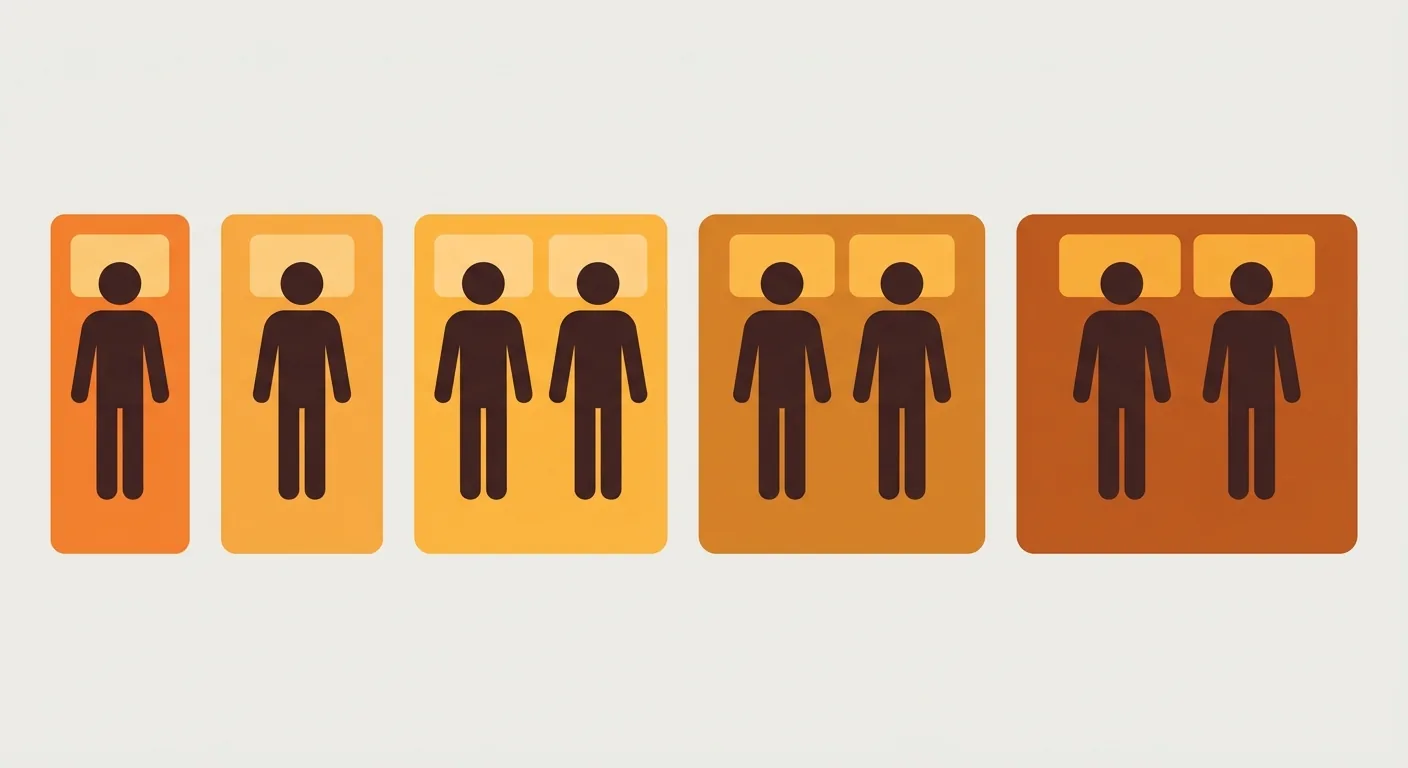
Caption: Taiwan's five mattress specs by width — single 91, extra-single 105, standard double 152, queen 182, king 182 cm
Key takeaway: A standard Taiwan double bed is 152×188 cm (5×6.2 Taiwanese feet); queen is 182×188 cm, king is 182×212 cm. The conversion base is 1 Taiwanese foot = 30.303 cm (Ministry of Education conversion table). When a size is quoted, the first number is width, the second is length.
We've laid out plenty of bedroom floor plans for people, and the most common misconception is "mattress size = bed frame size." The frame's outer dimensions are usually 5–15 cm larger than the mattress itself, so when measuring your room, use the frame's outer dimensions — otherwise it won't fit flush against the wall.
2Double Bed Size Chart: Standard, Queen, and King in Centimeters, with Taiwanese Feet
Taiwan mattresses come in five standard specs. The table below lists Taiwanese feet and centimeters side by side, answering every "how many feet, how many centimeters" query. These are market-standard specs, not tied to any particular brand or model. An "ordinary double bed" refers to the standard double at 152×188 cm — the size most people buy.
| Name | Taiwanese Feet (W×L) | Centimeters (W×L) | Occupancy |
|---|---|---|---|
| Single | 3 × 6.2 ft | 91 × 188 | 1 person |
| Extra-Single | 3.5 × 6.2 ft | 105 × 188 | 1 person, roomy |
| Standard Double | 5 × 6.2 ft | 152 × 188 | 2 people |
| Queen | 6 × 6.2 ft | 182 × 188 | 2 people, comfortable |
| King | 6 × 7 ft | 182 × 212 | 2 people plus a child |
Conversion basis: 1 Taiwanese foot = 30.303 cm, so 5 ft = 151.5 ≈ 152, 6 ft = 181.8 ≈ 182, 6.2 ft = 187.86 ≈ 188, 7 ft = 212.1 ≈ 212. These rounded values are the standard convention in the mattress industry — memorize them once and you won't have to recalculate every time.
Mattress Size and Bed Frame Size Aren't the Same
The easiest trap when buying a bed: the mattress is 152 cm wide, but the bed frame's outer dimensions might be 160–167 cm. The frame has an outer rail and a headboard, so when measuring your room, always use the frame's outer dimensions, not the mattress size. When we help users match furniture to their floor plans on Roomfit, this gap is the single most common error we catch — a layout that fits perfectly using the mattress size suddenly doesn't reach the wall once you switch to the frame's outer dimensions.
When buying a bed set online, the product page usually lists "mattress size" and "frame outer dimensions" separately — check both, especially for the side against the wall, since you can't rely on the mattress size alone. To check whether the frame will clash with a wardrobe or a bedroom door, the complete furniture dimensions chart has full comparisons across every category.
Headboard thickness is often overlooked too. A headboard with a backrest or built-in storage can eat up another 10–25 cm of room length. If your room is already short, choosing a style with no headboard or a thin one saves a meaningful chunk of space. Storage-integrated frames (lift-up beds, drawer beds) don't change their own footprint, but a lift-up bed needs clearance above to lift, and a drawer bed needs a walkway on the side to pull the drawer out — this "space you only need when the mechanism is in use" is worth thinking through before you buy.
3What Taiwanese-Foot Size Is a Double Bed? Converting Feet to Centimeters, and How to Read "Feet"
When a Taiwan double bed is quoted in "feet," it refers to the width. "5-foot bed" = standard double (152 cm wide), "6-foot bed" = queen (182 cm wide), and the length defaults to 6.2 feet (188 cm) unless it's a king, which goes up to 7 feet (212 cm). The conversion base is the same: 1 Taiwanese foot = 30.303 cm (Ministry of Education conversion table, 2021).
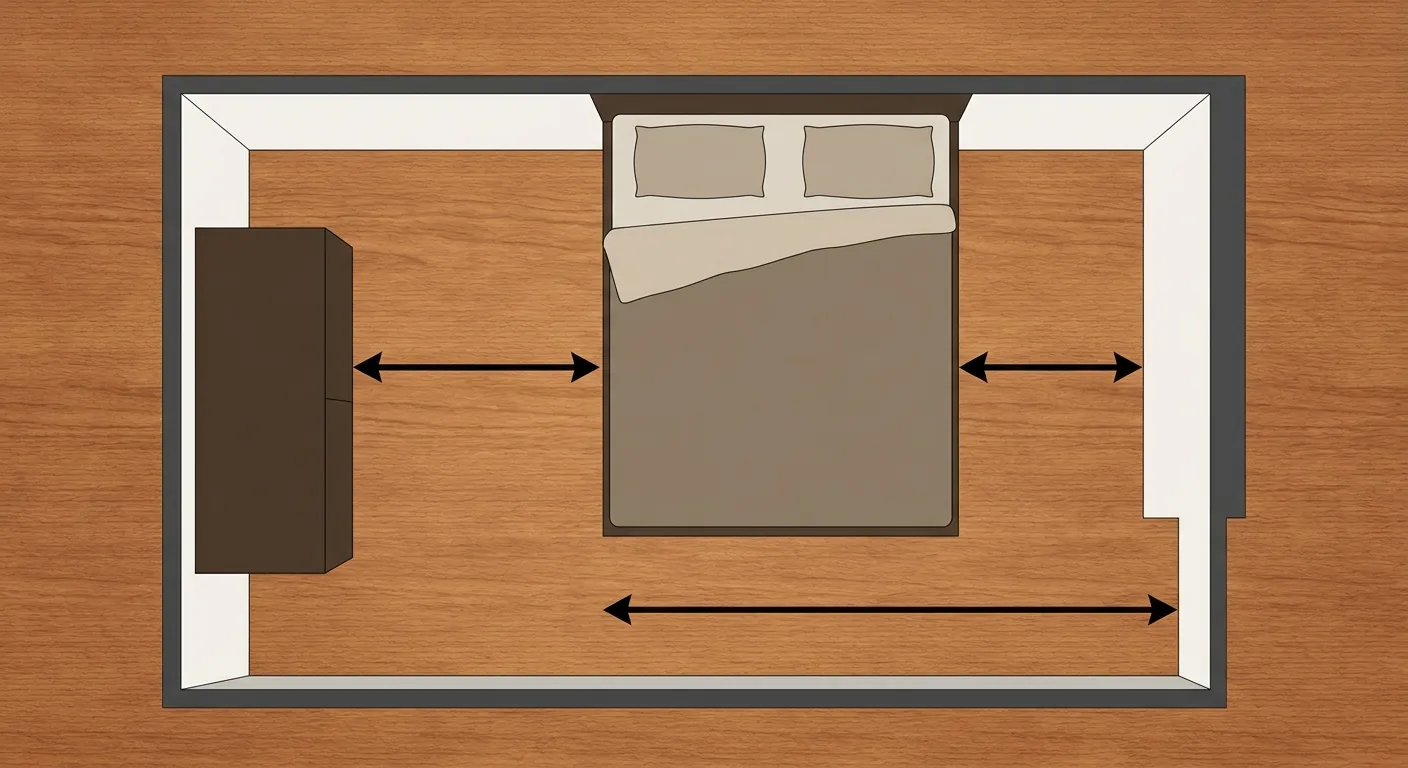
Caption: The mattress footprint is just the baseline — leave at least 60 cm of walkway beside the bed, or 90 cm on the wardrobe side for it to actually be usable
Why the First Number Is Width and the Second Is Length
The convention for Taiwan mattress sizing is "width × length" — for example, "5×6.2 feet" means 152 cm wide × 188 cm long. That's the reverse of some international specs, which list "length × width," so be careful when reading foreign mattress data. One trick to remember: of the two numbers for a double bed, the smaller is the width and the larger is the length — the length is almost always 188 or 212, so you won't get it wrong.
4How Many Ping Does a Double Bed Need? The Bed Plus the Walkway Clearance Beside It
Start with the mattress's own footprint: a standard double at 152×188 cm is roughly 2.86 m² (about 0.86 ping), and a queen at 182×188 cm is roughly 3.42 m² (about 1.03 ping) — based on 1 ping = 3.30579 m² (Ministry of Education conversion table). But that's just the bed itself; what actually determines whether the room is big enough is "the bed plus the walkway."
We recommend leaving at least 60 cm of walkway beside the bed, and 90 cm on the wardrobe side, ideally with room to get out of bed from both sides. Add the walkway on top of the bed and a rough guideline emerges: budget at least 2.5 ping for a standard double bedroom, and 3 ping or more for a queen or king, so you don't end up pressed against the wall getting out of bed or catching the bed corner opening the wardrobe. To check whether the clearance beside the bed and in front of the wardrobe is really enough, the furniture clearance and safety distance guide lists recommended minimum clearances for every scenario.
There's one detail people often overlook: having enough ping doesn't mean the layout will work smoothly. Two rooms of the same 3 ping, one square and one long and narrow, can fit completely different bed positions. In a long, narrow room, the bed can only go against one short wall, cramming the entire walkway to one side; a square room has the slack for clearance on both sides of the bed. So "how many ping is enough" is only the threshold — the room's shape is what actually determines whether it's livable. If you first want a rough sense of how many ping a studio or small unit needs to fit a double bed, pair this with our guide to how many ping one person really needs.
Which Double Bed Fits a Small Room
In a studio or a small primary bedroom, if the room is under roughly 2.5 ping, a standard double may only allow access from one side, meaning you'll have to sacrifice clearance on one side and push the bed against the wall. If space is truly tight, fall back to an extra-single (105 cm wide) — plenty roomy for one person. Don't force a queen or king into the space just because it technically fits; you'll get the bed in, but sidestepping around it every day makes living there genuinely uncomfortable.
Another common trade-off in small rooms is "which wall the bed goes against." Placing the headboard against the short wall with the bed running along the long side is usually the most space-efficient — but if the window, air conditioner, or outlets are in the wrong spot, the headboard may be forced to a different wall, and the footprint changes completely. This is exactly why it's worth checking the floor plan before buying a bed — the position of doors, windows, and structural beams directly determines how the bed can be placed and how much walkway is left. For how the bed, wardrobe, and dressing flow should be planned together for the whole bedroom, see our bedroom design and primary suite planning guide.
5Standard vs. Queen vs. King: How to Choose Based on Height, Sleeping Two, and Room Size
Choosing between the three specs comes down to height, how many people sleep in it, and room size. Under 175 cm tall, a 6.2-foot (188 cm) bed length is already enough; over 180 cm, we'd recommend the 7-foot (212 cm) king to avoid your feet hitting the foot of the bed. If two people care about having room to turn over, go with the queen (182 cm wide) — that's roughly 15 cm more per person.
For families where a child sometimes climbs into bed to sleep together, the extra space in a king (182×212) comes in handy, with room for a child in the middle without everyone bumping into each other. But a reminder: the bigger the bed, the tighter the walkway your room needs to leave — a king-size bed calls for a room of at least 3 ping, ideally with access from both sides. Don't upgrade to a king just for the occasional co-sleeping night — if it's usually just two people, it ends up feeling too spacious and cramping the room. Think through "how many people sleep here on a typical night" first, then decide on the size.
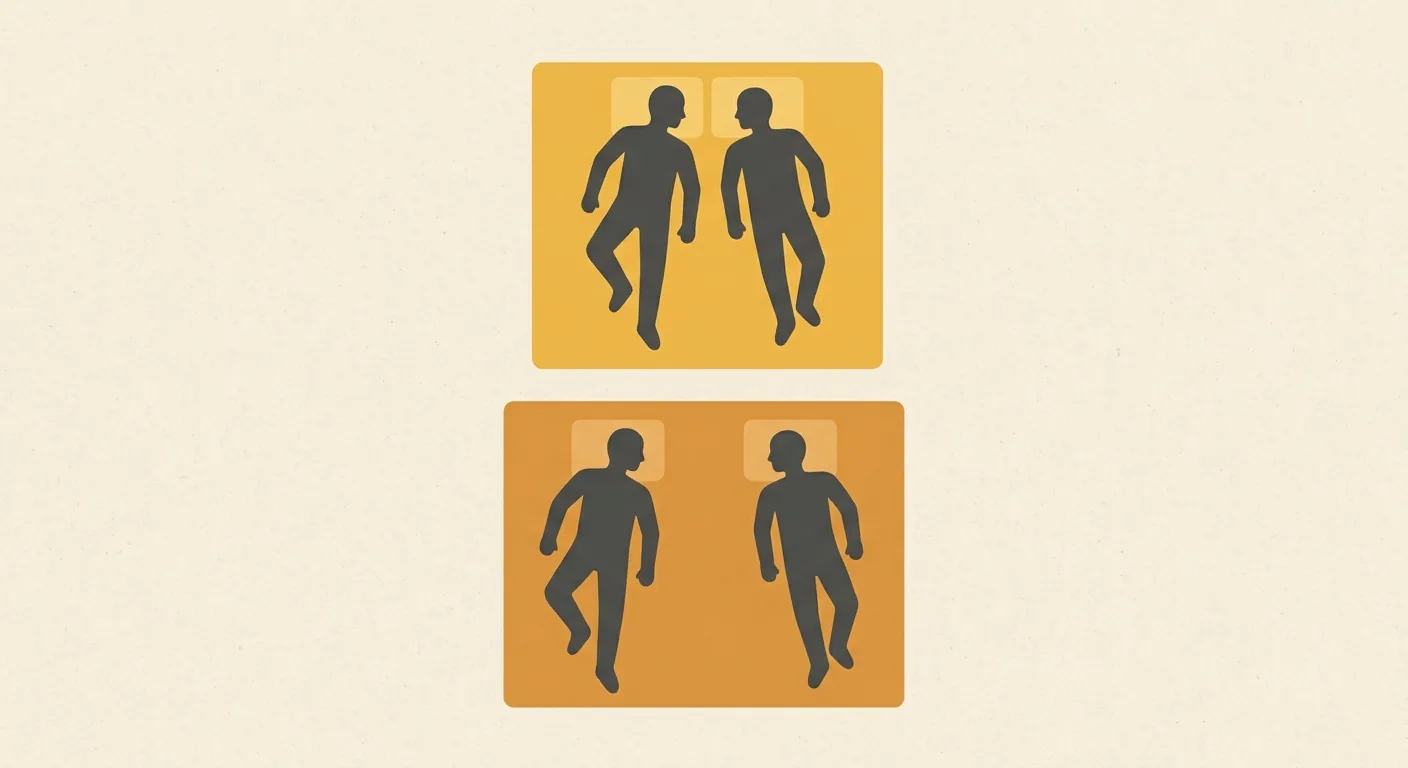
Caption: Standard double 152 vs. queen 182 cm — the extra 30 cm of width gives each person roughly 15 cm more room to turn over
Place the Bed at 1:1 Scale in Your Bedroom to Confirm the Walkway Before You Buy
Whether a room can fit a bed is something guesswork gets wrong most of the time. Drag your chosen bed size into your bedroom floor plan at true 1:1 scale using Roomfit, and the system automatically labels the distance from the bed's sides and foot to the wardrobe and door, and warns you if a walkway is too narrow. We've placed both the standard and queen versions into the same room on Roomfit ourselves and compared them — the difference in walkway space becomes obvious at a glance, letting you confirm nothing gets squeezed before you order.
If you want to plan the wardrobe, desk, and other furniture at the same time, the TV cabinet and desk dimensions chart and the dining table dimensions guide are also available.
6Conclusion: Check the Chart First, Then Calculate Bed Plus Walkway Before You Finalize
Double bed sizing really comes down to three sets of numbers: standard 152×188, queen 182×188, king 182×212 cm. To convert Taiwanese feet to centimeters, use 1 Taiwanese foot ≈ 30.3, and remember width comes first, length second. An "ordinary double bed" is the standard double at 152×188, the size most people buy.
But don't forget: mattress size isn't the same as the frame's outer dimensions, and your room needs to account for "bed plus walkway," not just the bed. Budget 2.5 ping for a standard double bedroom, and 3 ping or more for queen or king. The real final step is placing the bed back into your bedroom layout to confirm the walkway — that's when the decision is truly locked in. Once you've checked the bed, place the wardrobe and door clearance into the same view too, so nothing gets overlooked.
7FAQ
What's the standard size of a double bed in centimeters?
A standard Taiwan double bed (ordinary double) is 152 × 188 cm, or 5 × 6.2 Taiwanese feet — the size most people buy. A queen is 182 × 188 cm, and a king is 182 × 212 cm. The conversion base is 1 Taiwanese foot = 30.303 cm (Ministry of Education conversion table); when a size is quoted, the first number is width, the second is length.
What Taiwanese-foot size is a double bed?
The colloquial "5-foot bed" is the standard double, 152 cm wide (5 Taiwanese feet = 151.5 ≈ 152); a "6-foot bed" is the queen, 182 cm wide (6 Taiwanese feet = 181.8 ≈ 182). The length defaults to 6.2 feet (188 cm), reaching 7 feet (212 cm) only for a king. "Feet" always refers to width — length is a separate number.
How many ping does a double bed need?
The mattress's own footprint: a standard double at 152×188 cm is about 0.86 ping, and a queen at 182×188 is about 1.03 ping (1 ping = 3.30579 m², Ministry of Education conversion table). But you need to add walkway clearance to get the real requirement — leave at least 60 cm beside the bed, and 90 cm on the wardrobe side. As a rough guideline, budget at least 2.5 ping for a standard double bedroom, and at least 3 ping for queen or king, so you're not pressed against the wall getting out of bed.
What's the difference between standard and queen, and how do you choose?
Standard double is 152 cm wide, queen is 182 cm wide — the difference is that 30 cm of width, while the length is 188 cm for both. If two people care about room to turn over, choose queen for roughly 15 cm more per person; if the room is under 3 ping, standard double is the better choice so the walkway doesn't get squeezed. Only go up to king (212 cm bed length) if you're over 180 cm tall, to avoid your feet hitting the foot of the bed.
8References
- Ministry of Education's Revised Mandarin Chinese Dictionary — Measurement Unit Conversion Table (Length)
- Ministry of Education's Revised Mandarin Chinese Dictionary — Measurement Unit Conversion Table (Area)
- Mattress Industry Double Bed Size Reference
- Complete Furniture Dimensions Chart
- Furniture Clearance and Safety Distance Guide