"Can you actually move house during Ghost Month (the seventh lunar month)?" This is probably the most argued-over question on PTT and Dcard every year right before Ghost Month arrives. Some insist on avoiding it entirely, others move regardless, and both sides have their reasons. So who should you actually listen to?
This guide is the date-selection and customs unit within our complete moving and furniture measurement guide. We'll clarify the folk concerns and practical workarounds around moving during Ghost Month, explain whether you need to pick a date for moving house or moving furniture, how to choose peak vs. off-peak season for the best savings, and finally turn "things feel off after moving" from superstition-driven anxiety back into traffic-flow and bed-placement adjustments you can actually act on.
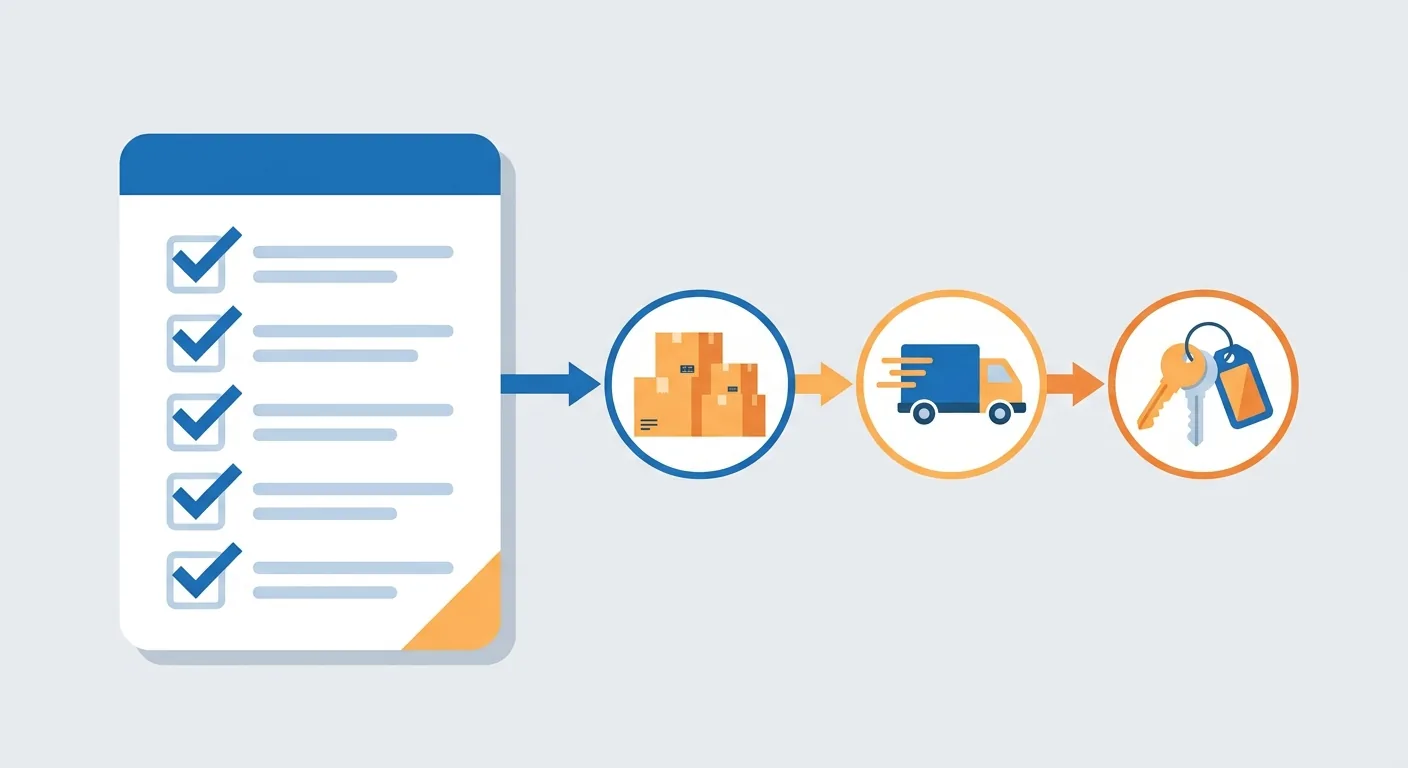
Caption: Three things to nail down when choosing a moving date — avoid folk-custom sensitive days, pick an auspicious day for moving in, and choose off-peak season to save money
Key takeaway: The seventh lunar month is popularly known as Ghost Month, and folk belief holds that "the gates of the underworld open on the first day and close on the thirtieth" (Ministry of Culture, Taiwanese Folk Beliefs, 2026). Modern folk-custom perspectives generally hold that moving taboos can be worked around, with the real point being peace of mind rather than an absolute prohibition on moving.
1Can You Move During Ghost Month? Common Myths on PTT and Dcard, and Practical Approaches
Whether you can move during Ghost Month — the answer is "folk custom raises concerns, but in practice it's not an absolute prohibition." The seventh lunar month is popularly known as Ghost Month, with folk tradition holding that "the gates of the underworld open on the first day and close on the thirtieth" (Ministry of Culture, Taiwanese Folk Beliefs, 2026). But as attitudes shift, plenty of folk-custom discussion holds that the taboo can be worked around — the point is peace of mind, not a hard prohibition.
On PTT and Dcard, both camps have their logic. The avoid-it camp wants peace of mind and would rather wait until Ghost Month passes; the move-anyway camp prioritizes practical reality — a lease ending or a job start date won't wait. Rather than arguing over who's right, it's more useful to consider what you personally care about — this comes down to a trade-off between belief and practical need, and there's no single right answer.
Where the Folk Concern Comes From
The concern around the seventh lunar month traces back to traditional Ghost Month beliefs. The Ghost Festival falls on the fifteenth of the seventh lunar month, an important folk observance blending Taoist Zhongyuan traditions, Buddhist Ullambana, and folk Ghost Month beliefs (Ministry of Culture, Taiwanese Folk Beliefs, 2026). Against this cultural backdrop, older generations tend to be more cautious about breaking ground, moving, or holding celebrations during the seventh month.
Understanding where the concern comes from makes it easier to talk this through with family. You don't have to accept it wholesale, nor reject it wholesale — knowing what matters to your elders is what helps you find a compromise both sides can live with.
How the Two Camps on PTT and Dcard See It
The avoid-it camp's approach is simple: don't move at all during the entire seventh lunar month, and wait until the gates close. The upside is peace of mind for family elders and less psychological burden for yourself; the downside is that demand spikes right after the month ends, making it even harder and pricier to book.
The move-anyway camp holds that as long as you pick a day marked "auspicious for moving in, auspicious for relocating" on the traditional almanac, complete the move during daylight, and keep any rituals low-key, moving is fine. In practice, many people avoid the first and fifteenth of the seventh lunar month specifically — days considered especially sensitive in folk tradition — and treat the rest of the month as normal. If you want to save money and aren't opposed to a workaround, the move-anyway camp's approach is worth considering.
Separating Handover From the Formal House-Warming
One very practical compromise: separate "moving your belongings in" from the "formal house-warming." During the seventh lunar month, you can sign the lease, take handover, move your furniture in, and start settling in — then wait for an auspicious day to perform house-warming rituals like the first cooking or offering to the earth god.
This approach avoids delaying your lease or your schedule while still leaving room for peace of mind. In the moving cases we've helped with ourselves, this "move in first, house-warming later" approach has been well received — family isn't opposed, and you don't have to sit around waiting for the calendar to cooperate. Practical matters and peace-of-mind matters can simply be handled separately — they were never one and the same thing to begin with.
2Do You Need to Pick a Date for Moving House or Moving Furniture? House-Warming Auspicious Days and Moving Before Lunar New Year
Whether you need to pick a date for moving depends first on distinguishing "moving your belongings" from "the formal house-warming." Simply transporting items is viewed more loosely in folk custom; it's the formal house-warming (bed placement, first cooking, offering to the earth god) that traditionally calls for an auspicious date. So if you're just moving furniture in first, you don't need to overthink it; you can wait and pick a date later, once you're ready to formally move in and start cooking.
How do you check for an auspicious day? A traditional almanac marked "auspicious for moving in, auspicious for relocating" is the common reference. But an auspicious day is just a reference — in practice, you also need to work around your moving company's availability; the best day in the world is useless if you can't book a truck.

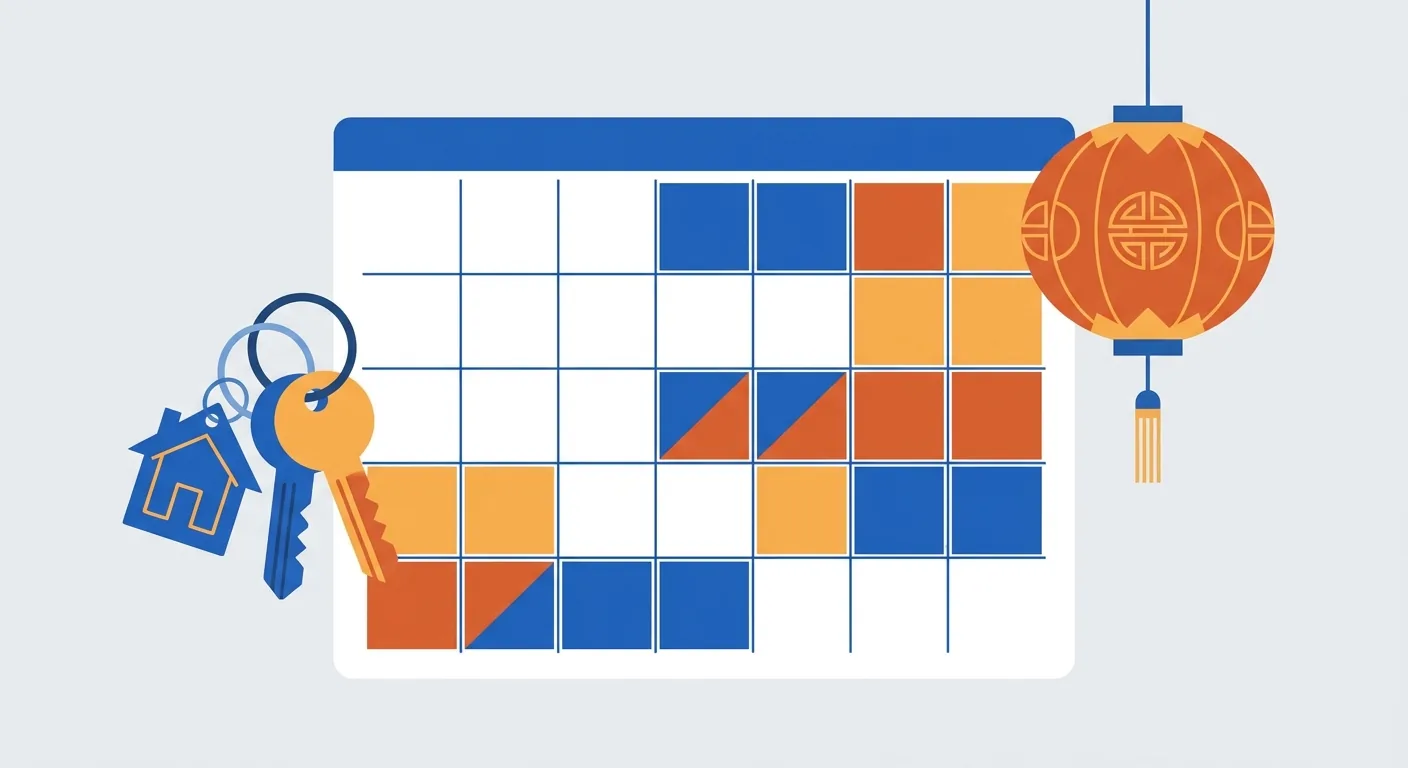
Caption: Moving objects (left) carries lower folk-custom concerns; the formal house-warming (right) — bed placement, first cooking — is where the auspicious date matters
Moving Objects vs. the Formal House-Warming
Moving objects means transporting furniture and boxes to the new place — folk concern around this action alone is relatively low. The formal house-warming carries the significance of "beginning to live here" — bed placement determines the direction you sleep, and the first cooking symbolizes the household starting to function. Tradition places its emphasis on the latter.
Separating these two means you won't get boxed in by "you absolutely have to pick a date to move." In practice, many people move first and hold the house-warming later, keeping the urgent transport separate from the more ceremonial ritual — covering both bases at once.
How to Check for an Auspicious Day
The most common way to check for an auspicious day is flipping through a traditional almanac to see whether a given day is marked "auspicious for moving in" or "auspicious for relocating." For something more thorough, some consult a fortune-telling master to pick a date based on family members' zodiac signs or the homeowner's birth details. These are all traditional references, not science — believe them or not, that's up to you.
Worth noting: this article does not select a specific date for anyone, nor does it claim any particular day is definitively auspicious or inauspicious. An auspicious day is a basis for peace of mind — for the actual date, rely on the current year's traditional almanac, a formal calendar reference, or a professional fortune-teller's guidance, not a single anonymous post you happened to read online.
The Trade-Off of Moving Before Lunar New Year
Moving before Lunar New Year has the appeal of "a fresh start for the new year." But it's also peak moving season, with concentrated demand, higher prices, and hard-to-book schedules. If you want to move into your new home before the new year, book well ahead, or you'll likely find nothing available.
The trade-off is very real: chase the auspicious date and good luck, and you accept peak-season prices and difficulty booking; chase an easy, affordable booking, and you need to loosen your grip on the date. There's no having it both ways — figure out which one matters more to you first. The peak/off-peak pricing logic here follows the same surcharge principles covered in our complete breakdown of moving costs and per-truck pricing.
3Moving Peak Season vs. Off-Peak Season: When to Time It for the Best Savings and Easiest Booking
If you want to save money and book easily, avoiding peak season is rule number one. The stretch from year-end through the run-up to Lunar New Year, graduation season, and the start-of-semester period all see concentrated moving demand, pushing prices up and availability down. Off-peak season, by contrast, has looser pricing and more flexible scheduling — great if your timing is flexible. Picking the right time can save you real money on the same truckload, and you won't be competing with everyone else for a crew.
Judging peak vs. off-peak isn't hard: just follow "when is everyone else moving." Avoid the times everyone's moving, and move when hardly anyone else is — you save money and get more availability.
When Peak Season Hits
Moving peak season clusters around a few key windows. Year-end through the run-up to Lunar New Year, when everyone wants "a good new year"; June through September's graduation season and semester transitions, when students and renters move in droves; and the end of each month, a peak point for lease expirations. When these windows overlap, both trucks and crews get stretched thin.
Peak season doesn't mean you can't move — it means you need to be prepared: book early, pay more, and have fewer choices. The later you book, the fewer your options and the harder your pricing gets.
How to Negotiate Prices During Off-Peak Season
Off-peak season (the regular months outside year-end, the Lunar New Year run-up, graduation season, and month-end peaks) is the best time to negotiate. With less demand, moving companies have open slots, giving you more leverage to ask for a discount or a flexible time slot. Get quotes from several companies and compare them side by side — off-peak season often gets you a much better number than peak season would.
When negotiating, remember that price isn't the only thing that matters. Compare service scope, surcharge items, and insurance coverage too, so you don't step on a landmine trying to save a little money. For how to read a moving company's reputation and quotes, our moving company reviews and equipment comparison guide has the full method.
The Sweet Spot: Weekdays and Mid-Month
There's a sweet spot within any given month too. Weekdays are usually better than weekends, and mid-month is usually better than month-end. Avoiding weekends and the month-end handover rush, and choosing an ordinary weekday in the middle of the month, gets you friendlier pricing and easier booking.
If your schedule is flexible and you're not particularly fixed on an auspicious date, a weekday in mid-month is the most economical combination. Stack this principle together with off-peak season, and the savings compound further.
4Feeling Off After Moving? Practical Arrangements for House-Warming Customs, Bed Placement, and Traffic Flow
"Things feel off after moving" often isn't superstition at all — it's a space problem. A walkway blocked by furniture that you trip over every day, a bed positioned so you can't sleep soundly because it's staring straight at the door, a layout that winds around so awkwardly it's annoying to live in day after day — these "off" feelings all have concrete causes, and all of them can be solved beforehand. Traditional house-warming customs are about peace of mind, while your actual living experience comes down to whether the placement and traffic flow have been arranged smoothly.
Rather than moving in and discovering everything's in the way, arrange it before you move. In this section, we shift focus from "what to offer" to "how to arrange."
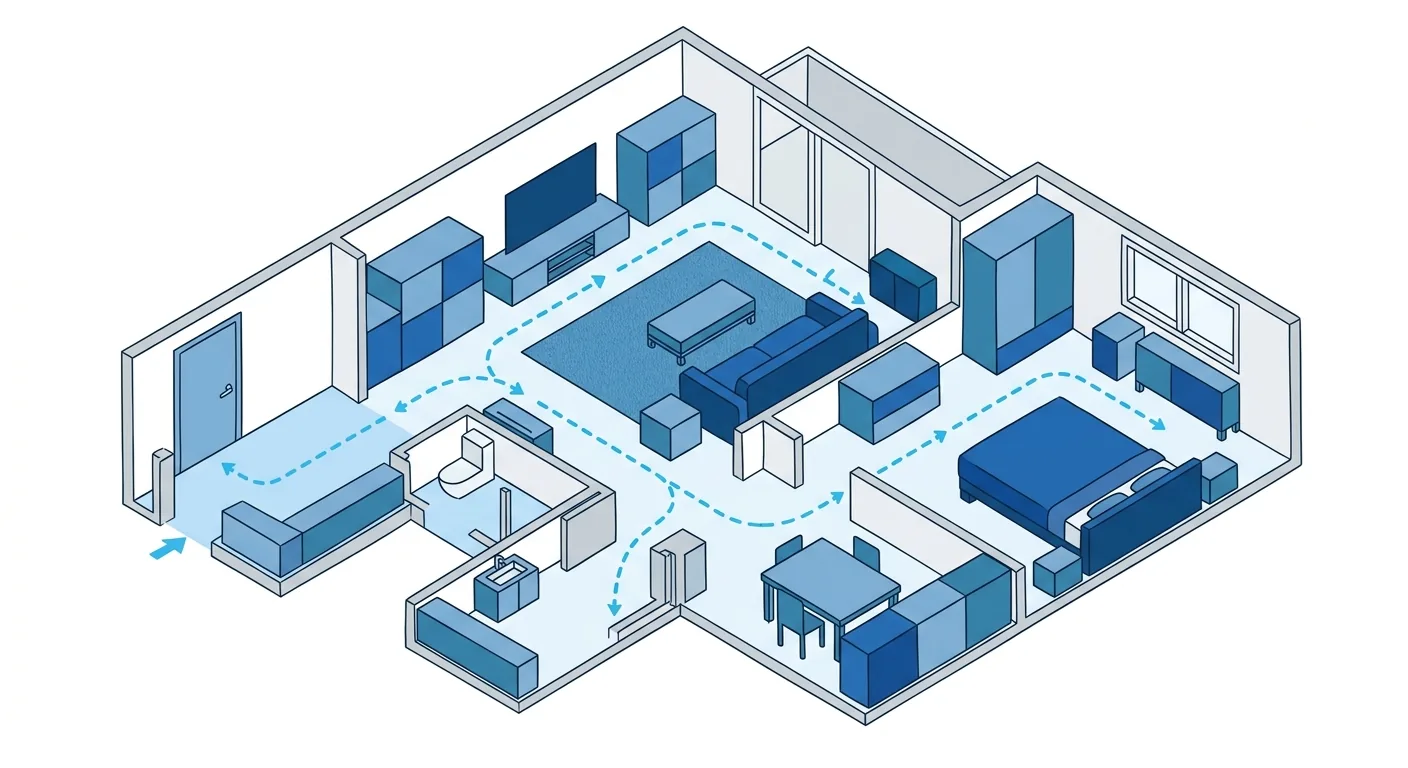
Caption: Whether a house-warming feels right comes down to the space itself — keep the bed away from facing the door directly, leave the walkway wide enough, and don't let furniture block traffic flow
The Real Causes Behind "Feeling Off"
If moving in feels off, check these practical causes first. First, a walkway that's too narrow or blocked by furniture, forcing you to walk sideways every time you come and go. Second, poor bed placement — the headboard isn't against a solid wall, or the bed faces the bedroom door directly, making sleep feel unsettled. Third, a winding layout — the path from entryway to kitchen, or from bedroom to bathroom, doesn't flow smoothly, and it grates on you over time.
None of this is bad luck — it's a layout that was never properly arranged. The good news is that layout problems can all be solved with planning ahead of time, instead of waiting to hit a wall after you've already moved in and regretting it.
The Peace-of-Mind Meaning of House-Warming Customs
Traditional house-warming customs — like bed placement, the fire-and-salt-and-rice ritual, the first cooking — are mainly about "peace of mind" and "a sense of ceremony," marking the formal beginning of a household. Folk discussion also mentions that if you want peace of mind about moving during Ghost Month, you can purify the home with salt and rice, or keep every light in the house on all night as a protective ritual (HouseFeel, 2026). Whether you do these is entirely up to you — what matters is that they're there to settle the mind.
Our take: respect the customs, but don't stake your quality of living entirely on ritual. No amount of careful offering fixes a layout that's constantly in your way; conversely, arrange the space smoothly, and living there naturally feels comfortable. The two aren't in conflict — you can do both.
Arranging Traffic Flow and Bed Placement Ahead of Time
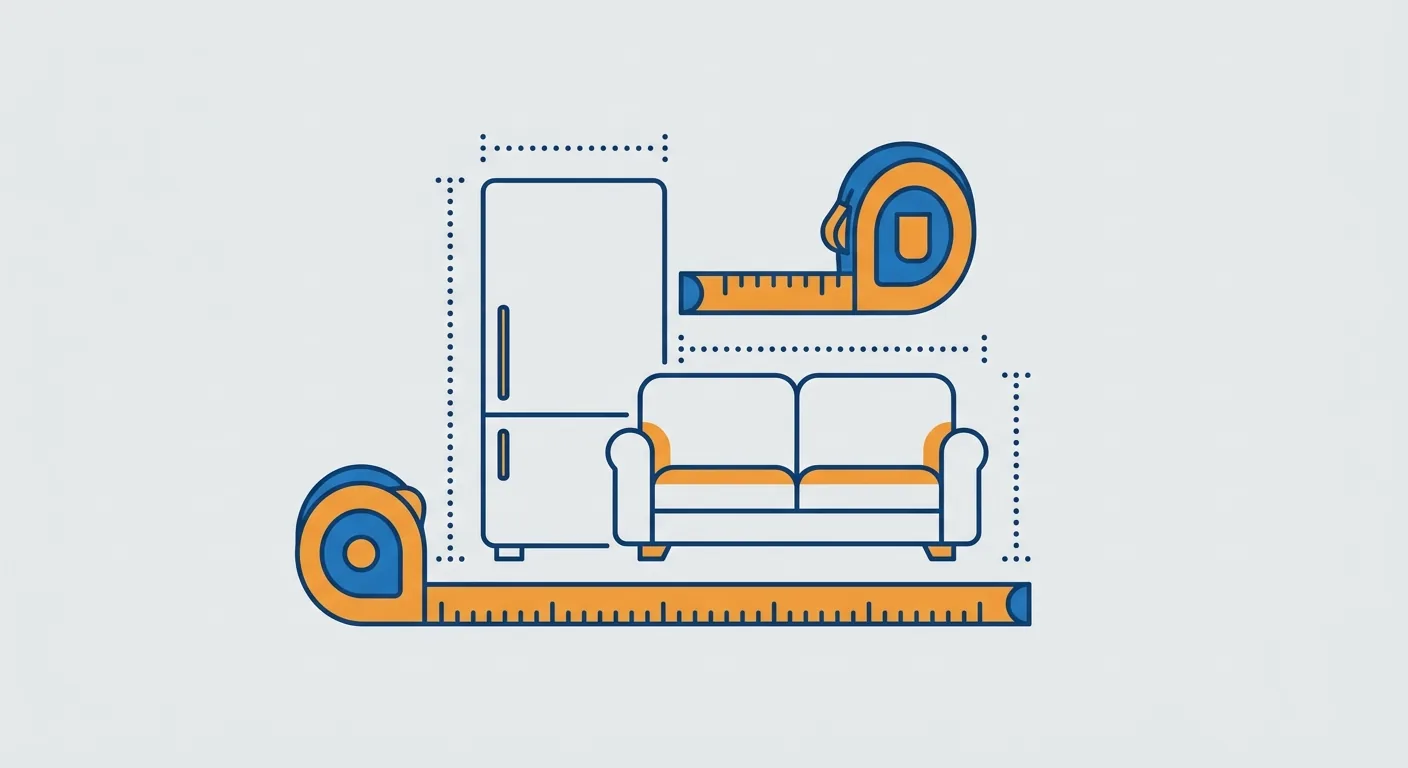
Arranging traffic flow and bed placement ahead of time is the key to making your house-warming genuinely smooth in practice. Before moving, use Roomfit (roomfit.app) to place your furniture at true 1:1 scale into your new home's floor plan, deciding in advance where the bed goes, where the sofa goes, and how wide to leave your walkways — avoiding a bed that faces the door directly or furniture that blocks traffic flow. Move in, and simply follow the positions you've already planned — no discovering after the fact that something's in the way.
If bed direction has specific significance for you, you can also lay out the relationship between the bed, the door, and the windows on the floor plan first, then fine-tune it against any feng shui guidance you follow. For the complete 1:1 placement workflow, see our complete moving and furniture measurement guide; for folding date selection into your overall moving timeline, see our moving checklist and packing guide.
5Conclusion: The Date Is for Peace of Mind — Whether It Feels Right Comes Down to Space
Choosing a moving date, at the end of the day, is a balance between belief and practical need. Whether you can move during Ghost Month, whether you need to pick a date, whether moving before Lunar New Year is worth it — none of these have a single right answer; it depends on what matters to you. Respect the customs, and there are plenty of workarounds too — move in first and hold the house-warming later, avoid the sensitive days, pick off-peak season and weekdays — all of these let you cover both peace of mind and practical reality.
But one thing is certain: whether a move feels right afterward comes down mostly to whether the space was arranged well, not to how thoroughly you performed the rituals. Pick a date that gives you peace of mind, and arrange your traffic flow and bed placement ahead of time — that's how this move actually goes smoothly.
6FAQ
Can you move house during Ghost Month?
Folk custom raises concerns, but in practice it's not an absolute prohibition. The seventh lunar month is popularly known as Ghost Month, with the belief that "the gates of the underworld open on the first day and close on the thirtieth" (Ministry of Culture, Taiwanese Folk Beliefs, 2026), but modern views generally hold this can be worked around. Common approaches: pick a day marked auspicious for moving in on the traditional almanac, complete the move during daylight, keep rituals low-key, or sign the lease and take handover to move objects in first, then formally house-warm on an auspicious day later — balancing peace of mind with practical reality.
Do you need to pick a date to move furniture?
It depends on whether you're moving objects or performing the formal house-warming. Simply moving furniture into a new home carries lower folk-custom concerns and doesn't need much overthinking; the formal house-warming's bed placement and first cooking are the parts tradition treats as needing an auspicious date. In practice, many people move first and house-warm later, keeping the urgent move separate from the ceremonial ritual. For the auspicious date itself, rely on the traditional almanac or a professional fortune-teller's guidance for the current year, not a single anonymous post online.
Is moving before Lunar New Year a good idea?
Moving before Lunar New Year has the appeal of "a fresh start for the new year," but it falls in peak season, with concentrated demand, higher prices, and hard-to-book schedules — book well ahead if you want in. The trade-off is real: chase the auspicious date and good luck, and you accept higher prices and difficulty booking; chase an easy, affordable booking, and you need to loosen your grip on the date. If your schedule is flexible, avoiding peak season for an off-peak weekday in mid-month is usually cheaper and easier to book.
When is moving peak season?
Moving peak season clusters around year-end through the run-up to Lunar New Year, the June-through-September graduation season and semester transitions, and the month-end lease-expiration peak. These windows see concentrated demand, pushing prices up and availability down. Off-peak season (the regular months outside these peaks) has looser pricing and more flexible scheduling. Within any given month, weekdays are usually better than weekends, and mid-month better than month-end — that's the sweet spot for savings.
What should I do if things feel off after moving?
Look for the cause in your space first — most "off" feelings come from a blocked walkway, poor bed placement, or a winding layout, not superstition. Before moving, use Roomfit to place your furniture at 1:1 scale into the floor plan, deciding in advance on your bed, sofa placement, and walkway width, and avoiding a bed that faces the door directly or furniture that blocks traffic flow. You can still follow house-warming customs for peace of mind, but whether your living space feels right ultimately comes down to how well the layout is arranged.
7Related Reading
- How to Pick a House-Warming Auspicious Day: Lunar House-Warming Rituals and Furniture Checklist
- Room Feng Shui Layout Guide: A Complete Breakdown of Layout, Direction, and Taboos
- Walkway Width and Traffic Flow Planning Guide: Spacing Figured Out Once and for All
8References
- Ministry of Culture – Taiwanese Folk Beliefs: Festival Rituals (Zhongyuan)
- National Center for Traditional Arts – Yishu Online: Taiwan's Distinctive Ghost Festival Observances
- HouseFeel – Can You Move During the Seventh Lunar Month? Debunking Ghost Month Moving Myths
- Global Views Health – Reasons for Seventh Lunar Month Ghost Month Taboos and How to Work Around Them