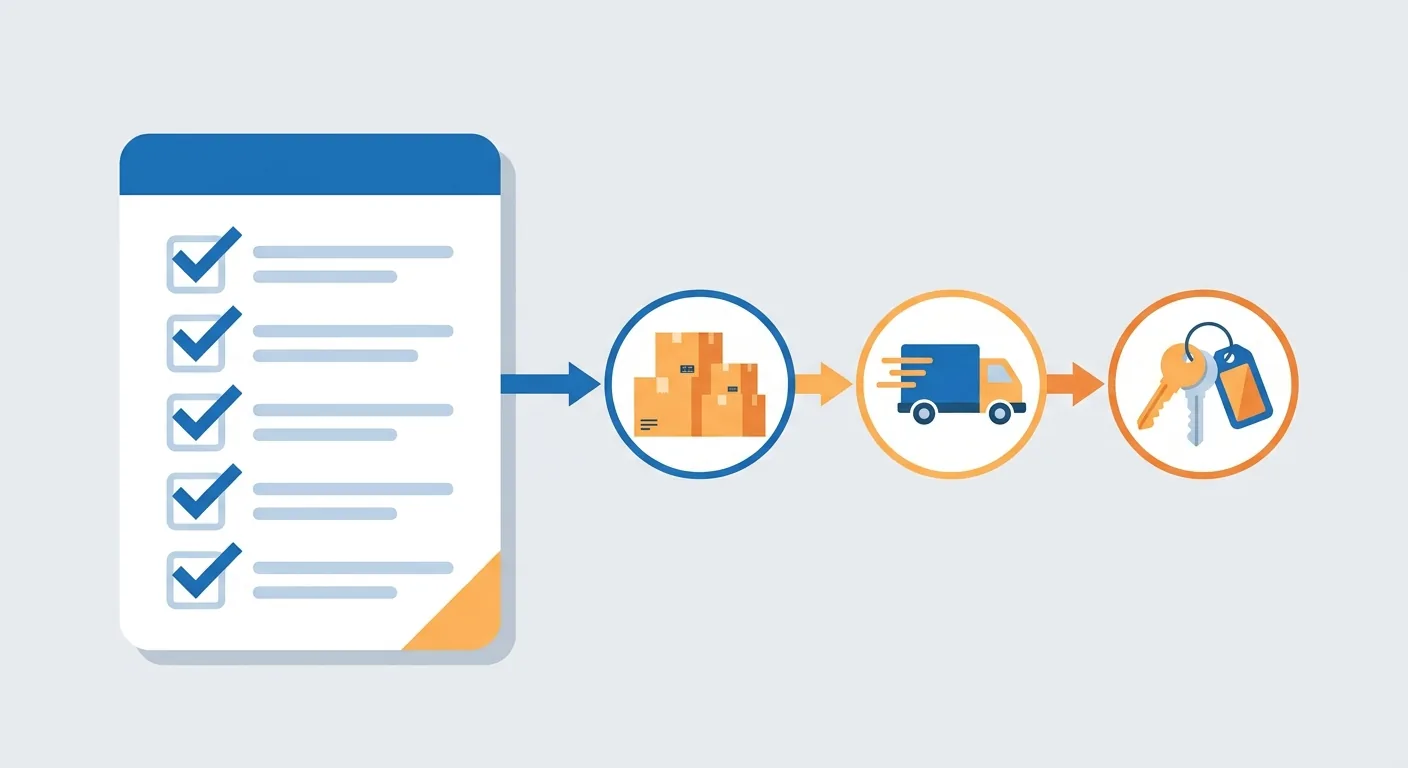

Search "moving company recommendations" on Dcard or PTT, and a wall of five-star reviews pops up — leaving you more confused than before. Which ones are genuine, and which are sponsored? Choosing a moving company isn't hard because there's nothing to find — it's hard because there's too much information and no easy way to tell what's real.
This guide is the company-and-tools unit within our complete moving and furniture measurement guide. We'll teach you how to judge the credibility of community recommendations, compare the trade-offs between reputable brands and budget companies, break down Lalamove, Uber, moving apps, and "shipping it instead" as small-load moving options, and finally share one trick that makes quotes more accurate: hand your moving company a layout drawing before you book.
Caption: Reading moving reviews — use a magnifying glass to check the details, and cross-reference genuine experiences against sponsored talking points
Key takeaway: Moving falls under the freight and moving services regulated by Taiwan's Ministry of Transportation and Communications, which has published a standard contract template — before signing, item count, dimensions, and fee items should all be spelled out clearly (Ministry of Transportation and Communications, 2007). Choosing a company isn't just about the star rating — quote transparency and a complete contract matter just as much.
1How Should You Read Moving Company Recommendations on Dcard and PTT? Spotting Genuine Reviews vs. Sponsored Content
Judging community recommendations starts with checking "is there any detail." Moving and freight services are regulated by the Ministry of Transportation and Communications, and legitimate operators disclose their fee items per the standard contract template (Ministry of Transportation and Communications, 2007), while genuine reviews usually come with a quote, a description of the moving process, and the actual cost — not just a single line saying "highly recommend." The more generic and glowing a five-star review is, the more skepticism it deserves.
Dcard and PTT moving recommendations mix genuine reviews with sponsored content. The difference isn't the star rating — it's the information density. Genuine reviews mention downsides, prices, and the process; sponsored posts tend to carry only emotion and no detail. Learn to tell these two apart, and you filter out half the noise right away.
A Few Telltale Signs of Sponsored Posts
Sponsored posts tend to share a few common traits. First, five stars with no detail — praising only "great attitude, very professional" without saying what was actually moved or how much it cost. Second, promoting a single brand exclusively — the whole post revolves around one company, with no mention of any alternatives. Third, comments steering readers to DM — phrases like "message me for details" or "I'll ask for a discount for you." Fourth, unusual account activity — an account that's only ever posted this one thing loses credibility by default.
Spotting these traits doesn't automatically mean it's fake, but it's worth staying a little more alert. Choosing a moving company is a decision worth several thousand NT dollars — one extra check never hurts.
What a Genuine Review Actually Looks Like
A genuine review usually has "both good and bad" in it. It might praise a company for careful handling, while also mentioning that the crew showed up late once, or that a surcharge wasn't clearly explained. This kind of imperfect, warts-and-all sharing is actually the most credible, precisely because real experiences are never flawless.
The reviews most worth reading come with a quote attached, photos of the actual move, and a specific dollar amount. When we've looked for moving companies ourselves, what we valued most was exactly this — "does this post mention price and process." Whoever gives you the specifics is the one who actually moved with them.
Cross-Referencing Across Platforms
A single platform's reviews are easy to manipulate; cross-referencing across platforms is far more reliable. Is a company's reputation consistent across Dcard, PTT, Google Reviews, and community groups? If glowing reviews cluster on just one platform while the company can't be found anywhere else, that gap itself is a red flag.
The practical approach: shortlist two or three candidates, search their names across multiple platforms, and read the negative reviews too. How a company handles complaints and disputes tells you far more about its true character than the positive reviews do.
2Comparing Reputable Brands Like Dayue Moving Against Budget Moving Companies
Reputable brands and budget companies each represent a different trade-off between cost and savings. Reputable brands charge more for standardized processes, insurance coverage, and complaint handling; budget companies save you money through leaner staffing and simplified service. Taking a widely discussed brand like Dayue Moving as an example, brands in this category are a good fit for a whole-household move, valuables, or situations where you want guaranteed protection; budget companies suit tighter budgets and simpler moves. There's no absolute better or worse — only what fits your situation.
Worth noting: budget doesn't mean low quality. Some budget companies also get great reviews — the key is checking the contract and reputation, not just comparing price tags.

Caption: Reputable brands (left) cost more for protection and standardization; budget companies (right) save you money through leaner staffing and simplified service
What You're Paying For With Reputable Brands
The price of a reputable brand buys you "someone to answer for it if something goes wrong." Comprehensive moving insurance, standardized disassembly and protection procedures, and traceable complaint-handling processes are all especially valuable when moving valuables, fragile items, or an entire household's worth of large items. Crew training and work standards tend to be more consistent, and the odds of damage from bumps are lower.
If your home includes a piano, antiques, or large appliances — or if you simply don't want to bear any risk at all — a reputable brand's premium is usually money well spent.
What You're Saving With Budget Companies
Budget companies save on staffing and add-on services. For the same truckload, they may send fewer people, expect you to handle disassembly yourself, and use simpler protective materials. For a simple move with few items, someone able to pitch in themselves, and a limited budget, this leaner approach is often just right — no reason to pay for services you won't use.
Before moving, think it through: do you need "full-service handling," or just "a truck and some hands to help carry"? The answer points directly to whether you should look at a brand or a budget option.
How to Read Reviews Without Getting Burned
Whether it's a brand or a budget company, the principle for reading reviews is the same: look at how negative reviews get handled, whether the contract is clearly written, and whether the quote includes surcharge items. A company willing to put floor-level fees, overtime charges, and large-item surcharges into the written quote is far more credible than one that just verbally promises "we won't add anything."
Before signing, always get a written estimate that lists item count, dimensions, floor level, and service scope. This is both your protection and a common baseline for comparing companies. For the surcharge logic behind moving costs, our complete breakdown of moving costs and per-truck pricing has the full details.
3Lalamove, Uber, Moving Apps, and "Shipping It Instead": How to Choose a Small-Load Moving Tool
Not every move needs a full moving company. For small loads, single items, or short distances, on-demand rideshare-style delivery and courier shipping are often more cost-effective. Lalamove and Uber suit on-demand moves of a few to a dozen items, available at a moment's notice; moving apps integrate quoting and matching for a more streamlined process; and "shipping it instead" (courier or freight delivery) suits single, shock-resistant, non-urgent items, often cheaper than booking a vehicle over long distances. Which one to choose depends on item count, distance, and urgency.
The table below compares these tools' suitability at a glance. Actual costs vary with distance, vehicle type, and time slot — the table reflects general suitability, not a fixed quote.
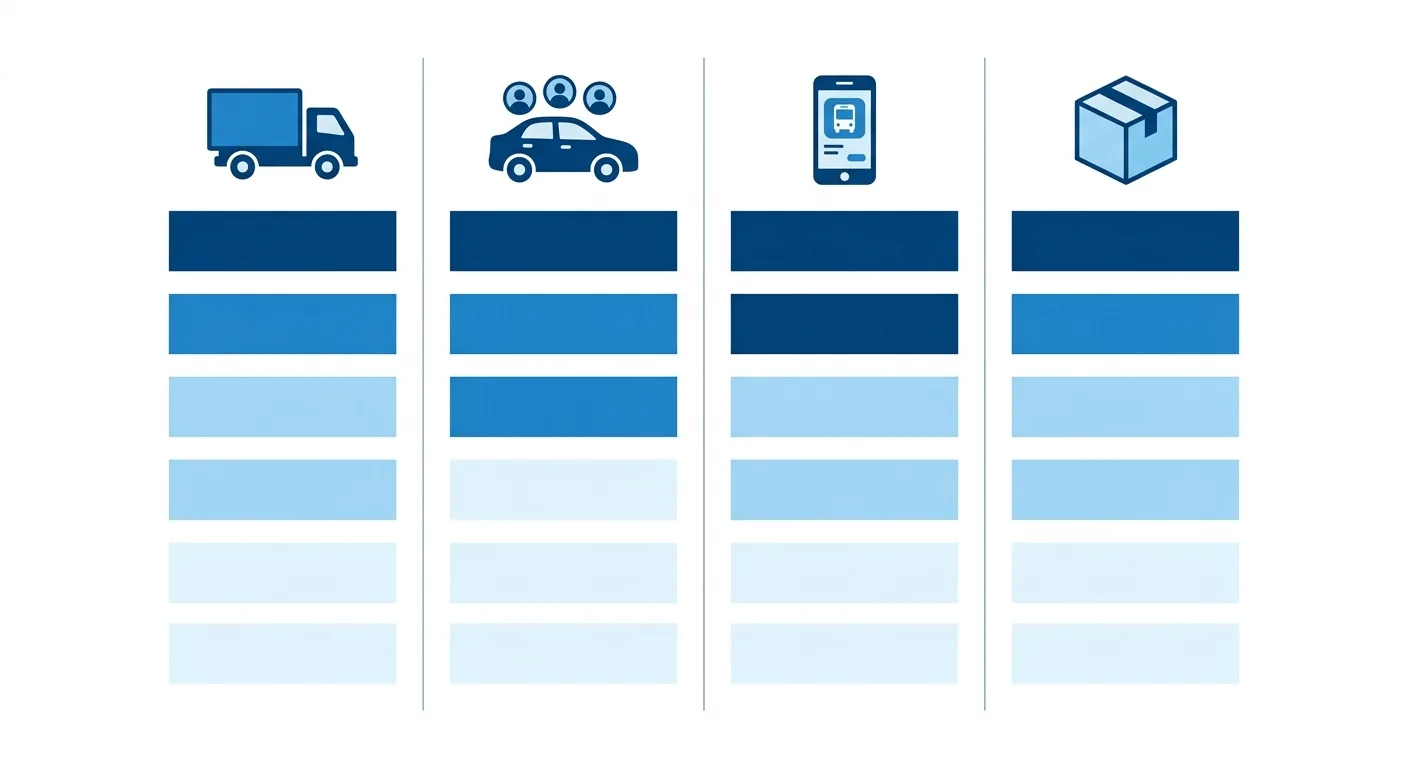
Caption: Small-load moving tools (1) Lalamove/Uber for on-demand rideshare-style delivery (2) moving apps for quoting and matching (3) "shipping it instead" (courier/freight) for single items over long distances
| Tool | Item Count Suited | Distance Suited | Key Features |
|---|---|---|---|
| Lalamove | A few to a dozen items | Short to medium distance | On-demand, available instantly, choice of vehicle type |
| Uber (freight/large vehicle) | A few small items | Short distance | Familiar interface, good for occasional small moves |
| Moving app | Small to medium load | Short to medium distance | Integrated quoting and matching, streamlined process |
| Shipping it instead (courier/freight) | Mainly single items | Cost-effective over long distances | Good for shock-resistant, non-urgent items, priced per item |
Item Counts Suited to Lalamove / Uber
Lalamove and Uber-style on-demand delivery excel at being "available instantly, priced per trip." They suit loads of a few to a dozen items — for example, a renter moving to a nearby dorm with a modest amount of belongings. You handle the loading and unloading yourself while the driver handles transport, saving you a moving company's labor fee.
But note that these platforms generally don't include moving labor — heavy or bulky items are on you to carry. One person carrying a refrigerator down five flights isn't something this kind of service can help with. Before booking, confirm whether everything fits in one trip — splitting it into two trips often ends up costing more.
How to Compare Moving Apps
A moving app's value lies in "integration" — online quoting, vehicle matching, and progress tracking all in one place, saving you the trouble of calling around for quotes one by one. It's a good fit if you want a simple process without needing a full-service moving company.
When comparing apps, focus on quote transparency and matching quality. Whether surcharge items are clearly disclosed, and how well-reviewed the matched vehicle and driver are — these matter far more than a slick interface.
What "Shipping It Instead" Is Best For
"Shipping it instead" works best for single, shock-resistant, non-urgent items. A box of books, or a small piece of furniture that won't be damaged by a bump — going through courier or freight shipping is often cheaper than a dedicated pickup over a long distance. It's priced per item, making the cost easy to budget for.
But fragile items, valuables, and oversized pieces shouldn't go this route — the risk of damage or loss is higher. The rule of thumb is simple: would it break your heart if this item got damaged? If yes, choose a method with better protection instead.
4Give Your Moving Company a Roomfit Layout Drawing Before Booking, for a More Accurate Quote and Less Back-and-Forth
Handing your moving company a layout drawing before booking makes the quote much more accurate. Use Roomfit (roomfit.app) to place your furniture at true 1:1 scale into your new home's floor plan, then export the layout drawing and furniture list — your moving company can immediately see item count, dimensions, and where everything goes at the new place, without needing to come on-site to re-estimate, and with far less room for last-minute surcharges.
The benefits are concrete. At the quoting stage, the company can estimate volume and vehicle size from the list, making the numbers more realistic. On moving day, the crew can place items directly according to the layout drawing, without stopping to ask "where does this go" — which also lowers the odds of overtime fees. Many communication gaps come down to "item count and placement weren't clearly conveyed," and one drawing closes that gap.
We handed over a layout drawing to a moving company ourselves once, and the crew barely asked "where does this go" on the day — they placed every large item according to the drawing, and finished faster than expected. This works just as well for on-demand delivery. Before calling Lalamove or Uber, use the furniture list to confirm whether everything fits in one trip or needs to be split, avoiding the surprise of coming up half a truckload short on-site. Where do the layout drawing and furniture list come from? For the complete 1:1 placement workflow, see our complete moving and furniture measurement guide; for dimensions and fit checks on various furniture and appliances, see our furniture and appliance size-fit check for move-in confirmation. For how to pack and label by room to get everything into place in one pass after the move, see our moving checklist and packing guide.
5Conclusion: Check the Details First, Compare the Tools Next, and Hand Over a Drawing Last
When choosing a moving company, don't let the star rating steer you. Check whether there's detail, how negative reviews get handled, and whether the contract is clearly written — these three things are more reliable than any five-star review. Reputable brands and budget companies each have their place, and on-demand delivery and moving companies each have their own turf — the key is matching your choice to your item count, distance, and budget.
And whichever you end up choosing, handing over a layout drawing before you book will always make your quote more accurate and cut down on back-and-forth. Measure first, place first, then book the labor — that way, this move won't leave you drowning in information.
6FAQ
Are moving recommendations on Dcard and PTT trustworthy?
They mix genuine experiences with sponsored content — the difference is in information density. Genuine reviews mention downsides and come with a quote and a description of the process; sponsored posts often carry only five stars with no detail, promote a single brand exclusively, and steer readers to DM. Moving falls under services regulated by the Ministry of Transportation and Communications, with a standard contract template in place (Ministry of Transportation and Communications, 2007) — we recommend cross-referencing across platforms and reading the negative reviews too before shortlisting candidates.
Is a reputable brand like Dayue Moving worth paying extra for?
It depends on what you're moving. Reputable brands charge more for moving insurance, standardized disassembly and protection, and complaint handling — a good fit for a whole household, valuables, lots of fragile items, or situations where you don't want to take on any risk. If your item count is simple, you can pitch in yourself, and your budget is limited, a budget company's leaner service is plenty. Budget doesn't mean low quality — the key is the contract and reputation, not just the price tag.
Should I use Lalamove or a moving company for a small load?
It depends on item count and whether you need labor. Lalamove and Uber suit on-demand moves of a few to a dozen items available at a moment's notice, but they generally don't include moving labor — heavy or bulky items are on you to carry. For a whole household, lots of large furniture, or disassembly and protection needs, a moving company is still recommended. Before calling a car, use your furniture list to confirm whether everything fits in one trip, to avoid the cost of splitting into two.
What items are suited to shipping instead of moving directly?
Single, shock-resistant, non-urgent items are best suited to shipping — for example, a box of books or a small piece of furniture that won't be damaged by a bump. Over long distances, courier or freight shipping is often cheaper than a dedicated pickup, and pricing per item makes budgeting easy. Fragile items, valuables, and oversized pieces aren't recommended for this route, given the higher risk of damage or loss. The rule of thumb: would it break your heart if this item got damaged — if yes, choose a method with better protection.
How do I communicate with a moving company to get the most accurate quote?
Hand over a layout drawing and furniture list before you book. Use Roomfit to place your furniture at 1:1 scale into the floor plan and export the list — the moving company can estimate volume and vehicle size from item count and dimensions, making the quote more realistic and leaving less room for on-site surcharges. On moving day, the crew can place items according to the drawing, lowering the odds of overtime fees. Always make sure your written estimate lists item count, floor level, and surcharge items.
7Related Reading
- Roomfit Furniture List Export Guide: One-Click Export for a New Home's Item List
- Studio Apartment Furniture Layout and Rental Makeover Guide
- Complete Furniture Dimension Reference: Item Count and Dimensions for Your Moving Company
8References
- Ministry of Transportation and Communications – Standard Contract Template and Consumer Information for Moving and Freight Services
- Executive Yuan – Standard Contract Template for Moving and Freight Services
- Consumers' Foundation, R.O.C. – Standard Contract Templates and Mandatory Disclosure Items
- PRO360 – 2026 Moving Company Costs: Latest Market Rates and Price List