Still taping up boxes the night before a move, then arriving at the new place and not being able to find your toothbrush in any of them — this is about as messy as moving gets. It doesn't actually have to be this chaotic; the only difference is whether you have a checklist and a timeline.
This guide is the checklist and packing unit within our complete moving and furniture measurement guide. We'll give you a cheat-sheet timeline from 30 days out to moving day, list your moving supplies and room-by-room packing order, teach you how to declutter when you have too much stuff and what to do with unwanted furniture, and talk about who self-moving (ant moving) is a good fit for. Finally, we'll share one time-saving trick: plan your new home's layout first, then pack by labeling according to room.
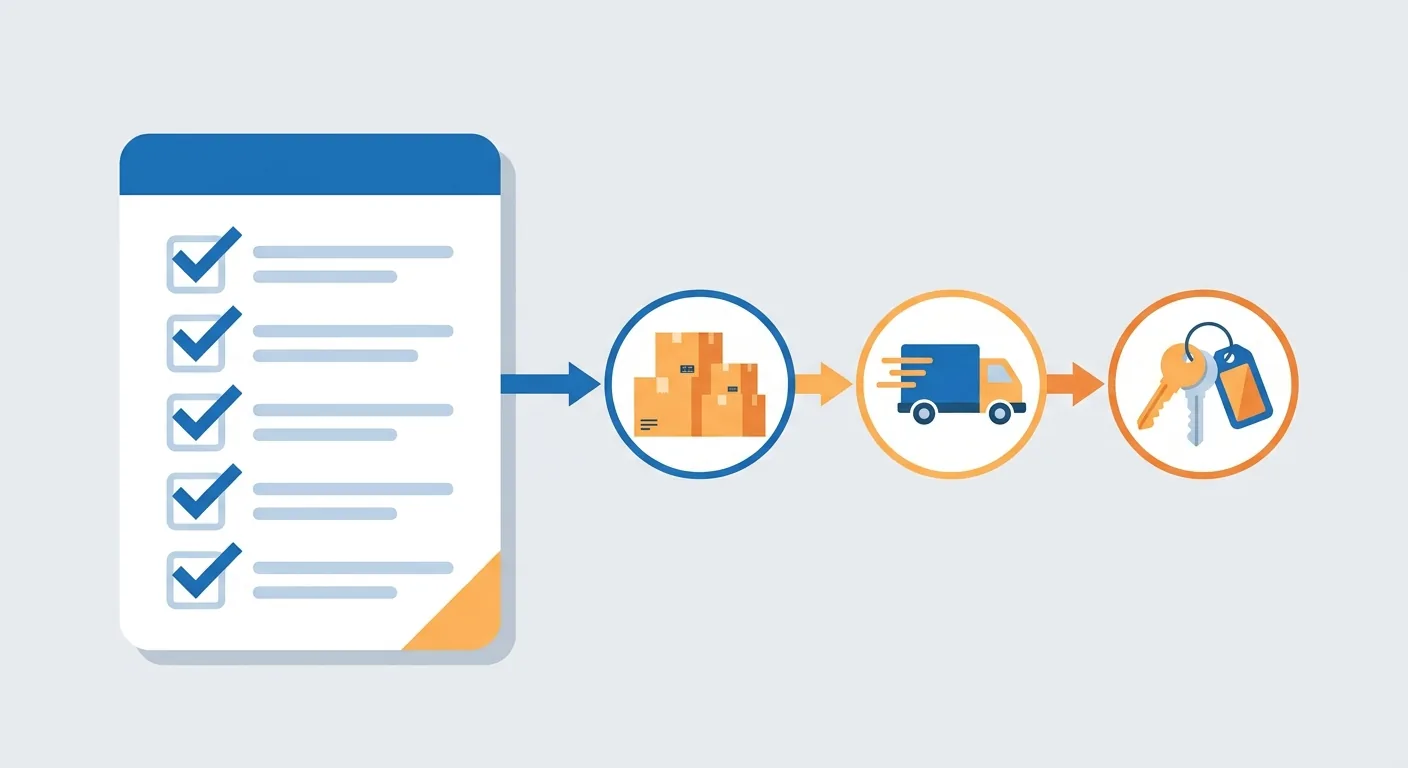
Caption: Three stages of the moving countdown — book your truck and declutter 30 days out, pack 7 days out, inspect and settle in on moving day
Key takeaway: For large discarded items like sofas, mattresses, and cabinets, most cities and counties let you book free removal through your local sanitation team — typically requiring at least one day's advance notice, with pickup Monday through Saturday (Taipei City Department of Environmental Protection, 2026). Downsize before you move — don't ship furniture you don't want to your new home and pay for the trip twice.
1Moving Checklist Cheat Sheet: The Timeline From 30 Days Out to Moving Day
The key to a stress-free move is laying everything out along a 30-day countdown. Start early, do things in batches, and know exactly what needs to happen at each stage — that way nothing gets crammed into the last night. Large furniture disposal especially needs to happen early — sanitation crews typically require at least one day's advance booking and don't operate on Sundays (Taipei City Department of Environmental Protection, 2026), so leaving it to the last minute means you're simply too late.
The value of a timeline is "spreading out the stress." The same tasks, done gradually over four weeks versus crammed into a single day, feel worlds apart in exhaustion. Here's the 30 days broken into checkpoints — follow along and nothing slips through.
30 Days Before Moving
A month out, start the two most time-consuming tasks: booking a moving company and decluttering. The earlier you book a moving company, the better date and price you can lock in — especially during peak season. Decluttering needs time to work through gradually — you can't decide the fate of every item in a single day.
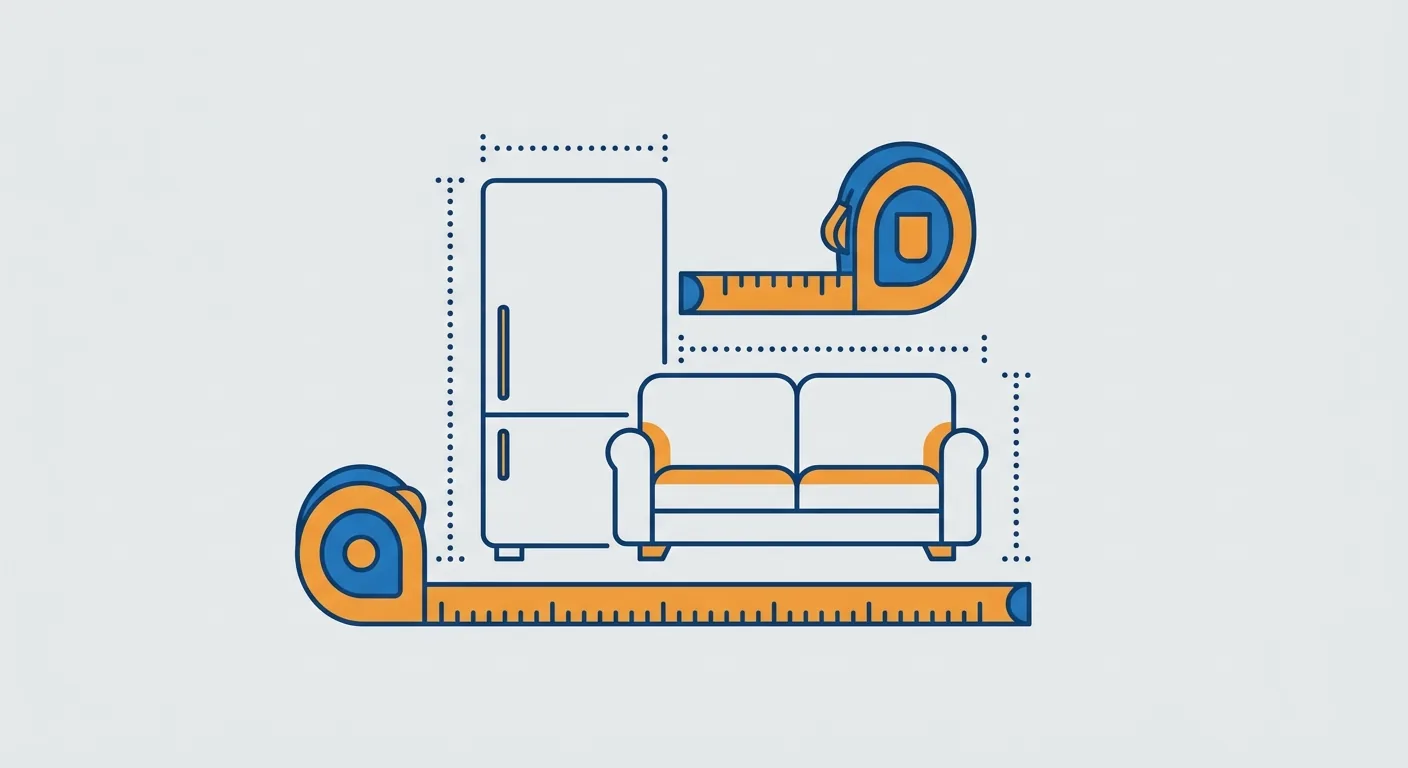
This stage is also a good time to start measuring dimensions and using Roomfit to plan your new home's layout, confirming which large items will fit and which should be dealt with early. To fold date selection into your timeline, see our complete guide to Ghost Month and moving customs to check an auspicious day first and match it against your schedule.
7 Days Before Moving
With a week left, shift your focus to packing and wrapping things up. Stock up on boxes, bubble wrap, and labels, and pack room by room with labels on each box; handle your address change (post office redirect, important bills), defrost your refrigerator ahead of time, and gather your important documents to carry with you.
At this point, confirm the pickup time, item count, and quote with your moving company one more time, to avoid discovering a discrepancy on moving day. Packing is best done gradually and early — don't leave it all for a last-minute scramble the night before.
Inspecting on Moving Day
On moving day itself, the focus is inspection and tallying. The moving crew places furniture according to your layout drawing; you check off items against your list, inspect for any bumps or damage, and boxes go into their labeled rooms.
Let your refrigerator sit for a bit before plugging it in — don't rush to power it on. Don't try to unpack everything on moving day itself — just open the boxes you'll need tonight, and take the rest slowly. Once everything's checked off with nothing missing or damaged, the day's a success.
2Moving Supplies List and Packing Order: Boxes, Labels, and Fragile Items
Running out of tape halfway through packing is one of the most deflating things that can happen. So step one is stocking up on supplies: boxes in various sizes, bubble wrap, packing tape, a marker, labels, and cable ties. Get your materials together first, and you'll pack smoothly without stopping halfway to restock.
There's a method to the packing order too. Pack the least-used rooms first, and the most-used items last — that way, your daily routine before the move stays undisturbed, and you can unpack what you actually need first once you arrive.
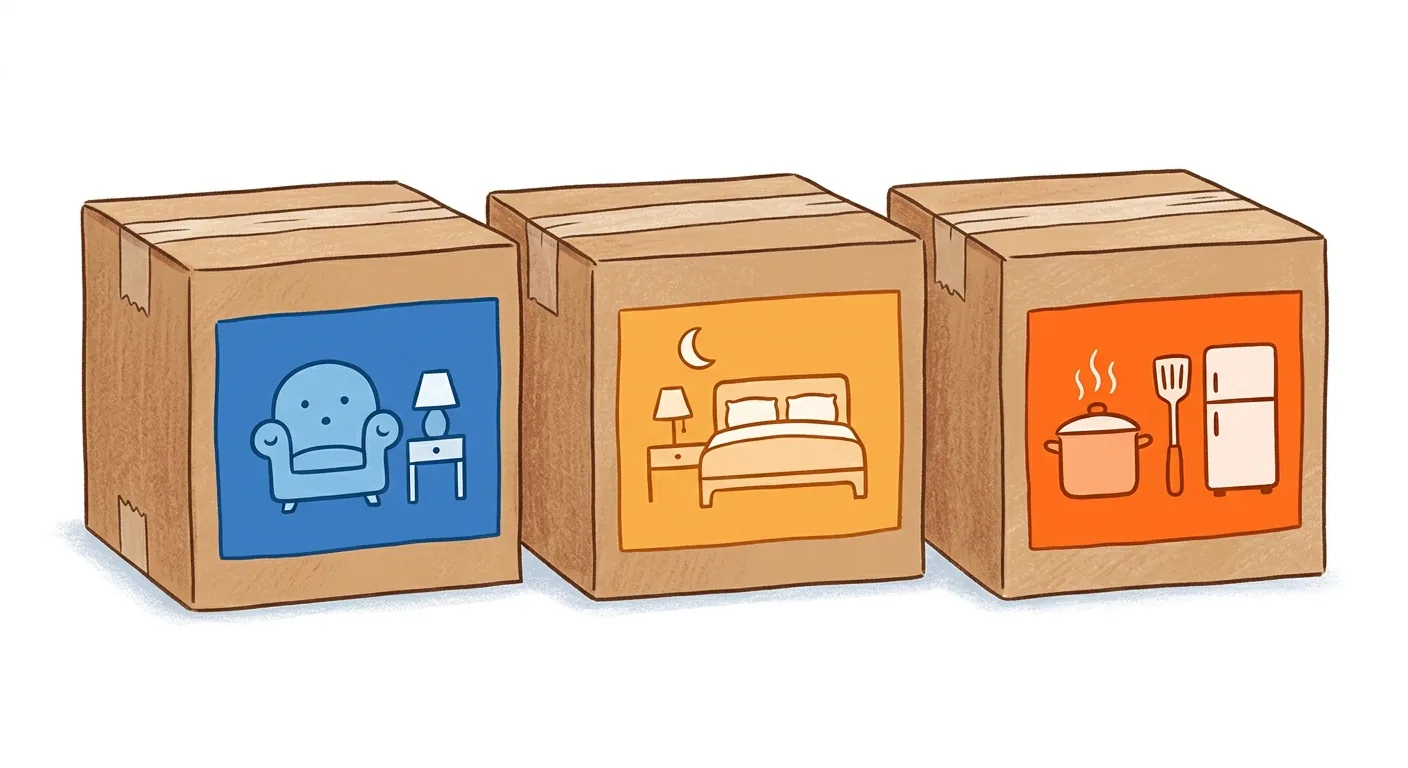
Caption: Label by room — living room, bedroom, and kitchen each get a different color code, so everything lands exactly where it belongs at the new place
Supply Checklist
Stock up on these packing supplies first: boxes in three sizes — small, medium, large (small for heavy items, large for light ones); bubble wrap and old newspaper (for protecting fragile items); packing tape; a marker and labels (for noting contents); cable ties or string (for bundling loose long items).
In our experience, it's better to buy extra boxes — you nearly always run short toward the end. Labels and a marker are the real MVPs here — an unlabeled box turns unpacking at your new place into a guessing game.
Room-by-Room Packing Order
The principle for room-by-room packing order: start with the rooms you use least. Studies, storage rooms, and off-season clothing that barely get touched can be boxed up a month ahead. The kitchen, bathroom, and current-season clothing you use daily should be packed last, in the final few days.
The advantage of this order is that your daily life during the packing period stays largely undisturbed, and once you arrive at the new place, you can follow the same logic — unpack what you need first, save the rest for later — instead of ending up in total chaos.
Fragile Items and Valuables
Fragile items and valuables need separate handling. Plates and bowls should stand on their edges (like storing records) rather than stacked flat, which handles pressure better; wrap cups and glassware individually in bubble wrap. Always label the box "fragile" on the outside as a reminder to handle it gently.
Valuables — documents, cash, jewelry, and important electronics — should never go into a general box; carry them with you. If these items get lost or damaged during the move, there's no getting them back. Labeling a box's exterior with "room + contents + fragile or not" is the key to getting everything into place in one pass.
3Too Much Stuff? Decluttering and What to Do With Unwanted Furniture
When you have too much stuff, sort it into three piles first: keep, discard, and undecided. Pack the "keep" pile and bring it with you; deal with the "discard" pile right away; and set a deadline for the "undecided" pile (for example, if you haven't used it in a year, let it go). Moving is the best opportunity for decluttering — every single item forces you to decide "is this worth the cost of moving it to the new place," and that question will push you to confront a lot of things you genuinely never use.
Don't just ship unwanted large furniture to your new home, where it takes up space and costs extra to move. Most cities and counties let you book free removal through your local sanitation team, typically requiring at least one day's advance notice (Taipei City Department of Environmental Protection, 2026). Downsizing before you move is the most cost-effective approach.
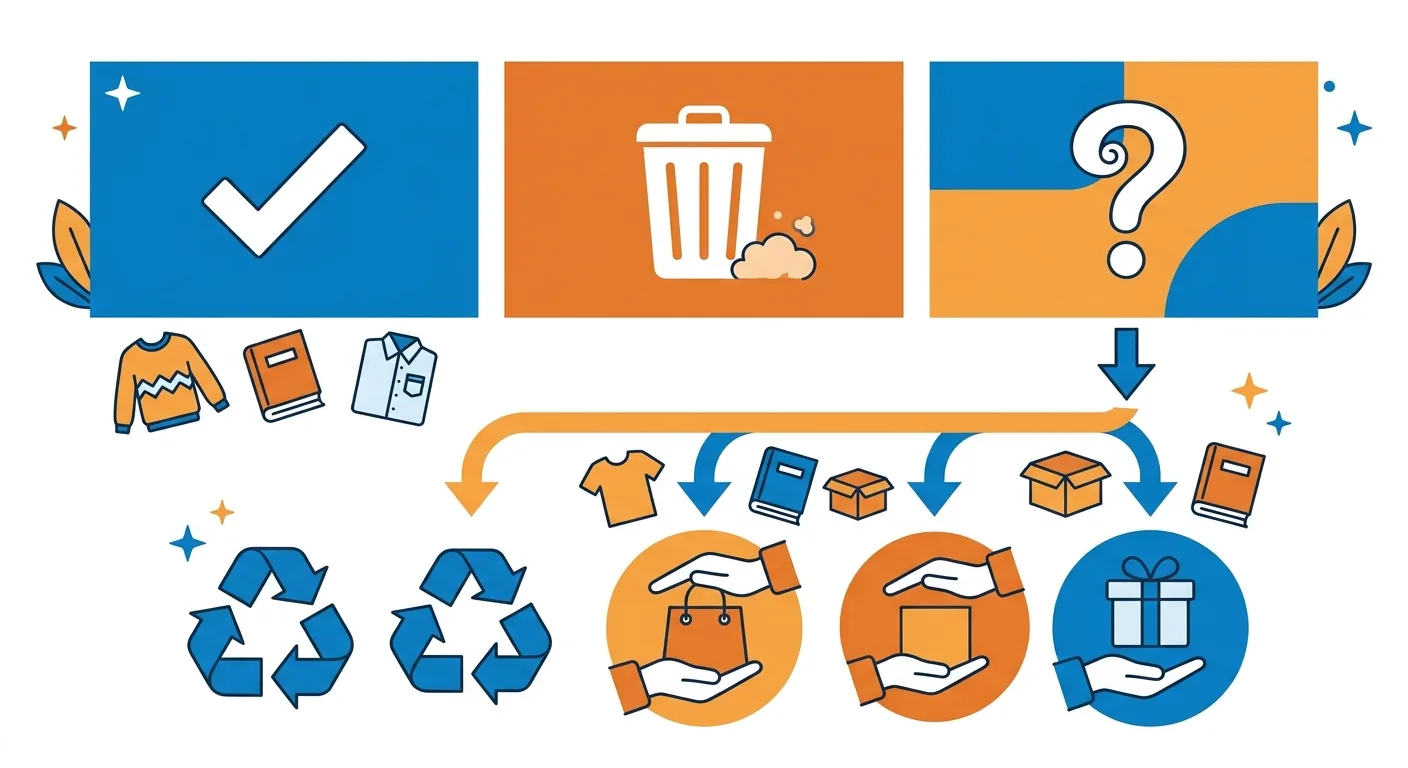
Caption: Three-pile decluttering method — keep / discard / undecided; unwanted large furniture splits into three paths — recycle, resell, or donate
The Keep / Discard / Undecided Method
The three-pile method is simple to operate. The "keep" pile is what's confirmed to come with you — pack it directly. The "discard" pile is confirmed to be dealt with — arrange recycling, resale, or donation. The "undecided" pile is the hardest, so give it a deadline — if you haven't used it within a year of moving, let it go.
The key with the undecided pile is "setting a deadline" — otherwise it turns into clutter that follows you to the new place and keeps taking up space. Handing the decision over to time is much easier than forcing yourself to decide on the spot.
Three Paths for Disposing of Large Furniture
Unwanted large furniture has three disposal paths. First, recycling: book large-waste pickup through your local sanitation team — free in most cities and counties, typically requiring at least one day's advance notice, with pickup Monday through Saturday (Taipei City Department of Environmental Protection, 2026). Second, reselling: sell or give it away through auction sites, community groups, or secondhand dealers, and you might even make a bit of money. Third, donating: furniture in good condition can go to friends, family, or a charity, so it gets a second life.
Which path to choose depends on the furniture's condition and your available time. Usable pieces go the resale or donation route; worn-out ones go to recycling — don't let unwanted furniture eat into your moving budget.
Downsizing Before You Move Saves the Most
Downsizing before you move is the single most effective money-saving move in the entire process. Every item you bring to the new place costs shipping and takes up space — moving something you don't want is essentially paying to relocate trash. Whatever doesn't fit or won't be used, deal with it before the move for the biggest savings.
This also echoes the core principle of "measure first, place first" — if it won't fit, it shouldn't be moved in the first place. To find out which large items your new home simply can't accommodate, measure ahead of time and place things once in Roomfit — see our furniture and appliance size-fit check for move-in confirmation for how to judge this.
4Who Is Self-Moving (Ant Moving) Right For? Pros, Cons, and Things to Watch Out For
Self-moving means transporting your belongings yourself over multiple trips, and it's a good fit if you're moving a short distance, don't have many items, have flexible time, and own or have access to a vehicle. It saves you a moving company's fee and lets you set your own pace, but it's time-consuming and physically demanding, can't handle large furniture, and carries a higher risk of injury or scratched belongings. Whether it's right for you comes down to distance, physical stamina, and whether the time investment is worth it.
A one-line rule of thumb: if you're moving roughly a studio apartment's worth of belongings and your old and new places are close together, self-moving works well; if it's an entire household's worth of large items, forcing a self-move usually costs you more in the end than it saves.
Who Self-Moving Suits Best
Self-moving is best suited to a few groups: renters moving to a nearby dorm or studio, people with so few items that a scooter or small car can finish the job in a few trips, and those with flexible schedules who can spread the move across multiple batches. In these situations, the money saved on a moving company can be substantial.
Conversely, if the distance is far, the item count is high, you have large furniture, or your time is tight, don't force it. The gas and time spent making a dozen trips often ends up costing more than booking a single truck — and leaves you exhausted besides.
Pros and Cons Compared
Self-moving's advantages are savings and autonomy: no moving company fee, move whenever you want, and keep an eye on your own belongings for extra peace of mind. The downsides are just as real: it's time-consuming and exhausting, requires many trips, one person can't handle large furniture alone, and there's a real risk of injury or scratched belongings.
Our suggested compromise: handle small, loose items yourself in batches, but still call a moving company or an on-demand truck for large furniture. Don't strain yourself carrying a refrigerator down the stairs just to save money — that's trading your body for cash, and it's not worth it.
Packing Electronics and Consoles in Separate Batches
Electronics and game consoles (things like a Switch or other home console) need extra care when packed in batches. If you still have the original box, use it — it's the safest option; if not, wrap items in bubble wrap and pack cables in a labeled storage bag to avoid tangling or losing anything.
For these shock- and pressure-sensitive precision items, we recommend carrying them with you rather than tossing them into a large box where they could get crushed. Consoles, hard drives, cameras — better to hold them yourself for the trip than risk them getting knocked around in a moving box.
5Plan Your New Home's Layout in Roomfit Before Moving, Then Pack and Label by Room
The most efficient way to pack is deciding "which item goes in which room" first, then boxing and labeling accordingly. Before moving, use Roomfit (roomfit.app) to place every piece of furniture at true 1:1 scale into your new home's floor plan — effectively deciding in advance what goes in the living room, the bedroom, and the kitchen. Once positions are set, pack directly by room with labels, and everything lands exactly where it belongs at the new place, with no need to move things twice.
The advantage of this sequence is that it flows in one direction. The traditional approach is to pack haphazardly, then unbox everything at the new place and figure out where things go; planning positions first means you sort things into categories while packing, and once you arrive, everything goes straight to its color-coded spot — saving a huge amount of the effort spent moving things a second time.
There's an added bonus too: planning your layout lets you confirm in advance whether your new home has room for everything. Which large furniture simply won't fit or won't have space — you'll know during decluttering and can deal with it ahead of time, instead of discovering it at the door. For the complete 1:1 placement workflow, see our complete moving and furniture measurement guide; for estimating volume ahead of time and booking the right truck in one go, see our complete breakdown of moving costs and per-truck pricing.
6Conclusion: One Checklist, One Timeline, One Layout Drawing
Whether a move turns into chaos isn't about how well you can tape up boxes — it's about whether you laid everything out ahead of time. A supplies checklist keeps you from running short, a 30-day timeline spreads out the stress, and a layout drawing gets packing and settling in done in one pass. These three things are the entire secret to going from sorting through your belongings to fully settling in.
Downsize before you move, label boxes by room, and confirm ahead of time whether large items will fit — apply the "measure first, place first" logic to your packing, and you'll find moving can actually be quite organized, without another night of frantic box-taping and searching for your toothbrush at the new place.
7FAQ
How far ahead should I start moving preparation?
We recommend starting 30 days out. A month ahead, book your moving company and start decluttering — these two take the longest; 14 days out, gather your boxes and start packing room by room; 7 days out, handle your address change and defrost your refrigerator; on moving day, inspect and check everything off. Large furniture disposal needs to happen especially early, since sanitation crews typically require at least one day's advance booking and don't operate on Sundays (Taipei City Department of Environmental Protection, 2026). Doing things gradually in batches keeps the stress from piling up on the last night.
What should be on a moving supplies list?
Stock up on: boxes in three sizes — small, medium, large (small for heavy items, large for light ones); bubble wrap and old newspaper; packing tape; a marker and labels; cable ties. It's better to buy extra boxes — you'll often run short toward the end. Labels and a marker are the most crucial items — an unlabeled box becomes a guessing game once you're at the new place. Labeling the exterior with room, contents, and fragile status is the key to getting everything into place in one pass.
I have too much stuff moving, what do I do with furniture I don't want?
Use the three-pile method first: keep / discard / undecided, with a deadline for the undecided pile — if it's unused by then, let it go. Unwanted large furniture has three paths: recycling (book through your local sanitation team, free in most cities and counties, requiring at least one day's advance notice), reselling (through auction sites or community groups), and donating (to friends, family, or charity) (Taipei City Department of Environmental Protection, 2026). Downsizing before the move saves the most — don't ship unwanted furniture to your new home only to pay extra to move it and have it take up space.
Is self-moving (ant moving) right for me?
It suits people moving a short distance with few items, flexible time, and access to a vehicle — for example, a renter moving to a nearby studio. The upside is saving on a moving company's fee and setting your own pace; the downside is that it's time-consuming and exhausting, can't handle large furniture, and carries a higher risk of injury or damage. We recommend handling small loose items yourself in batches, while still calling a moving company or an on-demand truck for large furniture — don't strain yourself carrying a refrigerator downstairs just to save money.
How should I arrange packing so everything lands in place at the new home in one pass?
First use Roomfit to place your furniture at 1:1 scale into your new home's floor plan, deciding which room each item goes in, then box and label by that placement (different color codes for living room, bedroom, kitchen). Once at the new place, everything goes straight to its color-coded spot, saving you from moving things twice. Planning your layout also confirms in advance whether everything will fit — during decluttering, you'll already know which large items won't fit and can deal with them ahead of time.
8Related Reading
- Complete Small-Space Storage Planning Guide: From Seasonal Storage to System Cabinet Traffic Flow
- Lunar New Year Home Decor and Deep-Cleaning Guide: Storage Solved in One Pass
- Complete Furniture Dimension Reference: Confirm Whether Large Items Will Fit
9References
- Taipei City Department of Environmental Protection – How Household Bulky Waste (Large Discarded Items) Is Collected
- Taoyuan City Environmental Management Department – Online Booking System for Bulky Furniture Waste Removal
- Recycling Encyclopedia – 2026 Guide to Large Furniture Recycling: Book Pickup in Advance