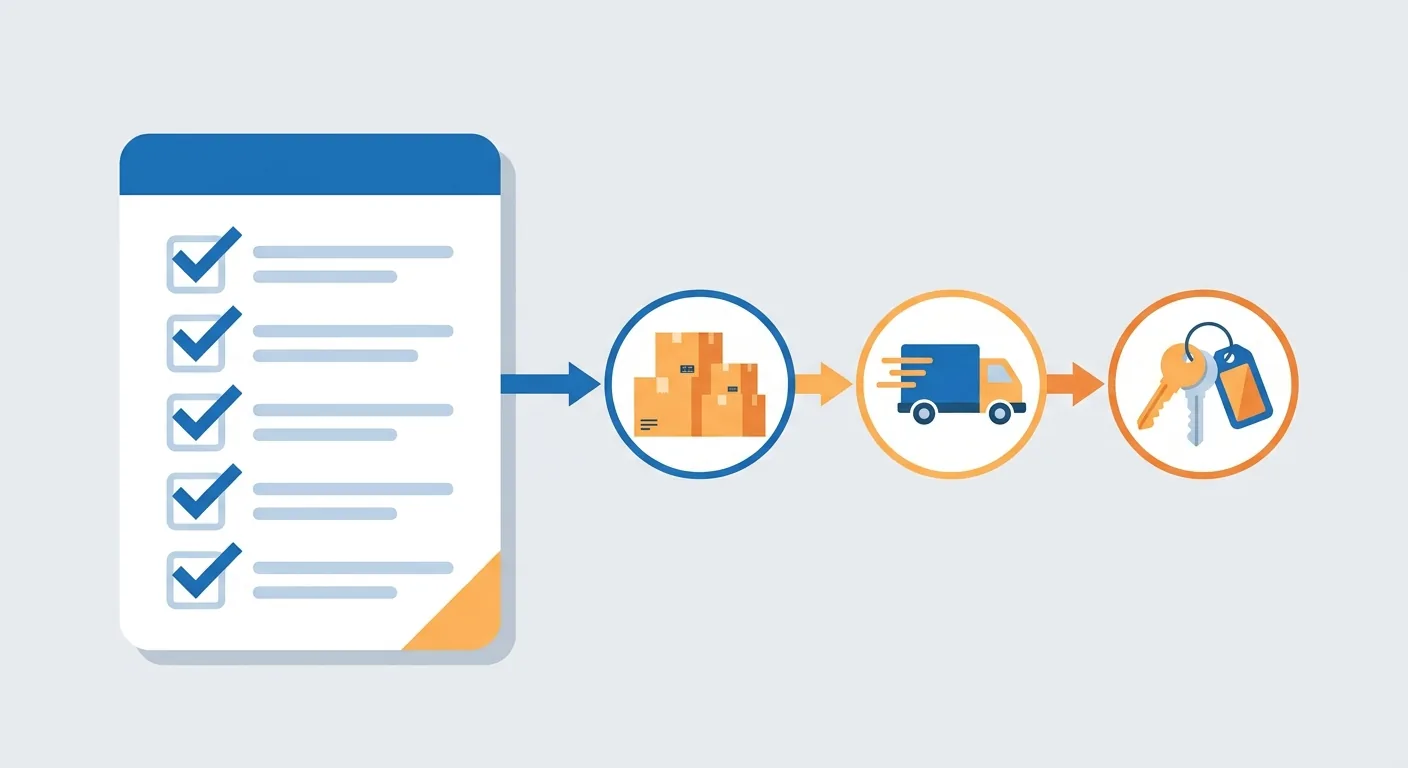
The scariest part of moving isn't the price — it's watching the final bill blow past the quote. You see NT$2,000-something online, then the actual invoice jumps to five or six thousand. Where's the gap coming from? Usually it's hiding in floor fees, overtime charges, and oversized-item surcharges — the line items that only show up once the crew is already at your door.
This article is the cost-focused companion to our Complete Guide to Measuring and Placing Furniture When Moving. We'll break down the four variables behind moving costs, give you a rate table, explain why bills end up higher than quotes, and compare DIY moving versus hiring a company. By the end, you'll see that nailing your budget starts with measuring your furniture's volume first.
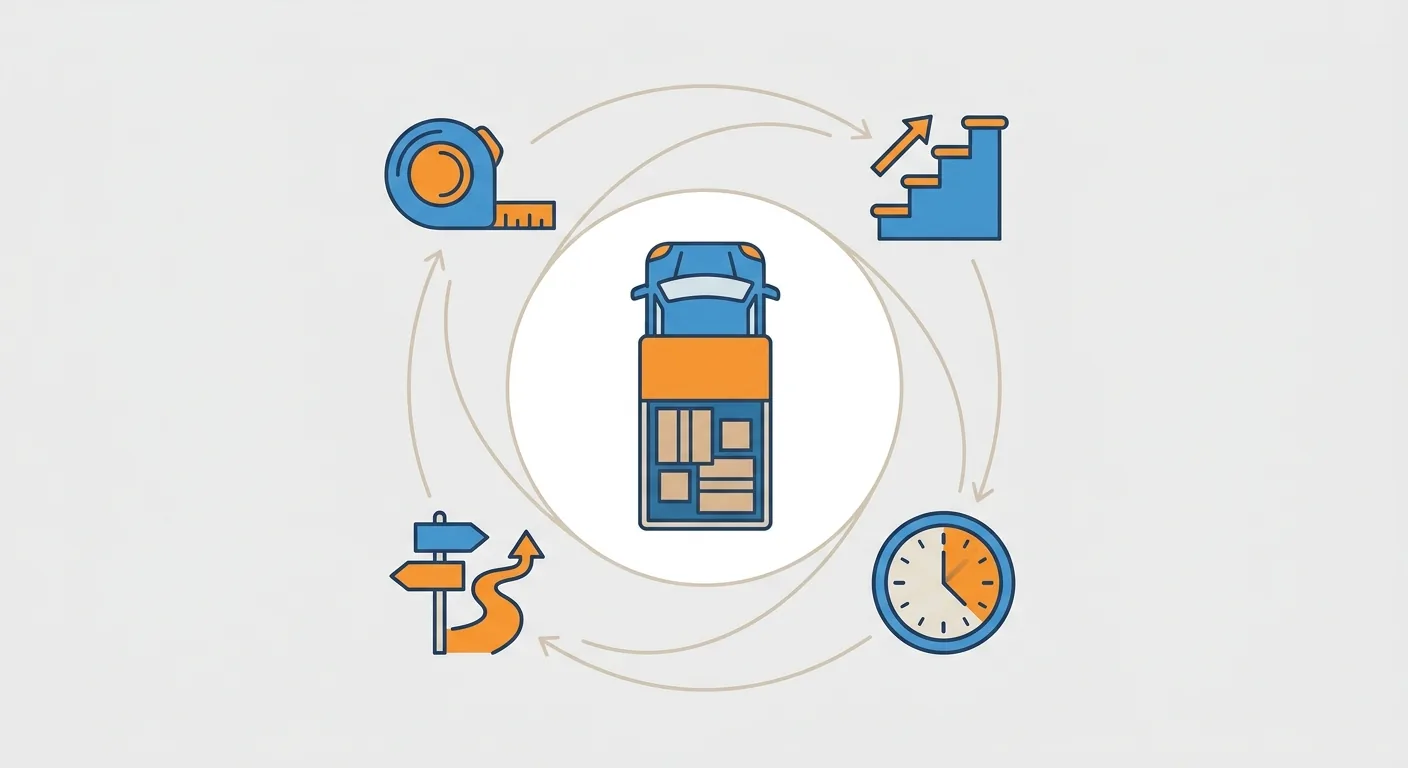
Caption: The four variables behind moving costs — truck volume, floor level, overtime, and distance — together determine the final quote
Key takeaway: There's no single fixed price for moving. Take the most common 5-ton truck as an example — one truckload typically runs NT$2,800 to NT$5,800, varying with floor level and service scope (PRO360, 2026). Getting an accurate quote starts with estimating your total volume correctly and booking the right truck the first time.
1How Much Does a Truckload Cost? Rates by Truck Size, Tonnage, and Distance
How much does a moving truck cost per load? It depends on four variables — truck tonnage × distance × floor level × item count — so there's no single fixed price. Take the most common 5-ton truck: the base rate for one truckload typically runs NT$2,800 to NT$5,800, varying by floor level (PRO360, 2026). Pick the wrong tonnage and you either can't fit everything in or you overpay for space you didn't need.
How do you choose the right truck size? A studio apartment or a single person with few belongings can get by with a small truck; a full family home with large furniture needs a bigger one. Get the tonnage right and you avoid paying for empty space in an oversized truck — or cramming everything into a small one and being forced to call a second trip.
1-Ton vs. 3.5-Ton: Which One Do You Need?
The small 1.75-ton truck suits studios and light loads — the base rate for a same-city move with no stairs runs about NT$1,500 to NT$2,500 (PRO360, 2026). This size truck fills up with roughly a refrigerator, a bed, a few cabinets, and a dozen or so boxes.
The 3.5-ton class (often filled today by 5-ton trucks) suits one- to two-bedroom households. According to moving companies, a 3.5-ton truckload runs about NT$2,800 to NT$3,000, while an 8-ton truck runs about NT$8,500 to NT$9,000 (Moverman, 2026). The simplest way to decide: add up the total volume on your furniture list, see which truck's capacity band it falls into, and book that one.
How Distance and Floor Level Multiply the Cost
Distance and floor level act as multipliers on your quote. A short same-city move is cheapest; a long cross-county move adds travel time and fuel costs. Floor level has an even more direct impact — whether there's an elevator makes a huge price difference. With an elevator, furniture rides up and down and costs stay flat; without one, the crew has to carry everything up the stairs by hand, and every floor adds a surcharge.
That's why the same truckload of the same belongings can get wildly different quotes for you and a friend. Nobody's getting ripped off — the variables are just different. When you request a quote, spell out the floor number, whether there's an elevator, and the distance from parking to your door, so the company can quote accurately.
Rate Table by Service Tier
Here's a table of typical per-truckload rates by service tier. These figures are reference ranges only — actual pricing varies by region, time slot, item count, and scope of service, and isn't a fixed quote.
| Service Tier / Truck Type | Per-Truckload Rate | Best For |
|---|---|---|
| DIY move (rent a truck yourself) | NT$1,500–2,500/truck | Few items, extra hands, tight budget |
| Economy moving service | NT$2,500–3,000/truck | Simple item count, some self-help |
| Full-service moving | NT$4,000–5,000/truck | Whole household, disassembly and protection needed |
| Hands-off (white-glove) moving | NT$5,500–6,000/truck | Fully handled for you, tight schedule |
(Source: PRO360, 2026; figures are reference ranges and vary with actual conditions.)
2Floor Fees, Overtime Charges, and Surcharges: Why the Bill Is Higher Than the Quote
In eight out of ten cases, a bill that's higher than the quote comes down to surcharges that weren't factored in. Carrying items up stairs typically adds NT$300–500 per floor, hauling items an extra 10 meters adds about NT$100–250, and a night move adds roughly NT$500–1,000 per truck (PRO360, 2026). These aren't random add-ons — they're published variables. But if you don't ask and the company doesn't volunteer them, the gap only shows up when it's time to pay.
There's only one way to avoid surprise charges: spell out your item count and dimensions ahead of time. Incomplete information means the surcharges only surface once the crew is already on-site — and that's the most expensive way to find out.

Caption: The anatomy of a moving bill — base fare + floor fee + overtime fee + oversized-item surcharge stack up layer by layer
Floor Fees and the Elevator Difference
Floor fees are one of the biggest hidden costs. With an elevator, furniture rides up and costs stay flat; without one, the crew carries everything up by hand, adding roughly NT$300–500 per floor. A fifth-floor walk-up alone can add an extra one to two thousand dollars in floor fees.
When requesting a quote, always specify the floor number, whether there's an elevator, and whether the elevator can actually fit your large items. If the elevator's too small for a big wardrobe, it still has to go up the stairs — and if you don't mention that detail up front, you'll get charged for it on-site anyway.
How Overtime Charges Work
Overtime charges come from either on-site waiting or the move running long. If the job isn't finished within the booked time slot, the extra time starts getting billed. Common causes are unfinished packing, more items than estimated, or a bottlenecked path on-site.
To avoid overtime, finish packing and plan your furniture placement before the crew arrives. If the movers can just follow a placement plan and put items straight into position — instead of waiting on you to decide "where does this go" mid-move — the time savings take care of themselves.
The Surcharge List for Oversized Items
Special oversized items carry their own surcharges. Heavy or oversized pieces like pianos, safes, extra-large side-by-side refrigerators, or marble tables typically add NT$1,500–3,000 per trip; if a crane is needed to lift something through a window, crane service runs about NT$2,500–3,000 per hour (PRO360, 2026).
These are the surcharges most likely to blindside you on-site. A large wardrobe that won't fit in the elevator and suddenly needs crane service can double your cost on the spot. Measuring dimensions and confirming your access route beforehand is exactly how you prevent that kind of surprise.
3DIY Move vs. Hiring a Moving Company: How to Estimate the Better Deal (Including Storage Rental Costs)
Whether a move is worth it comes down to total cost, not the sticker price. Renting a truck for a DIY move runs about NT$1,500–2,500 and saves you labor costs, but you take on the risk and the physical strain yourself, and you may need transitional storage. Hiring a company costs more upfront but buys you time, effort, and fewer injuries. Which one's the better deal depends on your item count, distance, and timeline.
The decision rule is actually simple: if you have few items, a short distance, and extra hands, DIY makes sense. If you're moving a whole household with large furniture on a tight timeline, hiring a company pays off. Don't just look at the sticker price — factor in the hidden costs too.
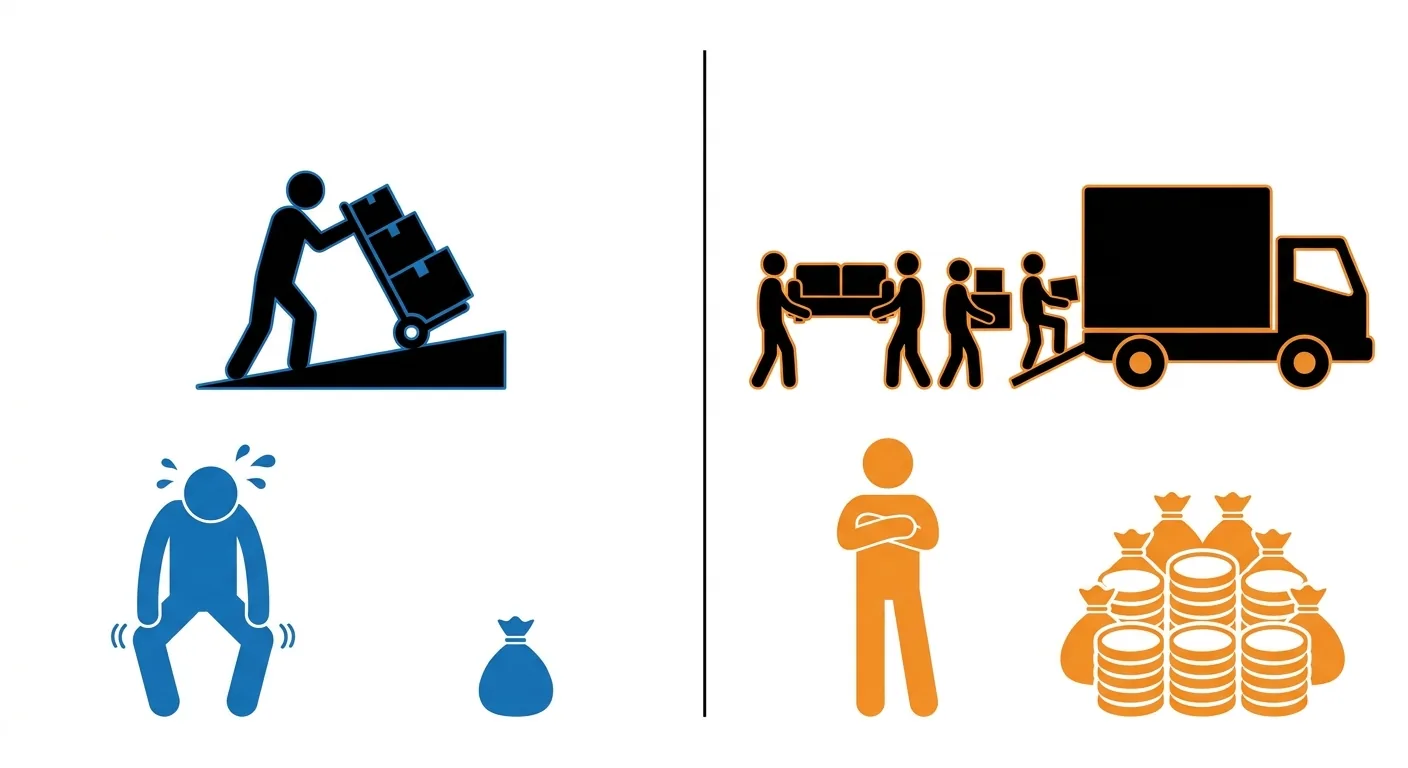
Caption: DIY (left) saves on labor costs but puts the risk on you; hiring a company (right) costs more but saves time, effort, and injury
The Hidden Costs of DIY
DIY moving looks like the cheapest option, but the hidden costs are easy to underestimate. Beyond the truck rental, there's fuel, tolls, the social debt and meals for friends who help out, and — most importantly — your time and risk of injury. When two or three non-professionals wrestle large furniture around, the odds of scraping a wall, scratching the floor, or throwing out your back aren't small.
We know a friend who roped in three coworkers to save on a moving company, only to have the mattress stuck in the stairwell for half an hour and end up scratching the new place's doorframe — the damages cost more than the savings. Real savings means totaling up the whole bill, not just the truck rental line item.
How to Estimate Transitional Storage Rental
When there's a gap between your old and new place, or you're decluttering in batches, renting transitional storage is an option. Costs are calculated by floor area and rental period — a small mini storage unit works for a small batch, while storing an entire household needs more space, and the cost adds up.
Whether storage rental is worth it depends on how long the gap is. If it's only a few days, asking a friend to hold your things or scheduling the move for the same day is cheapest; only consider storage if the gap runs longer than a week or two. Multiply the rent by the rental period and compare it against the cost of an extra moving trip — the numbers will speak for themselves.
When Hiring a Company Makes More Sense
For a full-household move with lots of large furniture and a tight timeline, hiring a company is almost always worth it. What you're paying for is professional disassembly, protection, and moving experience — plus the value of your time, not taking leave from work, and not getting hurt. Households with valuables or fragile items also get an extra layer of liability protection.
If you want to compare moving companies' reputations, pricing, and brands, our Guide to Moving Company Reviews and Moving Tools has a complete framework for evaluating them. Whether you go DIY or hire a company, measuring your dimensions first is always step one for an accurate cost estimate.
4Measure Your Furniture's Volume Before You Book a Truck: Avoiding the Hidden Cost of a Second Trip with Roomfit
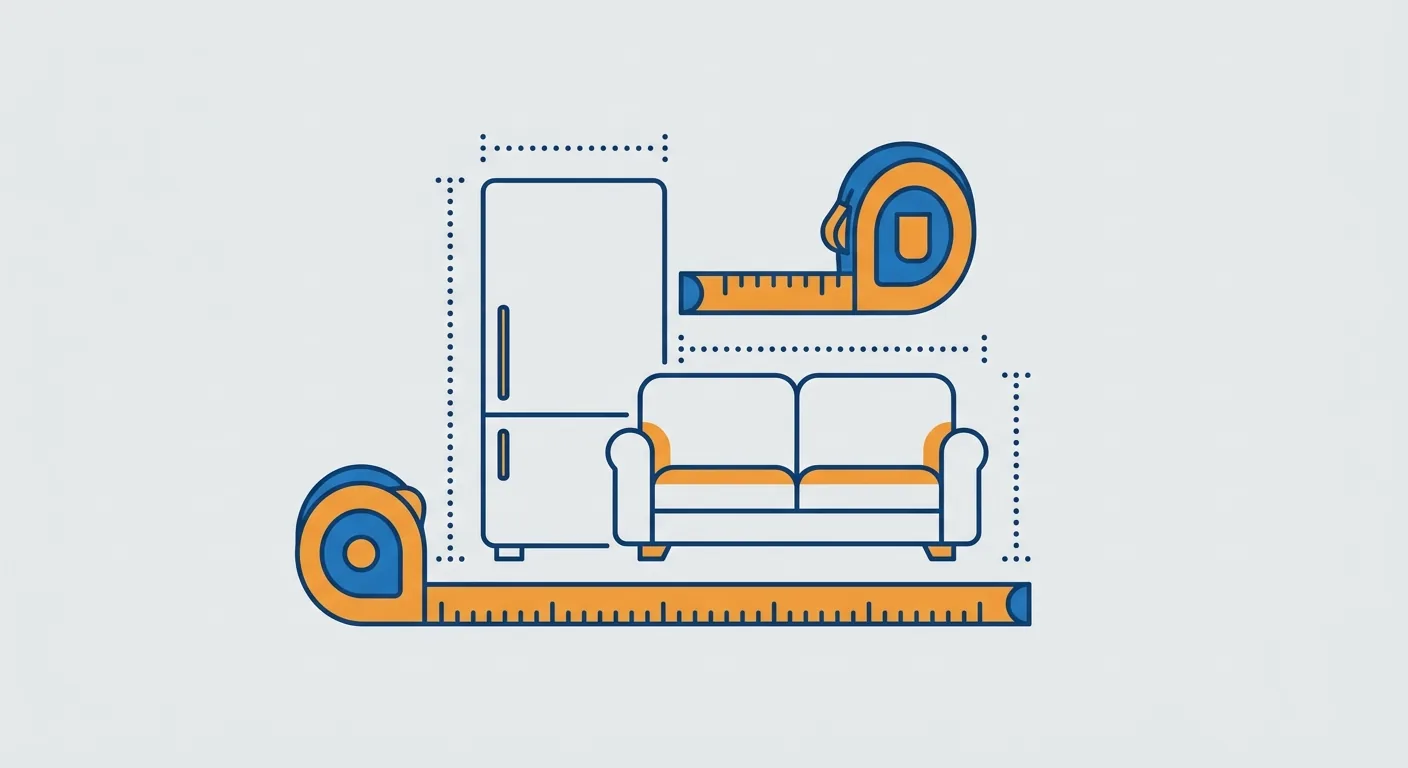
The most expensive hidden cost in moving is discovering on-site that everything doesn't fit and being forced to call a second truck. At roughly NT$2,800–5,800 per truckload for a 5-ton truck (PRO360, 2026), calling a second trip means paying that amount all over again. The way to avoid it is to lay out your furniture at true 1:1 scale in Roomfit (roomfit.app) before moving day, export a furniture list, and estimate your total volume and item count up front.
With your volume and item count in hand, you can book the right truck tonnage on the first try. Instead of guessing "a 3.5-ton truck should be enough," you match your list against each truck's capacity band and know exactly how many trucks — and what size — you need.
We've tried exporting a furniture list first and then requesting quotes from three companies — the speed and consistency of their quotes noticeably improved, because the item count and dimensions were laid out on paper with no ambiguity. An exported list also makes your quote conversations more precise. When you spell out item count and dimensions upfront, the moving company doesn't need to re-estimate on-site, which leaves less room for surprise charges. For the full measurement checklist and 1:1 placement workflow, see our Complete Guide to Measuring and Placing Furniture When Moving; for dimensions and fit checks across furniture and appliance types, see Furniture and Appliance Size Fit Checks Before You Move In. If you want to avoid peak-season pricing and pick a cheaper off-season date, check out Choosing an Auspicious Moving Date and Avoiding Peak Season.
5Conclusion: Estimate Your Volume Right, and the Cost Follows
Moving costs spiral out of control not because you're being ripped off, but because a variable got missed. Truck size, distance, floor level, and item count are the four core variables — add in on-site items like floor fees, overtime charges, and oversized-item surcharges, and missing even one means your bill will run higher than your quote.
Nailing your budget starts with measuring your furniture's volume clearly. Get the dimensions right, estimate the volume correctly, and you'll book the right truck; book the right truck, and your quote won't jump on the day. Measure first, plan your layout, then book the truck — that's how you pay for this move with your eyes open.
6FAQ
How much should a moving truckload reasonably cost?
There's no single fixed price for moving — it's set by truck size, distance, floor level, and item count. For a 5-ton truck, one truckload typically runs NT$2,800–5,800; a small 1.75-ton truck for a same-city move with no stairs runs about NT$1,500–2,500 (PRO360, 2026). Whether a price is reasonable depends on the scope of service — get quotes from multiple companies and spell out your floor level and item count before comparing.
How are moving floor fees calculated?
Floor fees come from having no elevator, so the crew has to carry items up the stairs by hand — typically adding NT$300–500 per floor (PRO360, 2026). With an elevator that fits your large items, costs stay flat; without one, or if the elevator can't fit large pieces, the surcharge adds up floor by floor. When requesting a quote, always specify your floor number, whether there's an elevator, and whether it can fit your large furniture, so you don't get surcharged on-site.
What's the going rate for a 3.5-ton moving truck?
According to moving companies, a 3.5-ton truckload typically runs NT$2,800–3,000, and an 8-ton truck runs about NT$8,500–9,000 (Moverman, 2026). This size suits one- to two-bedroom households. Prices vary with floor level, distance, and item count — the key to choosing the right truck is adding up your furniture's total volume first and matching it to the right capacity band.
Is a DIY move really cheaper?
Not necessarily. Renting a truck yourself runs about NT$1,500–2,500, which looks like the cheapest option, but you need to add fuel, social debt to helpers, time, and injury risk. When non-professionals wrestle large furniture, the odds of hitting a wall, scratching the floor, or throwing out a back are high — the damages can outweigh the savings. DIY makes sense with few items, a short distance, and extra hands; for a full household or lots of large items, hiring a company is usually the better deal.
How do I estimate transitional storage rental costs?
Storage rental costs are calculated by floor area and rental period — a short-term mini storage unit works for stashing a small batch. Whether it's worth it depends on the length of the gap: if it's only a few days, asking a friend to hold your things or scheduling everything on the same day is cheapest; only consider storage once the gap runs longer than a week or two. Multiply the rent by the rental period, compare it against the cost of an extra moving trip, and decide from there.
7Related Reading
- Roomfit Furniture List Export Guide: One-Click Export for Your New Home's Item List
- Roomfit Measuring and Scale Tool Guide: Calibrating Your Floor Plan Scale
- Complete Furniture Dimensions Reference: Measure Right Before You Estimate Volume
8References
- PRO360 — How Are 2026 Moving Company Costs Calculated? Latest Rates and Price List
- Moverman — How Is Moving Truck Cost Calculated? The Difference Between 8-Ton and 3.5-Ton Trucks
- Ministry of Transportation and Communications — Standard Moving/Freight Contract Template and Consumer Information
- Executive Yuan — Standard Moving/Freight Contract Template