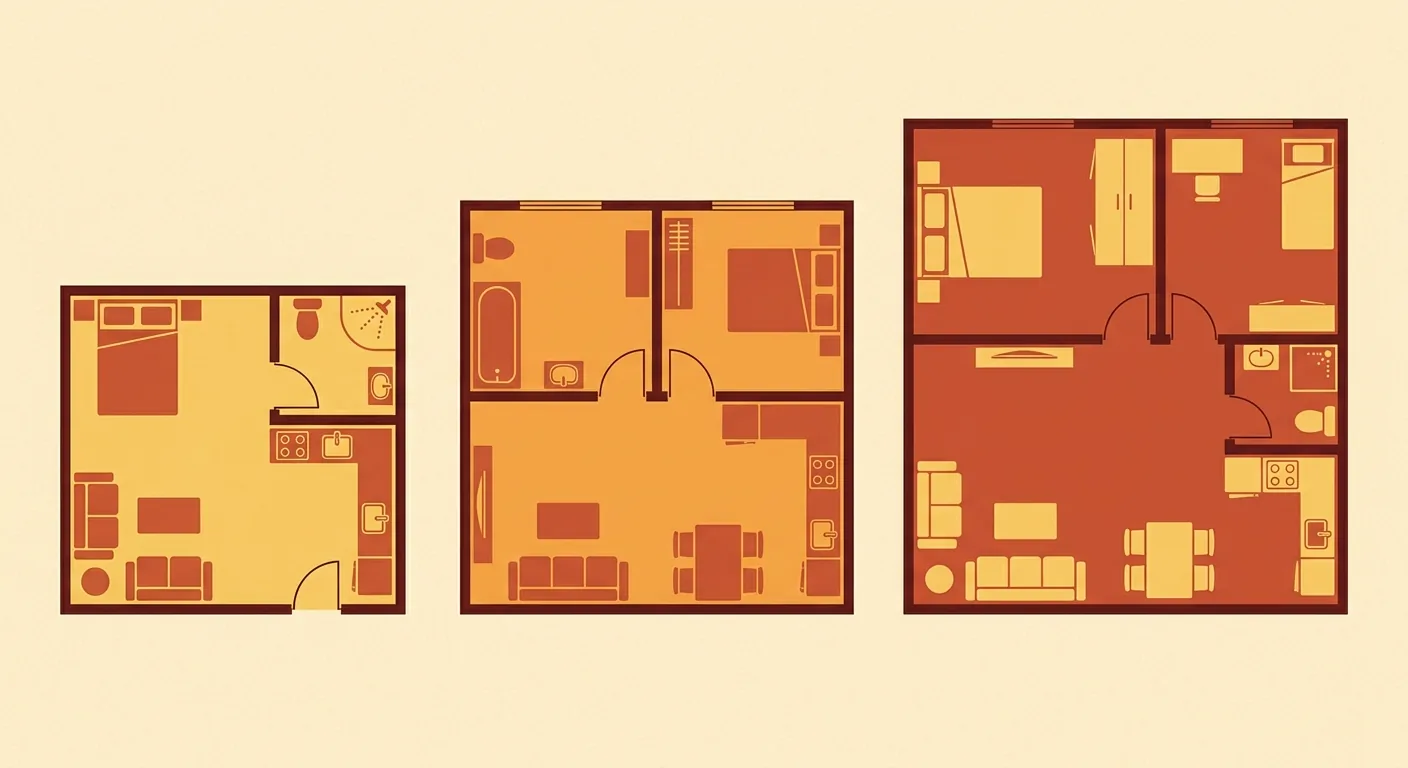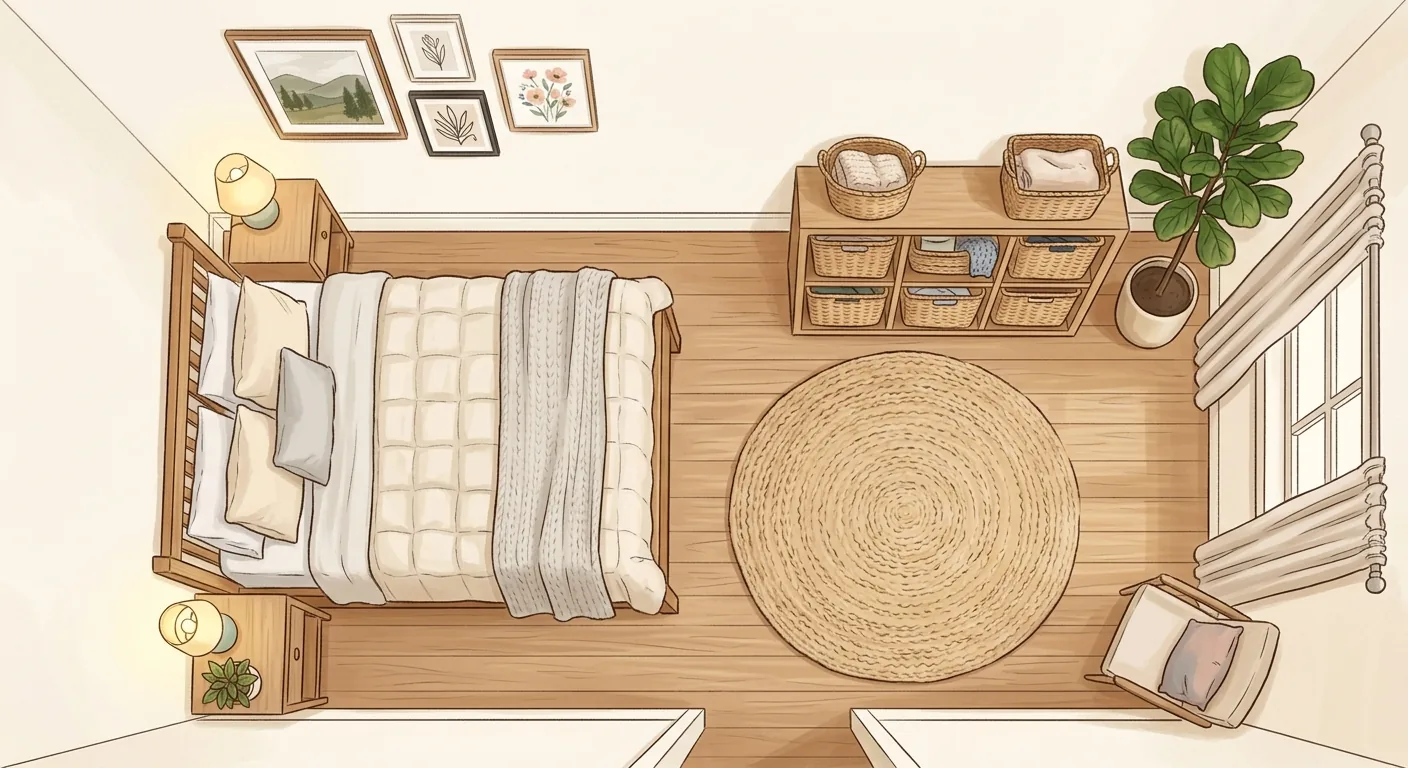

You've bought a pile of storage boxes, and the place is still a mess - that's a frustration a lot of people share. The problem isn't that you're not trying hard enough. It's that the order is backwards. Storage isn't about "buying more boxes to cram things into" - it's about first figuring out how much you actually own and how you use it day to day, and only then deciding where it goes.
1Storage Keeps Failing? The Planning Order Is Usually Backwards
Taiwanese households own more clutter than most people realize. Psychiatrists estimate that nearly a million people across Taiwan show hoarding tendencies, at a rate of roughly 8% to 10% (EBC News, 2024). Things pile up because no one can bear to throw them out, and no cabinet - however large - stays organized for long. Small spaces suffer the most: with limited square footage, getting storage wrong takes a direct toll on quality of life.
This article upgrades storage from "stuffing things in" to "designing a system": the right order to work in, how to handle seasonal storage, which zones small spaces should prioritize, whether hiring a professional organizer is worth it, and one habit that saves you from a costly mistake before you order storage furniture. To get the overall layout right first, pair this with The Small-Space Room Layout Playbook, our hub guide for the topic.
Caption: The storage planning order: 1. Take inventory of your belongings 2. Study your traffic flow 3. Sort and assign a spot to each item 4. Only then choose storage furniture
Key takeaway: Take inventory before you buy furniture, not the other way around. Psychiatrists estimate nearly a million people across Taiwan show hoarding tendencies, at roughly 8%-10% (EBC News, 2024) - small spaces especially need planning to make up for the lack of square footage.
2The Right Order for Storage Planning: Inventory and Traffic Flow First, Then Storage Furniture
The first step in storage planning isn't shopping - it's taking inventory. You need to know how much you own and how you actually use it before you can decide where each category belongs and how much storage capacity you actually need. Buying boxes first only creates more corners where things get stuffed in but are hard to retrieve. Get the order right, and storage stops being a one-time cleanup and becomes a system you can maintain long-term.
Take Inventory Before You Store Anything - Don't Buy Boxes First
Taking inventory sounds like a hassle, but it's actually the step that saves you the most money. Pull everything from the same category out and lay it all together, and you'll find duplicates, broken items, and things you haven't touched in years. Once you've done this and let go of what needs letting go, the storage capacity you actually need is often far smaller than you assumed.
People who buy boxes first often end up with "boxes storing boxes." We've seen plenty of cases like this: someone buys a full set of storage bins, only to find they don't fit the cabinet, or forgets what's even inside them. Decide what you need to store first, then go shopping for the right container - never the other way around.
Let Traffic Flow Decide Where Things Go
Once inventory is done, look at your traffic flow next. Store an item near wherever you actually use it. Keys by the door, refills near the point of use, the clothes you wear most often at the most convenient height - that's what "let traffic flow decide the spot" means.
Smooth traffic flow is what keeps storage from sliding back into chaos. If retrieving something takes three steps and opening two doors, you'll stop putting it back once you're done with it. Small spaces already have short traffic paths by nature, which makes it even more important to keep high-frequency items within arm's reach. If you want to plan the sleeping and work zones together at the same time, The Small-Space Layout Guide by Room covers zone-by-zone approaches you can reference.
3How to Handle Seasonal Storage: Seasonal Storage Bags, Vacuum Bags, and High Shelves
The key to seasonal storage is "sort by frequency, store high." Sort by season and how often you use each item first - keep the current season's frequently used items within easy reach, and move off-season items to high shelves and under-bed space. That way, the things you reach for daily stay right where you need them, while the bulky off-season clothing goes into a zone you rarely touch anyway.
The Sorting and Packing Order for Seasonal Storage
Packing has a sequence. Declutter first - clear out anything you haven't worn in a year, so you're not wasting bag space on things you don't even want. Then sort by "thickness" and "material": thick coats in one bag, knits in another, anything that crushes easily kept separate. Sort clearly, and next season you won't have to dig through everything to find what you need.
Label as you pack, or use clear bags - it makes finding things much faster later. Have you ever dug through every storage bag you own just to find one jacket? Sorting and labeling exist precisely to spare you that hassle.
How to Combine Seasonal Storage Bags, Vacuum Bags, and High Shelves
Seasonal storage bags and vacuum-sealed bags each suit different situations. Vacuum bags work well for bulky, space-hungry items like down jackets and comforters - once the air is sucked out, the volume shrinks dramatically. One caveat: long-term vacuum compression damages wool and down fibers and they never fully regain their loft, so only compress these for a season at a time, not for long-term storage.
High shelves are a great partner for seasonal storage. The top of a cabinet or wardrobe is exactly right for off-season, low-frequency items. Just watch safety - keep heavy items off the highest shelves, and brace yourself properly when retrieving anything from up there so nothing falls on you. If you want to line up seasonal storage with your pre-Lunar-New-Year deep clean, The Lunar New Year Home Decor and Deep Cleaning Guide has a zone-by-zone progress approach worth extending into.
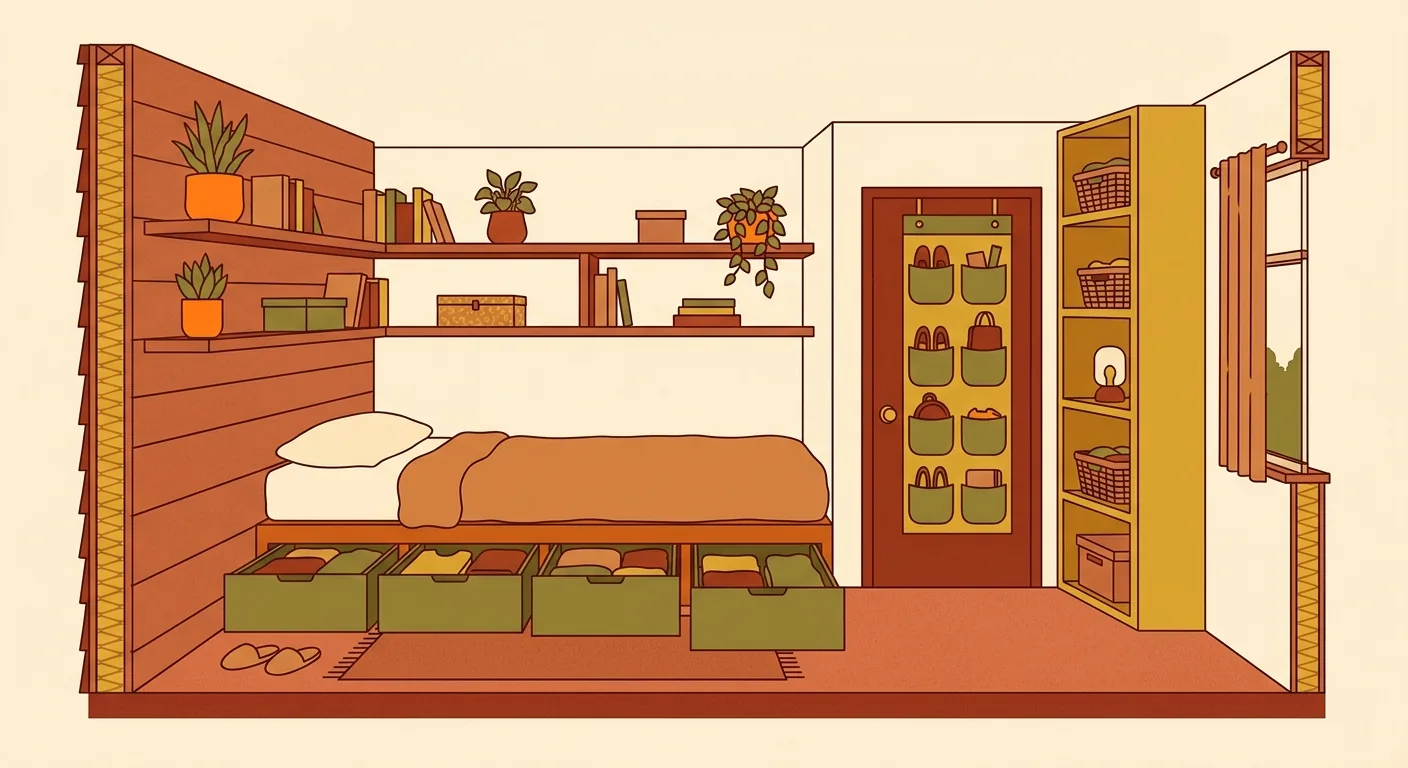
Caption: The four key storage zones for a small space: 1. Under the bed 2. Wall space 3. Behind doors 4. Awkward corners - claim vertical space and dead zones
4Key Storage Zones for Small Spaces: Under the Bed, Walls, Behind Doors, and Awkward Corners
For small spaces, claim "vertical" and "dead" space, and leave the floor free for traffic flow. The four zones to prioritize are: under the bed, wall space, behind doors, and the awkward corners around beams and columns. These four spots are often overlooked, yet they hold the biggest hidden capacity in a small space.
Vertical Storage Under the Bed and on Walls
The space under a bed is prime storage real estate in a small studio. A bed with built-in drawers, a lift-up frame, or under-bed storage bins let you "reuse" the entire footprint the bed already occupies. It's a great fit for off-season clothing, comforters, and luggage.
Walls, meanwhile, are space that grows upward. Shelving, pegboards, and hanging hardware turn a wall from decoration into storage. Books, everyday small items, and kitchen tools can all go up on the wall. The principle: leave the floor for walking, use the walls for storing.
Fill-In Storage Behind Doors and in Awkward Corners
The back of a door is the spot people most easily overlook. An over-door hanging organizer and a few hooks can hold cleaning supplies, odds and ends, and accessories. It's a small footprint, but it fills gaps effectively.
Awkward corners - under beams, next to columns, in odd angles - are best filled with custom builds or a narrow cabinet repurposed for the space. Standard furniture won't fit these spots, but they're often the last remaining capacity in a small home. One reminder: don't cram things in just to fill the space - overpacking makes it harder to get things back out, so leave a little breathing room to keep it maintainable.
5Should You Hire a Professional Organizer? Weighing DIY Against Paid Planning
Is it worth paying for a professional organizer? It depends on how much you own, how much time you have, and your budget. A professional organizer handles inventory, traffic flow design, cabinet spec recommendations, and coaching on storage habits - a good fit if you own a lot, are short on time, or want everything sorted in one go. Doing it yourself saves money, but costs you time to learn and experiment.
What a Professional Organizer Actually Does, and Who It's For
A professional organizer does more than just "tidy up for you." They start by taking inventory of your belongings and understanding your lifestyle habits, then design where each category goes and what storage furniture specs you'll need - some will even help you declutter along the way. If you own a lot, or you're about to invest in built-in cabinets, going pro can save you from a lot of trial and error.
Who's it for? People moving into a new home who want everything planned in one go, people who've been stuck under clutter for a long time and can't find a way out on their own, or people too busy with work to sort it out slowly. If you don't own much and actually enjoy the process of organizing yourself, you probably don't need one.
DIY vs. Paid Planning: The Trade-Off
Weigh DIY against paid planning across three dimensions: budget, time, and complexity. If your budget is tight, your time is flexible, and your belongings are simple, DIY is entirely workable. On the flip side, if you own a lot of complicated stuff and time is short, paying a professional may actually be the better deal.
Be realistic about cost - professional organizer fees vary widely by scope, square footage, and region, and may be charged by area, by the hour, or by project; there's no single fixed number. Get quotes directly from providers and confirm the scope of service before deciding - don't be misled by a single "going rate." But whether you do it yourself or hire help, the premise is the same either way: sort out your belongings and traffic flow first.
6Before Ordering Storage Furniture, Confirm Cabinet and Swing Clearance at 1:1 Scale
Storage furniture - built-in cabinets especially - is hard to change once it's custom-made. The most common trap isn't "the cabinet doesn't fit" - it's "the cabinet fits fine, but the drawer or door catches on the bed or the walkway when you open it." Built-in cabinet pricing itself already varies widely by material, size, hardware, and region, so it's even more worth confirming your space before you place the order, so a custom-build fee doesn't go to waste.
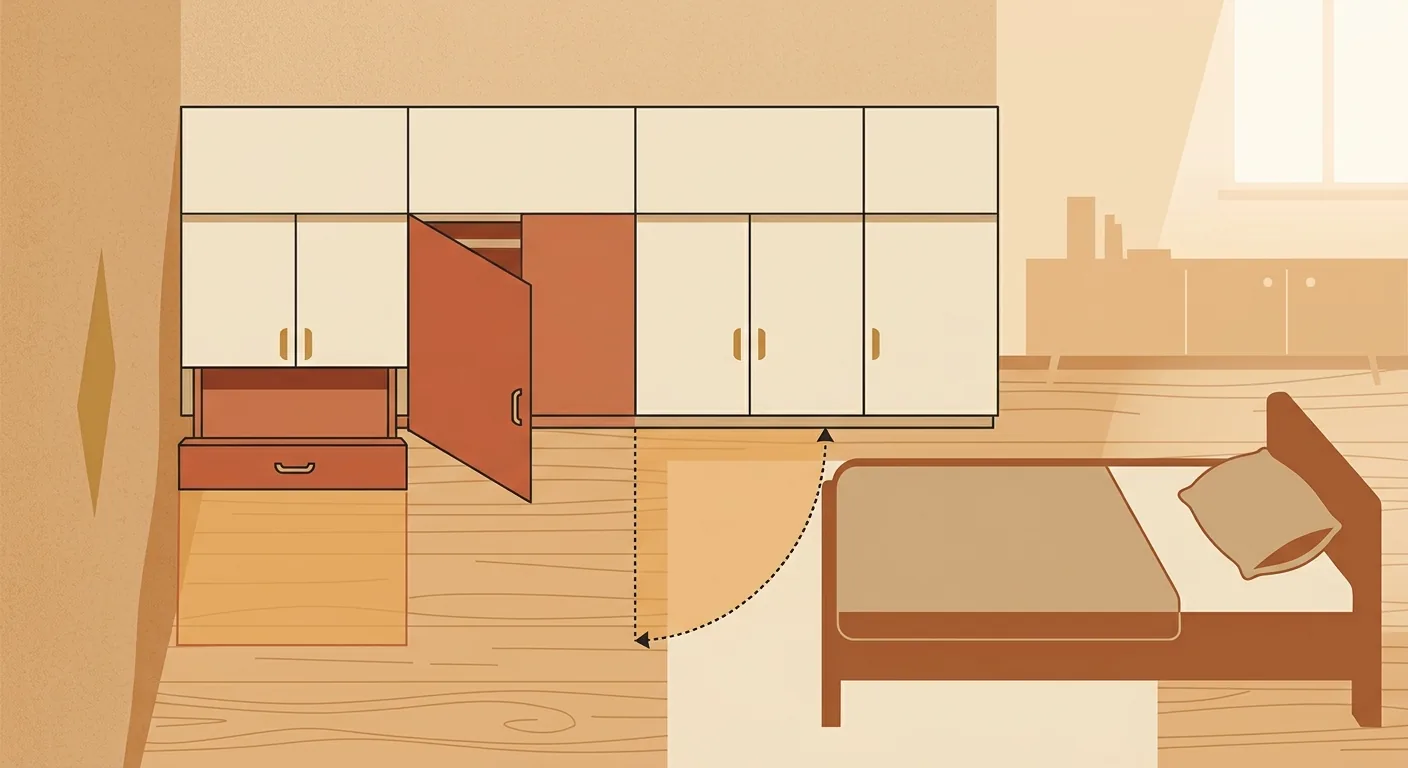
Caption: Factor in "swing clearance" along with the cabinet itself - make sure the space a drawer or door needs to open doesn't hit the bed or the walkway
Our experience is that a lot of people measure a cabinet's width, height, and depth and place the order right there, forgetting to calculate the clearance the door needs to swing open. A drawer 60 cm deep needs at least another 60 cm of clearance in front once it's pulled out, just so a person can stand there. Will an outward-swinging door's arc clip the corner of the bed nearby? None of this shows up if you only look at the wall dimensions.
This is where Roomfit becomes genuinely useful. Pull up your actual wall layout and existing furniture positions, then place the cabinet you're planning to build at true 1:1 scale, including the swing clearance for drawers and doors - whether it clashes becomes obvious at a glance. Confirm on screen that it "fits and opens" before you place the order or send it out to be built. No download required - open it in your browser, and testing different configurations costs you nothing extra.
Factor in door-swing clearance along with the cabinet itself - that's the single point we'd most want to stress about planning storage furniture. To fit storage into your overall layout, go back and read The Small-Space Room Layout Playbook for the fuller picture.
7Summary: Plan First, Then Store - Small Spaces Can Stay Organized Too
Whether storage works well comes down to order: inventory first, study the traffic flow, sort and assign a spot, and only then choose storage furniture. Store off-season items high and under the bed, claim vertical space and dead zones in small spaces, and confirm door-swing clearance at 1:1 scale before ordering built-ins - get these steps right, and even a small space can stay clean and easy to maintain. Storage is something you design, not something you buy.
8FAQ
What's the first step in storage planning?
Take inventory first - don't buy boxes first. Pull everything from the same category out and lay it all together, and you'll find duplicates, broken items, and things you haven't touched in years. Once you've let go of what needs letting go, the storage capacity you actually need is usually much smaller than you assumed. Psychiatrists estimate nearly a million people across Taiwan show hoarding tendencies, at roughly 8%-10% (EBC News, 2024) - decluttering before storing is far more effective than continually buying containers.
Is it safe to use vacuum bags for seasonal storage?
It depends on the material. For bulky, space-hungry items like down jackets and comforters, vacuum bags work great - sucking the air out shrinks the volume dramatically. But long-term vacuum compression damages wool and down fibers and they never fully regain their loft, so only compress these for a season at a time, not for long-term storage. Pair this with high shelves and under-bed space for off-season clothing, keeping current-season items within easy reach, and seasonal storage stays convenient.
Which storage zones should a small space prioritize?
Under the bed, wall space, behind doors, and awkward corners - these four zones. Use a bed with drawers or storage bins to reuse the footprint under the bed; use shelving and pegboards to grow storage upward on walls; use over-door organizers to fill gaps for odds and ends; and fill awkward corners around beams and columns with a narrow cabinet. The principle is to claim vertical space and dead zones, leaving the limited floor space for walking. Just don't overpack - leave breathing room so it stays maintainable and easy to retrieve from.
Do I have to hire a professional organizer? How is the fee calculated?
Not necessarily. If you own a lot, are short on time, want everything sorted in one go, or are about to invest in built-in cabinets, going pro can save you a lot of trial and error; if you don't own much and enjoy organizing yourself, you don't need to spend the money. Fees vary widely by scope, square footage, and region, and may be charged by area, by the hour, or by project - there's no fixed number, so get quotes directly from providers and confirm the scope of service before deciding.
What should I watch out for before planning built-in cabinets?
Beyond measuring the cabinet's width, height, and depth, you must also calculate the "swing clearance" for doors and drawers. A drawer 60 cm deep needs at least another 60 cm of clearance in front once pulled out, just so a person can stand there; an outward-swinging door's arc may clip the corner of the bed. Built-in cabinets are hard to change once custom-made, and pricing varies widely by material and size - before you place the order, use Roomfit to simulate the cabinet and its swing clearance at 1:1 scale, and confirm it fits and opens.
9Related Reading
- System Cabinets and Wardrobe Planning: From Sizing to Interior Dividers, Fully Explained
- Storage Cabinet Design Guide: Configuration, Dividers, and Sizing in Practice
- Furniture Clearance and Aisle Safety Distance Guide: Door Swing and Traffic Flow Width