New Homes & Renovation

Getting the keys to a new build, the first feeling is usually excitement — and the second is anxiety: "how much is renovating this place actually going to cost?" Search online and you'll see one person saying NT$40,000 per ping, another saying NT$120,000, and the gap alone is enough to make anyone more nervous.
The truth is, "how much per ping" (1 ping ≈ 3.3 m²) never had a standard answer to begin with. This article walks you through: the key factors that drive price, the correct renovation sequence and timeline, how long each trade takes to move through, and one approach that keeps your budget from blowing up — placing furniture at 1:1 scale in Roomfit before construction starts.
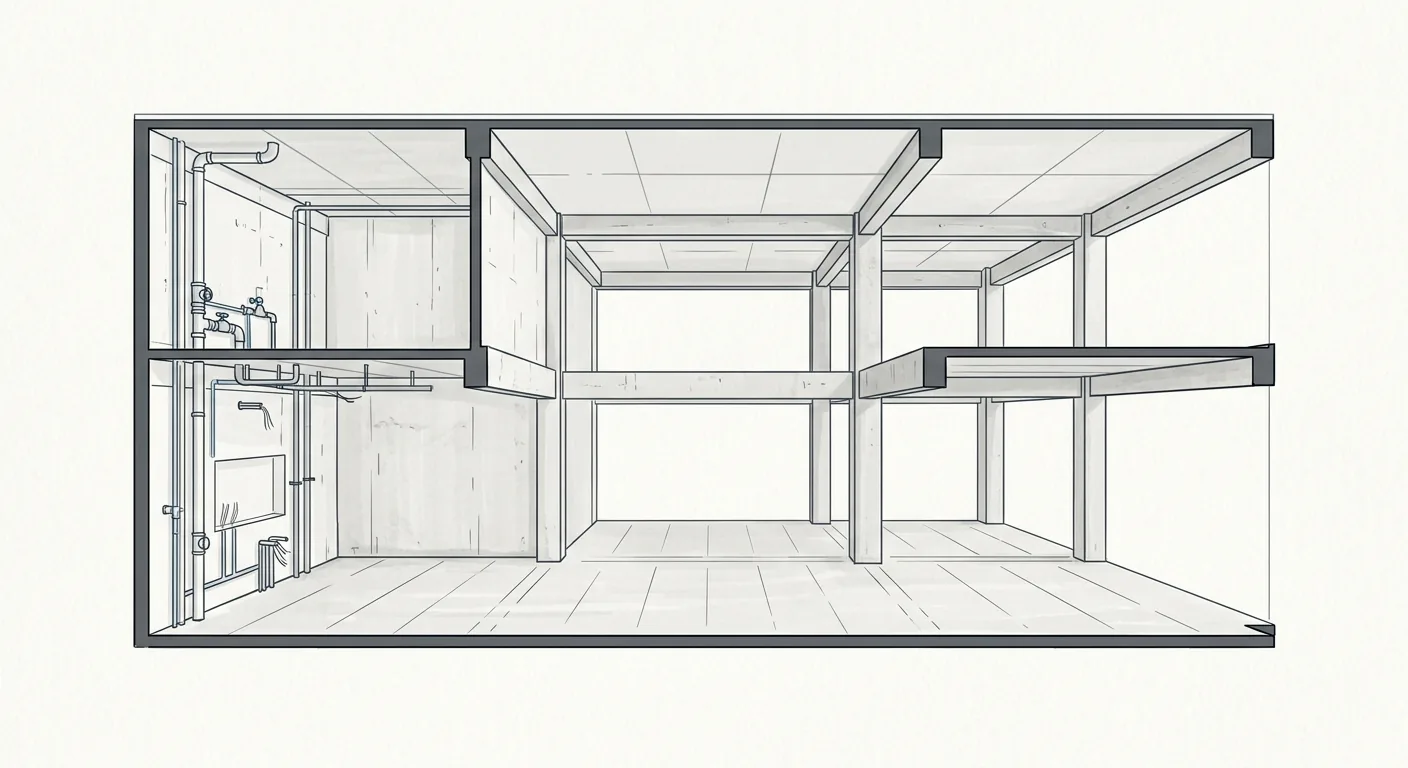
Caption: New build renovation means the structure and utilities are already finished, so the budget can focus on function and style — placing furniture first, then setting the budget, is the safest way to avoid blowing it
Key takeaway: Since a new build's structure and utilities are already finished, the renovation budget mostly goes toward function and style. Market rates run roughly NT$40,000–80,000 per ping (about NT$12,000–24,000 per m²), or NT$80,000–120,000 per ping with more system cabinetry (uwood Solid Wood); the actual amount depends on material grade and construction costs — always check against your quote.
New build renovation typically costs roughly NT$40,000–80,000 per ping, or often NT$80,000–120,000 per ping when it includes more system cabinetry and partial carpentry (uwood Solid Wood). Why does the same square footage swing so widely? Because "how much per ping" is shaped by way too many variables.
The main factors driving the price are:
There's also a bigger-picture factor people often overlook: construction costs themselves are constantly shifting. The Directorate-General of Budget, Accounting and Statistics' Construction Cost Index (CCI) reflects changes in input costs like cement, aggregate, lumber, paint, and labor (National Statistics, R.O.C. (Taiwan)). As materials and labor prices rise, renovation quotes naturally follow, which is exactly why "last year's rate" can't be applied directly to this year.
So market ranges are only a reference point — always check against your actual quote and the current market. To turn cost estimates into an actionable budget table, How to Set a Renovation Budget and Allocation Ratios has a full template. If you're comparing against a bare-shell house, Bare-Shell Renovation Cost From Zero is also worth checking, since the two have very different cost structures.
The correct sequence for new build renovation is a timeline you can't run out of order. Since the structure is already complete, a new build usually skips major demolition, and base construction (electrical, plumbing, masonry, waterproofing) accounts for about 20–25% of the total budget (uwood Solid Wood). The process is shorter than a bare-shell house's, and simpler than a resale unit's.
The standard sequence generally looks like this:
Why can't the order be shuffled? Two examples make it clear. Electrical and plumbing has to come before masonry, because the lines need to be routed before the walls and floors are sealed up; painting has to come after carpentry, otherwise the carpenters showing up will scuff the freshly painted walls. Get the sequence wrong, and you're redoing work and spending more.
We've seen a case where a homeowner, trying to speed things up, brought the painters in early — then the carpentry work scratched up the walls entirely, and the paint job had to be redone from scratch, wasting money for nothing. Sequencing isn't something you can rush.

Caption: Renovation sequence (1) measuring (2) demolition (3) electrical and plumbing (4) masonry (5) carpentry/system cabinetry (6) painting (7) cleaning (8) soft furnishing — the order can't be reversed
There's no fixed number of days for new build renovation — it depends on scope, whether the layout changes, and how fast materials arrive. Since base construction accounts for a relatively low share (about 20–25%) (uwood Solid Wood), a new build's timeline is usually shorter than a bare-shell house's. Short as it may be, it can still get dragged out by a few common causes.
Here are the most common causes of delay, so you can build in some buffer:
Timing figures here are fluid — always check against your actual contract and crew schedule, and don't treat someone else's timeline as a guarantee. Ever wonder why so many renovations run over? More often than not it's not that the crew is slow — it's that decisions got made too late, especially when furniture hasn't been picked yet, which leaves carpentry and outlet placement unresolved.
How does renovation timing connect with handover? Usually, handover and getting the keys comes first, then construction starts. For how that handover process runs and when the final payment is due, see Handover Process and Final Payment Timing. If you bought a pre-sale unit that hasn't been built yet, there's a customization step before construction even starts — see The Complete Pre-Sale Customization Process and Timeline for details.
The most common reason renovation budgets blow up is "underestimating soft furnishing and furniture." Base construction may only account for about 20–25% of the total (uwood Solid Wood), but plenty of people only budget for hard finishing and forget that furniture and appliances are also a major expense — and then they come up short. The right approach is to list out exactly what furniture and appliances you need to buy first, then work backward to set the total budget.
Here's a practical step that aligns the budget with what you actually need: place your furniture at 1:1 scale in Roomfit against the floor plan first, confirm the pieces fit and the traffic flow works, then go back and figure out "what to buy, how big, and how much."
We've tried this ourselves — placing furniture first, then setting the budget — and the biggest benefit is avoiding rework. Laying it out once, we discovered the TV wall's outlet would end up blocked by a cabinet, and adjusted it before carpentry started; we also found that the large dining table we'd originally wanted would block the traffic flow, so we swapped it for a smaller size, saving the cost and hassle of returning and rebuying it.
The real benefit of planning furniture first comes down to saving money: it prevents you from finishing renovation only to discover the sofa's too big, the walkway beside the bed is too narrow, or the TV wall outlet is in the wrong spot. Fixing these after the fact means paying for rework and returns.
For the full budget allocation ratios and a shopping-list template, see The Renovation Budget Template and Allocation Ratios. To check standard furniture dimensions and clearances, pair it with Roomfit's furniture-placement feature.
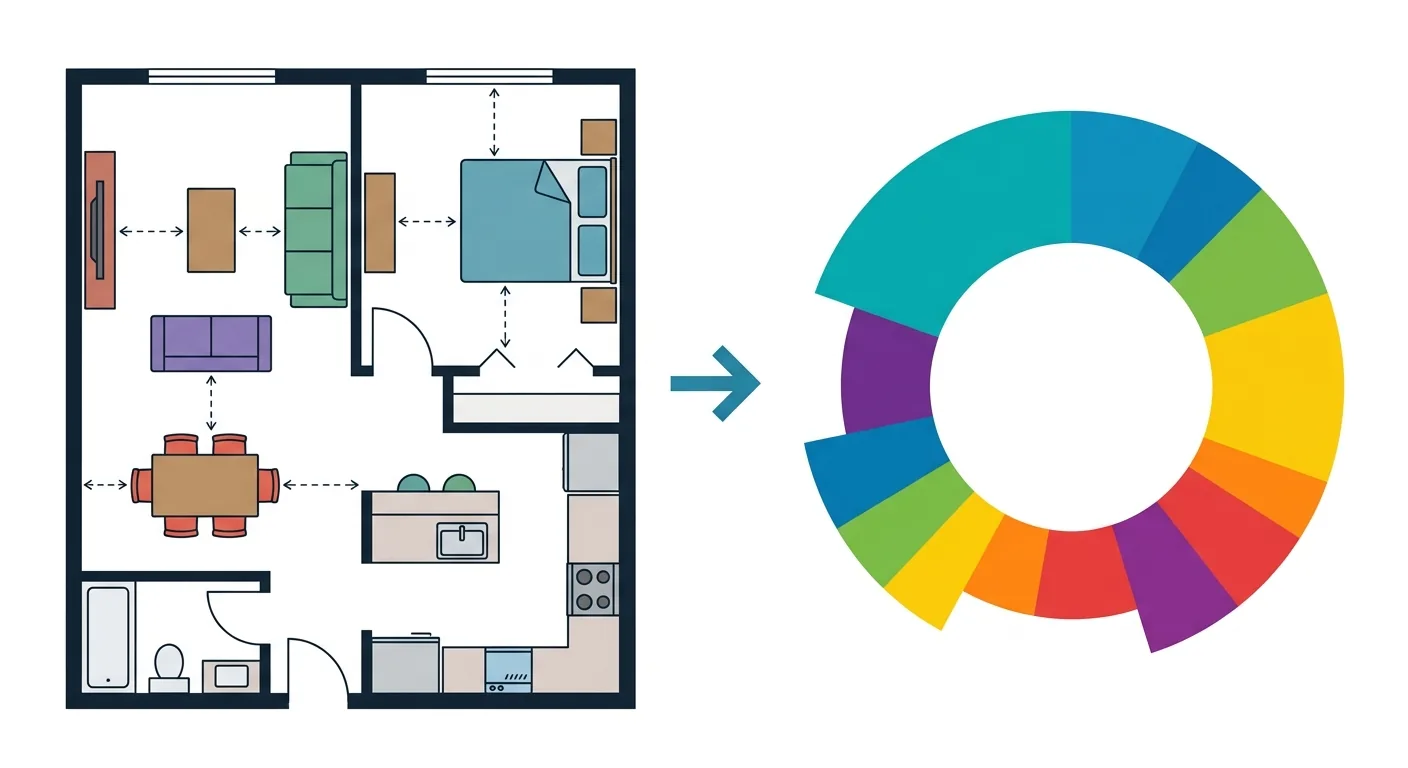
Caption: Place furniture at 1:1 scale in Roomfit first → confirm dimensions and traffic flow → then work backward on "what to buy, how big, how much" — aligning the budget with actual needs
A "new build for sale" is a property the developer has already finished and is selling as-is — the biggest advantage is that you can see the actual unit and start renovating right away, but the layout is already fixed and can't be customized. Since the structure and utilities are already complete, base construction accounts for roughly the same 20–25% share (uwood Solid Wood). This is a fundamentally different starting point from a customizable pre-sale unit.
Here's a table laying out the difference:
| Item | New Build For Sale (As-Is) | Customizable Pre-Sale Unit |
|---|---|---|
| Can you see the actual unit | Yes | Floor plan only |
| Can you customize | No, layout is fixed | Yes, adjust utilities and partitions before construction |
| Renovation starting point | Modifying an existing layout | Planned before construction even starts |
| Best suited for | Wanting speed, wanting to see it first | Wanting it done right the first time, willing to wait |
Each has its trade-offs — neither is definitively better. Worth flagging: when viewing a new build for sale, go in asking "will my furniture actually fit" — don't get fooled by how spacious an empty unit feels. We once walked through an empty unit with a client who thought the living room felt huge, only to discover after placing an L-shaped sofa and dining table at 1:1 scale back home that the walkway left was only 60cm — not even enough room to turn around. You can use Roomfit to lay out the floor plan first and see whether your sofa, bed, and dining table fit before deciding whether to buy.
For a full explanation of how the customization mechanism actually works and what can be changed, see The Complete Guide to Pre-Sale House Customization. If you're considering a completely different option — a bare-shell house — that's an entirely different approach; see Planning a Bare-Shell Renovation From Zero.
Back to the anxiety we started with — how much does new build renovation cost per ping? Now you know: there's no standard answer, but there is a standard approach.
Here's the summary in three lines:
The most expensive part of renovation isn't the materials — it's "getting it wrong and doing it over." And the first step to avoiding that is seeing the real dimensions clearly. Rather than finishing renovation only to discover something doesn't fit, use Roomfit to place your furniture at 1:1 scale into your home's layout first, so every dollar of your budget goes where it should.
New build renovation market rates run roughly NT$40,000–80,000 per ping, often landing at NT$80,000–120,000 per ping with more system cabinetry and carpentry (uwood Solid Wood). But whether that's "reasonable" depends on material grade, whether the layout changes, and current construction costs — the gap for the same square footage can be huge. Market rates are only a reference; always check against your actual quote.
The correct sequence is: measuring and marking out → demolition (usually minimal for a new build) → electrical and plumbing → masonry → carpentry/system cabinetry → painting → cleaning → soft furnishing move-in. The order can't be reversed — electrical and plumbing has to come before masonry, and painting has to come after carpentry, otherwise you're paying for rework. Since a new build's structure is already complete, base construction accounts for about 20–25%, making the process shorter than a bare-shell house's.
There's no fixed number of days — it depends on scope, whether the layout changes, and how fast materials arrive. Common delays come from slow material delivery, mid-project design changes, poor handoffs between trades, and back-and-forth acceptance inspections. Always check timing against your actual contract and crew schedule. The most effective way to shorten the timeline is choosing furniture early, so outlet and carpentry placement gets locked in once instead of changing midway.
A new build for sale is a unit the developer has already finished — you can see the actual space and start renovating right away, but the layout is fixed and can't be customized. A pre-sale unit isn't built yet, so you only have floor plans, but you can customize the utilities and partitions before construction. The two have different renovation starting points, each with trade-offs. When viewing a for-sale unit, we'd recommend laying out the floor plan in Roomfit first to confirm the furniture fits before deciding.
Arrange furniture in your space at true 1:1 scale with Roomfit and see exactly how much walkway is left — no install, no sign-up.
Start with Roomfit →