New Homes & Renovation
The moment you get the keys to your new home is exciting — then you sit down to work out the renovation budget and the headache begins. Quote after quote gets thicker, the numbers keep climbing, and you have no idea where it's going to blow out. Actually, all it takes is a clearly zoned renovation budget spreadsheet to turn chaos into something you can control.
This piece walks you through building your own 2026 renovation budget spreadsheet: how to set up the columns, what share to give hard finishes vs. soft furnishings, how to build a furniture shopping list, and the hidden costs that get underestimated most. We won't lock in fixed dollar amounts — leave the numbers for your own real quotes; the template only gives you the structure.
Key takeaway: The key to a usable renovation budget spreadsheet is clearly zoning hard finishes, furniture and appliances, soft furnishings, and a "contingency fund." Most interior design firms recommend setting aside a separate contingency fund, with the exact share depending on your individual quote and how the project unfolds, because add-on costs are almost the norm in renovation.
A truly usable renovation budget spreadsheet needs at least six columns: item, quantity, unit price, subtotal, actual paid, and notes. Most design firms recommend adding a separate "contingency fund" column, with the exact share depending on your individual quote and how the project unfolds, because add-ons during construction are almost inevitable.
Why should the contingency fund be listed separately instead of folded into each line item? Because once it's mixed in, you'll think you still have money left when you've actually already run out.
I fell into this trap myself the first time I built a budget spreadsheet. Back then I kept "roughly set aside some buffer" in my head instead of writing it into the sheet; then the plumbing and electrical work got an add-on, the carpentry changed materials, and the buffer evaporated instantly. Afterward I switched to treating the contingency fund as its own separate line — logging every time I spent from it — and only then did I feel at ease.
We recommend splitting the spreadsheet into four zones, each with its own subtotal, then adding them all up at the end:
Give each zone its own subtotal and you can immediately see which one is ballooning fastest. If your sheet is just one long list of line items with no zoning, the numbers will lose all sense of direction once there are enough of them.
The budget spreadsheet structure differs a lot between a brand-new home and a bare-shell unit. A new home has relatively little hard-finish work — the focus is on whatever pre-sale customization didn't cover, plus soft furnishings; see our breakdown of renovation cost per ping for new homes.
A bare-shell unit is a blank slate — plumbing, electrical, partition walls, and flooring all need to be done from scratch, so hard finishes take up a much larger share; see the details in our full guide to bare-shell renovation costs and planning from zero.
If you bought a pre-sale unit and are still in the customization phase, fold your customization upcharges into the sheet too — don't let them become a black hole outside the spreadsheet. Start with how to fold customization costs into your total budget.
The spreadsheet template doesn't lock in fixed amounts. Every number in every cell gets filled in based on your own actual quotes. Only then is it truly your spreadsheet, not someone else's.
Here's a rough reference point to start with: hard finishes (including design and construction) make up about 60–65%, furniture and appliances each about 15%, soft furnishings 5–10%, and contingency fund 10–15% (2026 design firm market rate roundup). This is a starting reference, not a fixed rule.
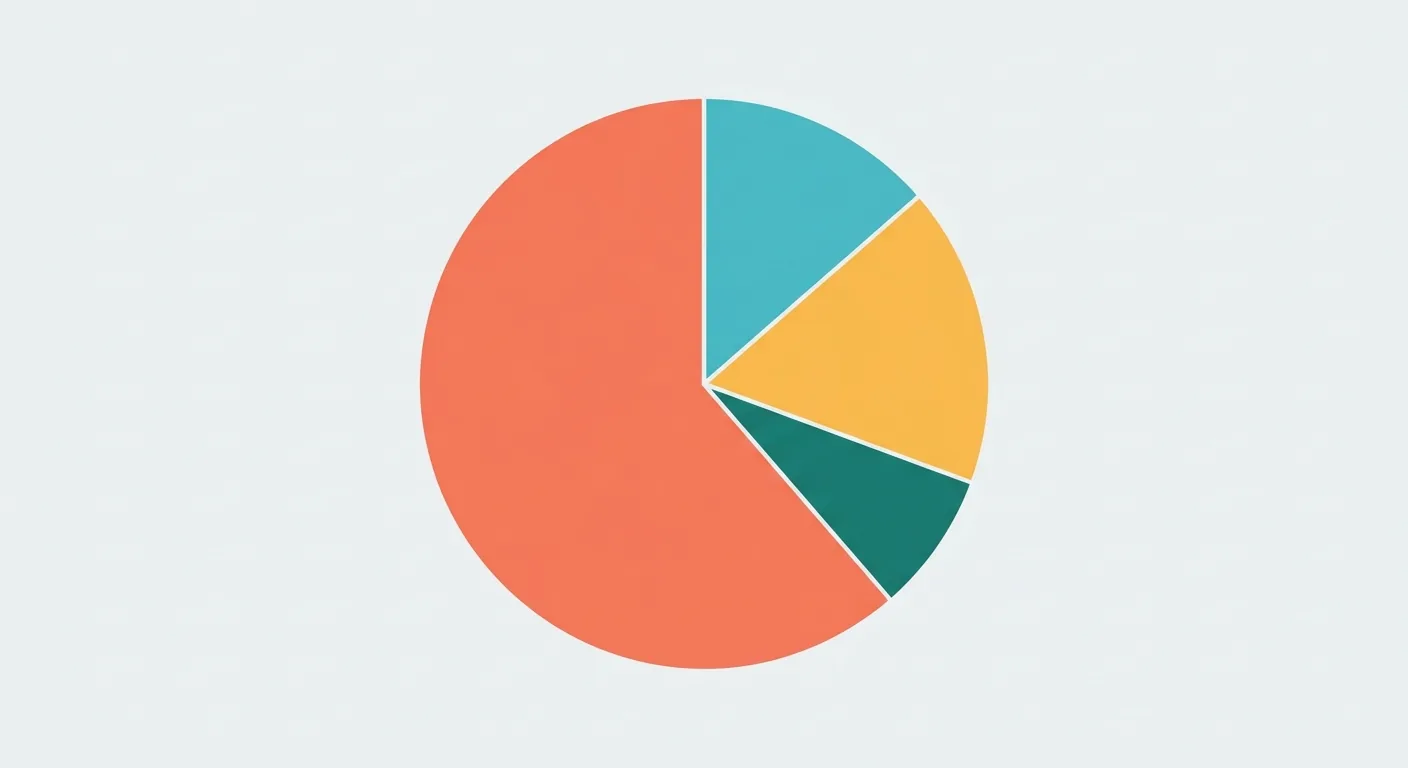
Caption: Rough renovation budget allocation — hard finishes (including design) about 60–65%, furniture about 15%, appliances about 15%, soft furnishings 5–10%, contingency fund 10–15%; these ratios are a starting reference only, not a fixed rule
This ratio can shift a lot depending on your home's condition and needs. If storage matters most to you, ramping up built-in cabinetry pushes hard finishes higher; if you want more atmosphere, soft furnishings and lighting naturally take a bigger share.
I've seen a case where the homeowner insisted on an island counter and a lot of cabinetry, and hard finishes went straight past 70%, so appliances were limited to just the essentials at first, with the rest filled in later. There's no right or wrong here — the point is knowing clearly where your money is going.
There are really only two things worth remembering. First, hard finishes are the part that's "hard to change once it's done," so it's better to think it through up front. Second, don't squeeze furniture, appliances, and soft furnishings down to the bare minimum, or the place will feel empty once you move in.
So how do you actually settle on a ratio without forcing it? The answer is to work backward — first figure out what your home genuinely needs, then adjust the ratio accordingly, instead of taking someone else's pie chart and forcing it onto your own home.
Under Taiwan's Regulations for Building Interior Renovation, Article 3, furniture, curtains, and movable partitions fall under "attached and placed items" and are not classified as interior renovation (Laws & Regulations Database of the Republic of China, 2026). In other words, these are exactly the items you're free to move around — and also the ones most easily bought in the wrong size.
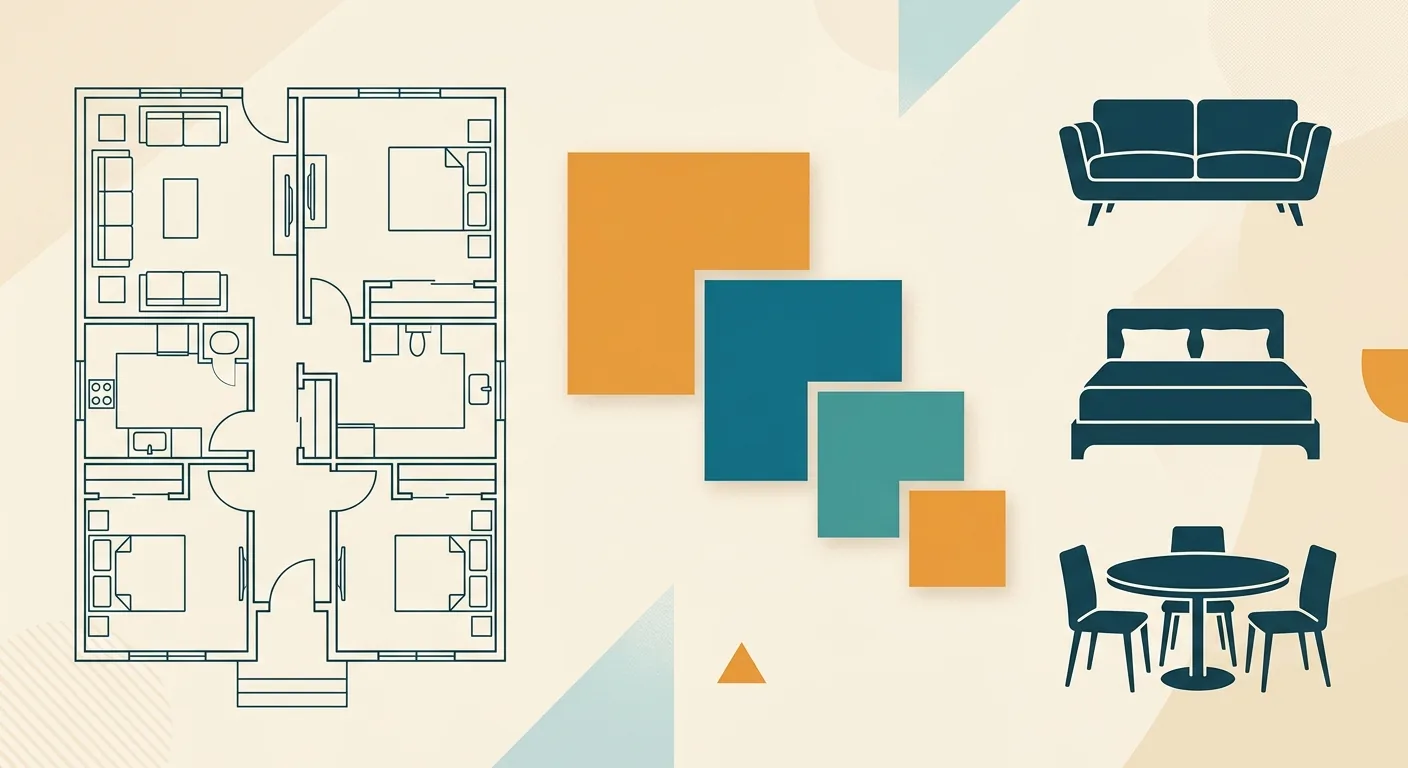
A usable furniture shopping list should have six columns: item, dimensions, quantity, budget, actual, and store link. It turns "what to buy" into a checklist you can tick off item by item.
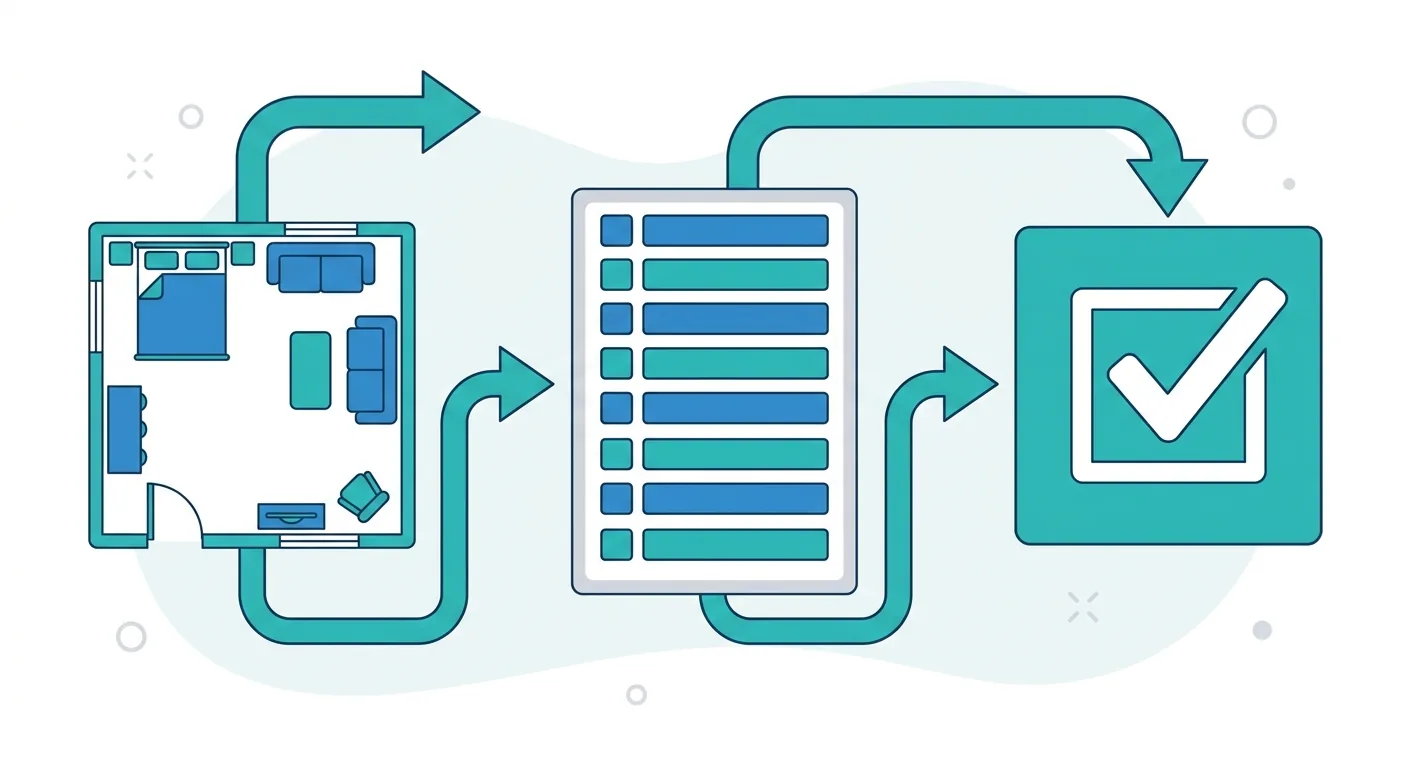
Caption: Arrange furniture first → export the furniture list → convert it into a checkable shopping list — dimensions, quantity, and placement aligned all at once
The problem is, a lot of people fall for a sofa they like first and only measure it afterward — the order is backwards.
This is exactly where Roomfit comes in. You can drop your builder's floor plan (or your own measurements) into Roomfit, place your furniture piece by piece at true 1:1 scale, and the system automatically marks clearances and snaps pieces to walls. Once it's arranged, that furniture list converts directly into a shopping list — dimensions, quantity, and placement all aligned at once.
We've actually done this ourselves, and the biggest payoff is "you won't buy something that doesn't fit." We used to guess in our heads, convinced a 240 cm sofa would fit — only to find, once it was delivered, that the walkway had less than an arm's width left and it was a nightmare to squeeze through. Arranging it on the plan first cuts down a lot on that kind of embarrassment.
Arranging furniture first, then listing it, also helps you avoid buying duplicates or missing items. If you want to properly place your furniture and also plan out your move-in day traffic flow, pair this with arranging your furniture placement before your house-warming.
The costs that most often blow the budget aren't the main construction items — they're the scattered items that never made it onto the sheet. Under Article 22 of Taiwan's Regulations for Building Interior Renovation, interior renovation of buildings used by the public must be reviewed and approved before construction begins (Laws & Regulations Database of the Republic of China, 2026), and these review and certification fees are commonly left out entirely.

Caption: What you see on the quote is just the tip of the iceberg — debris removal, protective coverings, plumbing/electrical add-ons, hardware and lighting, curtains and air conditioning, and rent during the gap period are often hiding below the waterline
Forums (such as PTT's renovation board) most commonly mention these categories of hidden costs:
These forum shares are personal experiences, not general rules — actual amounts vary a lot case by case, so treat them as a reference and don't apply them directly to your own project. Forum information is also time-sensitive, and older quotes lose reference value over time, so check the post date before citing it.
So how do you avoid blowing the budget? It comes back to the point from the beginning — list these hidden costs into your contingency fund zone ahead of time. Once you've thought of it, it can't hurt you.
If you also want to plan out your renovation timeline after handover in one go, continue with how final handover payments connect to your renovation schedule, and for the whole journey from buying to renovating, see the full walkthrough from pre-sale customization to handover.
The core of a renovation budget spreadsheet isn't filling every cell with a number — it's making sure every dollar matches a real need. Zone it clearly, keep the contingency fund separate, and adjust the ratios to your own home; get these three steps right and your budget will be very hard to lose control of.
My own experience is that getting the order right saves money. Arrange furniture at true 1:1 scale in Roomfit first, then turn the list into a shopping list and budget spreadsheet — dimensions, quantity, and placement all land in one go, naturally cutting down on rebuying and missed items. Arrange it right first, then make it look good, then work out the cost.
Yes. Most interior design firms recommend setting aside a contingency fund, with the exact share depending on your individual quote and how the project unfolds, because construction often turns up plumbing/electrical issues only discovered once things are opened up, plus last-minute material changes or add-on purchases. The contingency fund should be listed as its own separate column, not mixed into other subtotals — that way you can see your real remaining balance instead of assuming you still have money when you've actually already run out.
A rough reference point is hard finishes (including design and construction) at about 60–65%, furniture and appliances each about 15%, soft furnishings 5–10%, and contingency fund 10–15% (2026 design firm market rates). This is only a starting ratio, not a fixed rule — if storage matters most to you, raise the built-in cabinetry share; if atmosphere matters most, raise soft furnishings. We recommend figuring out what your home genuinely needs first, then adjusting the ratio, rather than forcing someone else's pie chart onto your own home.
It depends on the nature of the work. Under Article 22 of Taiwan's Regulations for Building Interior Renovation, interior renovation of buildings used by the public must be reviewed and approved before construction can begin (Laws & Regulations Database of the Republic of China, 2026). If your project involves fixed renovation work like ceiling changes or partition wall modifications, budget for these review and professional certification fees in advance — don't wait for the bill to discover you missed them.
Because size mismatches are the most common reason people end up buying things twice. Under Article 3 of Taiwan's Regulations for Building Interior Renovation, furniture is classified as a "placed item" and doesn't count as interior renovation, which means it's something you're free to move around — and also the easiest thing to buy in the wrong size (Laws & Regulations Database of the Republic of China, 2026). Arrange furniture in Roomfit at true 1:1 scale on your floor plan first, then convert the list into a shopping list, so quantity and dimensions line up at once — cutting down on the returns and rebuys that come from "buying something that doesn't fit."
Arrange furniture in your space at true 1:1 scale with Roomfit and see exactly how much walkway is left — no install, no sign-up.
Start with Roomfit →