
You've scrolled through decor inspiration all night, saved a pile of photos, but when it's time to actually start, you don't know where to begin? Or you excitedly bought a bunch of accessories, only to have them look wrong once you put them up?
The most common mistake in room decoration is letting the pretty photos lead you and buying first, thinking later. This article sets the order straight: fix function and traffic flow first, then talk style and soft decor; then we'll walk through three popular styles and how to choose between them, where to buy decor accessories, common taboos around the bed head and mirrors, and what to check before you DIY.
The last section is the most important - how to bring the inspiration photos you love down to your own room's real dimensions. Because someone else's room was never built to your measurements. If you want to master the small-space scaling logic at the same time, pair this with The Small-Space Room Layout Playbook.
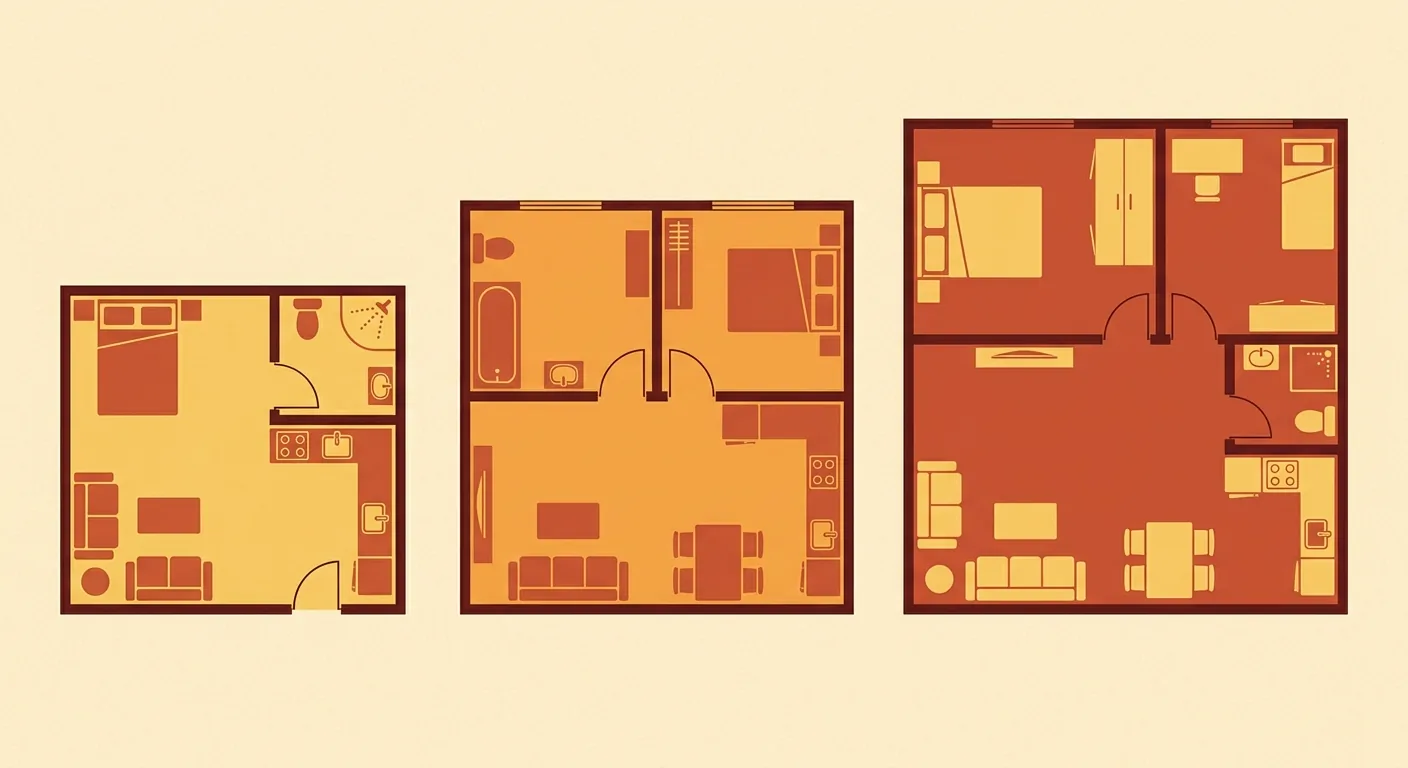
Caption: Good room decoration fixes function and traffic flow first, then adds soft decor as a bonus - get the skeleton right, and accessories become the finishing touch
Key takeaway: Roughly 58% of furniture returns come down to sizing and space mismatches (Eightx, 2025, citing RocketReturns). Fix function and traffic flow first, confirm the dimensions fit, and only then talk style - that's how you avoid wasting money.
1The Basic Logic of Room Decoration: Fix Function and Traffic Flow Before Aesthetics
The correct order for room decoration is to fix function and traffic flow first, then talk aesthetics. Doing it in reverse is the trap most people fall into. Online furniture return rates run about 22.7% (Eightx, 2025, citing NRF and Happy Returns), and nearly 60% of those come down to sizing mismatches - many of them the result of "getting swept up by a pretty photo, then ordering and finding it doesn't fit the traffic flow."
Ask yourself first: what does this room need to do? Sleep, work, storage, getting ready, or hosting friends? List out the activities that will happen there, and the traffic flow answers itself. Function and traffic flow are the skeleton; decor accessories are the flesh - if the skeleton is crooked, no amount of beautiful soft decor can save it.
The most common trap for beginners is "buy first, figure it out later." You see the wall art, string lights, and rug in an Instagram-worthy room and order them, only to find the furniture doesn't fit the traffic flow, the style doesn't match, and you've bought a pile of things you can't use. Our experience is that fixing the position of the large furniture first, then going back to add small accessories, has a much higher success rate. To start planning from the overall layout, Small-Space Design Techniques by Room is worth reading next.
2A Full Overview of Room Decoration Styles: Choosing Between Scandinavian, Japanese Minimalist, and Wabi-Sabi for a Small Home
The trick to choosing a style is picking one dominant tone and accenting around it, without overmixing. Scandinavian, Japanese Minimalist, and Wabi-Sabi are the three most popular styles in recent years, each with its own personality - Wabi-Sabi in particular is a favorite for small spaces and small homes. All three lean toward low saturation and generous negative space, which naturally helps a room feel bigger.
Scandinavian style: bright, natural wood, with accent pops of color, a clean palette, and simple lines - suited to well-lit spaces and the easiest style for beginners to pull off. Japanese Minimalist style: plainer and more restrained, built around white, natural wood, and light gray, emphasizing storage and tidiness - suited to people who love minimalism. Wabi-Sabi style: low saturation, rustic materials, a touch of age, lots of negative space and few objects - it builds an elevated feel in small homes through "less is more."
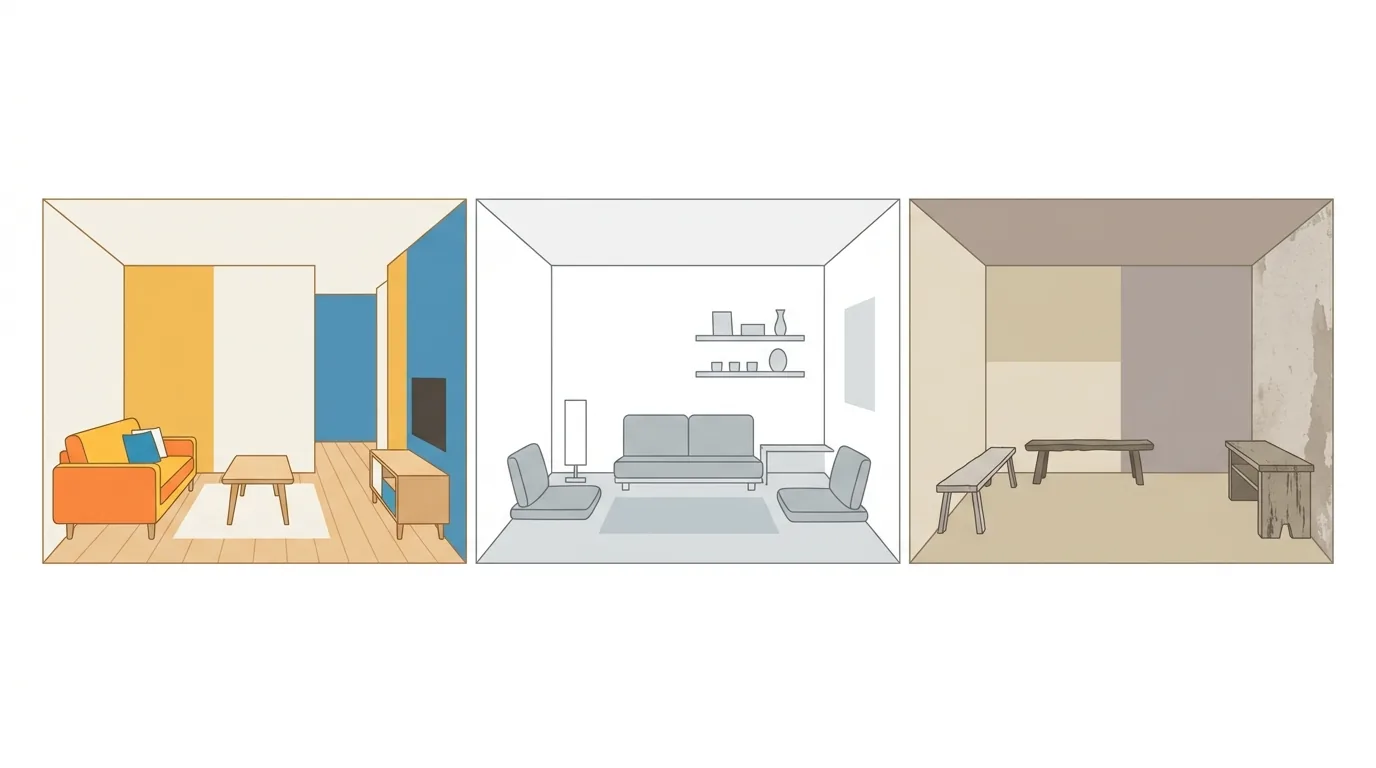
Caption: Three popular styles - (1) Scandinavian: bright wood with accent color (2) Japanese Minimalist: white and light gray minimalism (3) Wabi-Sabi: low saturation and rustic with negative space, best suited for small homes
How does Wabi-Sabi translate into a small space? Negative space, natural wood, and low saturation are its foundation - and they happen to be the same elements that make a space feel bigger. But watch out for over-stacking objects - Wabi-Sabi's elevated feel comes from restraint, and filling it up instead makes it look cluttered and cheap. Pick one dominant tone as your base and accent lightly with everything else - a rule that applies across all three styles.
3Decor Accessories and Guys' Room Decoration: Low-Cost Ways to Change the Mood, and Where to Buy
Decor accessories are the cheapest way to transform a mood, and light and textiles are the most noticeable place to start. You don't need to move furniture around - swap a lamp, add a rug, put out a couple of plants, and the whole feel of the room changes. Here are the highest-value picks for quickly shifting the atmosphere:
- Lighting: warm table lamps, mood string lights, and floor lamps set the room's temperature.
- Textiles: rugs, cushions, sheets, and curtains - change the color and you change the season.
- Wall art and posters: the wall's focal point - one piece can define the whole look.
- Plants: one or two bring life; if you're low-maintenance, pick an easy-care variety.
- Storage baskets: handle storage and visuals at once, tucking clutter away neatly.
Where to buy them? Affordable home-goods chains, general lifestyle-goods retailers, online furniture marketplaces, and secondhand markets can all turn up good finds - we won't name a single specific brand here; pick your retailer based on your budget and style. To use storage baskets more systematically, The Complete Small-Space Storage Planning Guide is worth a look.
Guys' room decoration tends to lean toward low saturation, function-first design, plus gaming or collection displays. Dark tones, metal and leather textures, and clean lines are the dominant notes, with display shelving for models, figures, or sneakers. The priority is still the same - fix function first: desk, display area, and sleeping zone, then come back to color and lighting.
4Room Decoration Taboos and DIY: Bed-Head Orientation, Mirror Placement, and What to Check Before You Start
Most room decoration taboos combine folk belief with practical logic, and it's most useful to view them neutrally. The ones that come up most: bed-head orientation, a mirror facing the bed, a beam over the bed, and traffic flow cut off by furniture. Some come from folklore, some actually have a practical basis - there's no need to overstate the luck involved; understanding the logic behind them is enough.
Bed-head orientation: folklore offers various takes, but practically speaking, it's better to have the headboard against a solid wall and avoid facing a door or window, for a more settled sleep. Mirror facing the bed: being startled by your own reflection in the middle of the night is a real problem for a lot of people - moving the mirror or using a cabinet with doors solves it. A beam over the bed: the sense of pressure from sleeping under a beam is real, and can be eased with a false ceiling or by shifting the bed's position. These fall under folklore and personal feeling, opinions vary by household, and this article doesn't argue for any particular fortune or misfortune.
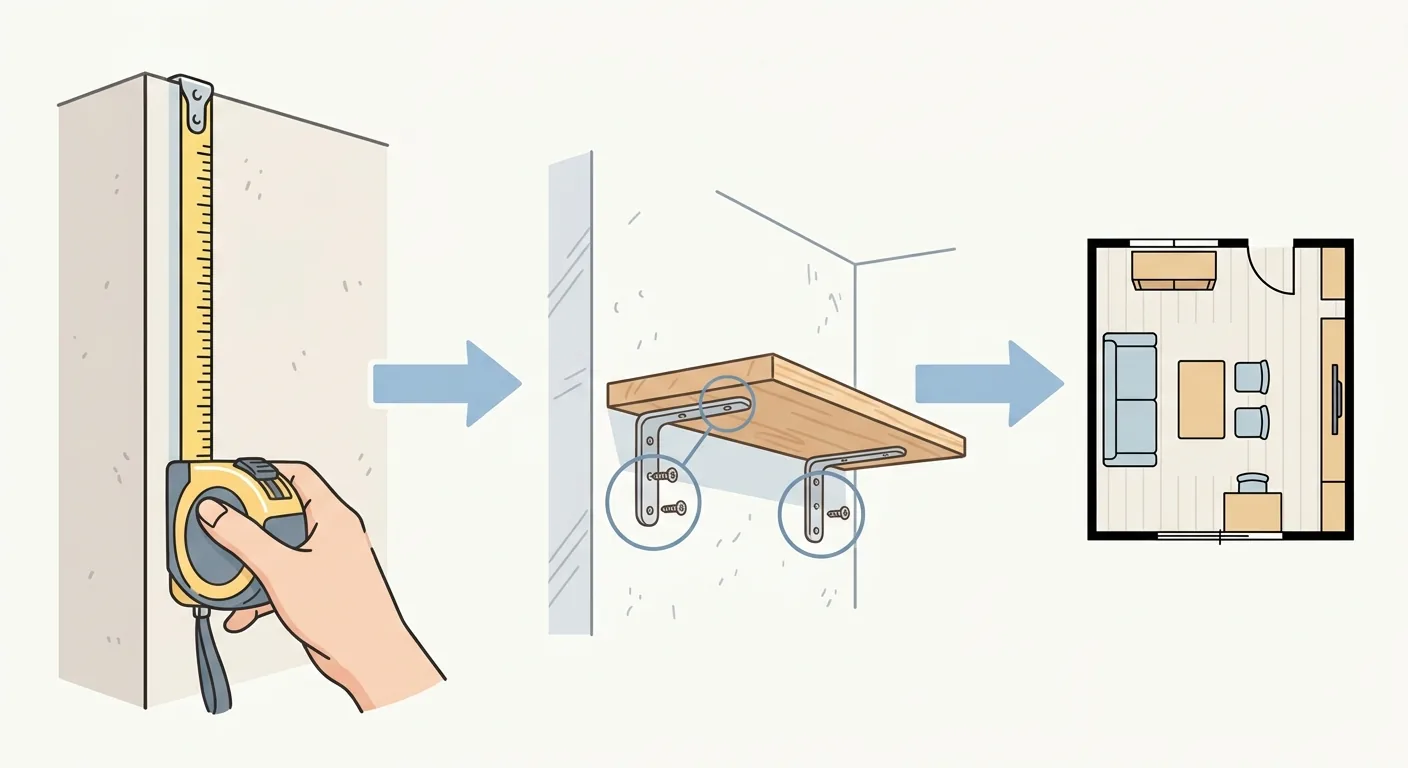
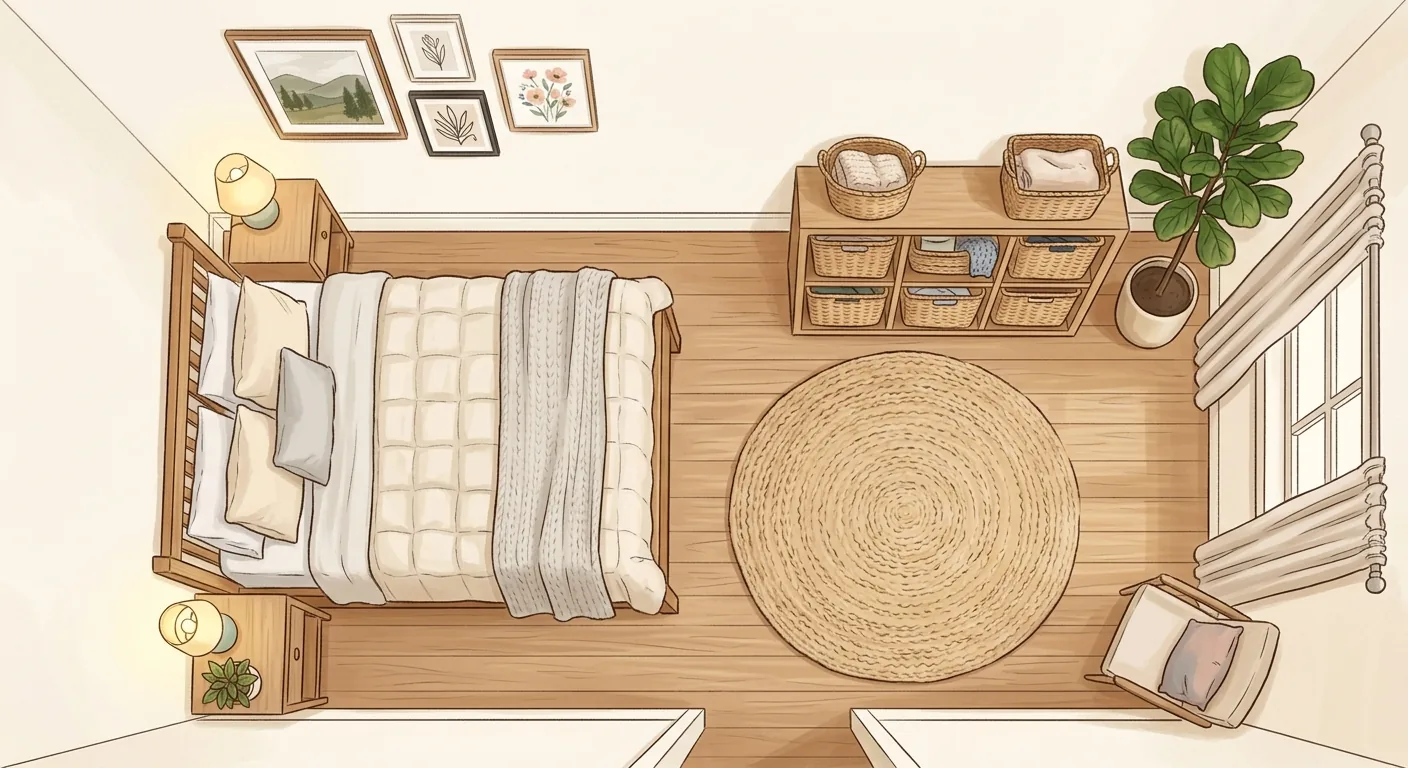
Caption: Three steps before you DIY - (1) measure dimensions (2) confirm the wall can hold shelving and wall art (3) do a trial layout on paper first
Before you DIY, confirm three things: measure your dimensions, confirm whether the wall can hold shelving and wall art, and do a trial layout first. The biggest DIY trap is discovering halfway through that the dimensions don't fit or the wall won't hold a drill, wasting all the effort so far. Doing a trial layout on paper first is the most efficient move, and it naturally leads into the next topic - how to bring it down to your own room's dimensions.
5Decorating a Large Room: Zoning and Placement Tricks for a Space That Feels Too Empty
The challenge with a large room isn't crowding - it's emptiness, coldness, and no focal point. When a room feels too vast, zoning and placement tricks are the most effective fix. A lot of people assume a big floor area means they don't need to worry about decor, only to end up with all the furniture pushed against the walls, a big empty gap in the middle, and a room that feels cold and lifeless.
Zoning is the solution. Use a rug to define a sleeping zone, a reading zone, a storage zone, giving each area its own function and focal point. Furniture doesn't have to hug the walls - pulling a sofa or bookshelf away from the wall to act as a "divider" can carve a large space into layers. Lighting is another zoning tool - different light sources for different zones instantly define the mood.
Large floor plans still come down to traffic flow and proportion, just in the opposite direction: a small space is about squeezing out room, a large space is about filling it without clutter. Regardless of size, furniture proportion and placement are the key - which echoes the furniture-proportion principles covered in The Small-Space Room Layout Playbook.
6After Finding Inspiration from Room Decoration Photos, How Do You Bring It Down to Your Own Dimensions?
Once you've found a decor photo you love, the biggest gap is that "someone else's room isn't built to your dimensions." This is the one hurdle every piece of inspiration has to clear before it becomes real. Those gorgeous photos you've saved from Pinterest, Dcard, and Instagram are built around someone else's wall lengths, someone else's doors and windows, someone else's floor area - copy it directly and nine times out of ten it won't fit.
We've been there too: we saw a gorgeous decor photo, excitedly bought the same furniture, and got home to find the room simply couldn't hold the same layout. The problem was never the photo - it was that the dimensions were never checked. Nearly 60% of furniture returns come down to sizing mismatches (Eightx, 2025, citing RocketReturns), and bringing inspiration down to reality is exactly where it most often goes wrong.
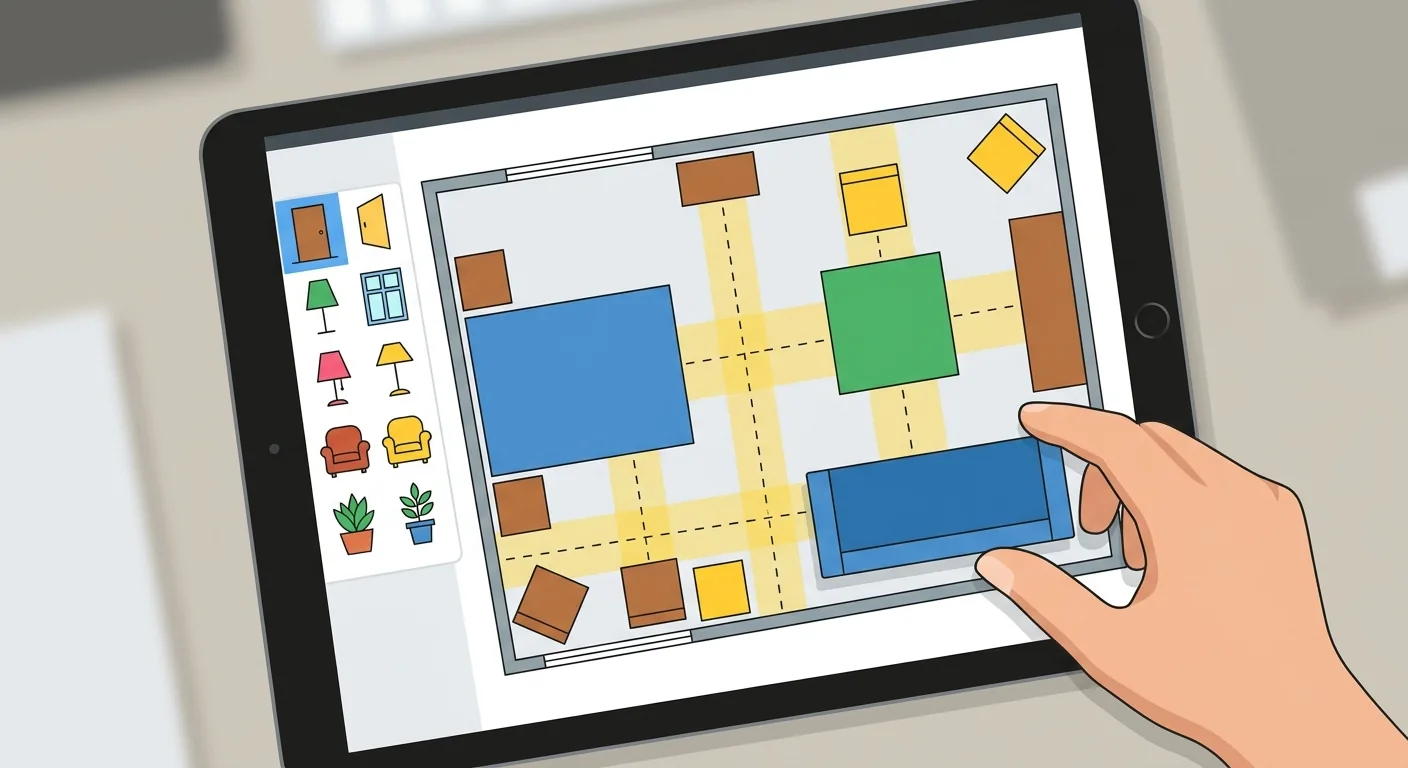
The way to make it real is to match the inspiration to your own dimensions before you act. Use Roomfit to pull up your home's actual wall lengths and door and window positions, place the furniture arrangement you want to copy at true 1:1 scale, confirm it fits your home and the walkway is wide enough, and only then buy and arrange it to match. To compare different decoration tools more systematically, check out Room Layout App & Simulation Tool Recommendations. Matching inspiration to your own dimensions is the key step that turns decoration from "looks gorgeous" into "actually feels good to live in."
7Room Decoration FAQ
Where should room decoration start?
Fix function and traffic flow first, then talk aesthetics. First ask what this room needs to do (sleeping, working, storage), fix the position of the large furniture, then go back and add small accessories and soft decor. Doing it in the reverse order is the trap most people fall into - getting swept up by a pretty photo, buying first, and ending up with furniture that doesn't fit the traffic flow. Nearly 60% of online furniture returns come down to sizing mismatches (Eightx, 2025) - fixing positions first, then decorating, saves a lot of wasted money.
Where's the best value for buying room decoration accessories?
Affordable home-goods chains, general lifestyle-goods retailers, online furniture marketplaces, and secondhand markets can all turn up great value. Start with light and textiles for the most noticeable effect - swap in a warm lamp, add a rug, put out a couple of plants, and the mood of the room changes completely without moving any furniture. Pick your retailer by budget and style rather than swearing by one brand. The key is buying a little at a time, not all at once without a plan for where things go.
Do you have to follow room decoration taboos?
That's up to how you view them. Common taboos like bed-head orientation, a mirror facing the bed, and a beam over the bed sometimes come from folklore, and sometimes have a practical basis (a mirror facing the bed, for instance, really can startle you awake). These fall under folklore and personal feeling, opinions vary by household, and this article doesn't argue for any particular fortune or misfortune. The practical approach is to understand the logic behind them, adjust what genuinely bothers you, and not feel bound by every saying.
Is Wabi-Sabi suited to a small space?
Very much so. Wabi-Sabi's negative space, natural wood, and low saturation happen to be the same elements that make a space feel bigger, building an elevated feel in a small home through "less is more." But watch out for over-stacking objects - Wabi-Sabi's texture comes from restraint, and filling it up makes it look cluttered. Use it as your dominant tone with objects added sparingly and generous negative space preserved, and even a small space can achieve a calm, enduring feel.
8Related Reading
- Interior Design Style Overview: Comparing 8 Popular Styles
- Wabi-Sabi Interior Design: Features, Décor Picks, and a Room-by-Room Guide
- Room Feng Shui Guide: Layout, Orientation, and Bed Placement Taboos Explained