
The easiest mistake to make on move-in day is rushing out to buy furniture first. Only after the bed, the sofa, and the wardrobe are all hauled upstairs do you realize the walkway is barely a shoulder wide. The more you buy, the more cramped it feels — but the problem was never that the space is too small. It's that the furniture was never arranged right.
1Buying More Furniture Only Makes the Studio Tighter? Nail the Layout Logic Before You Order
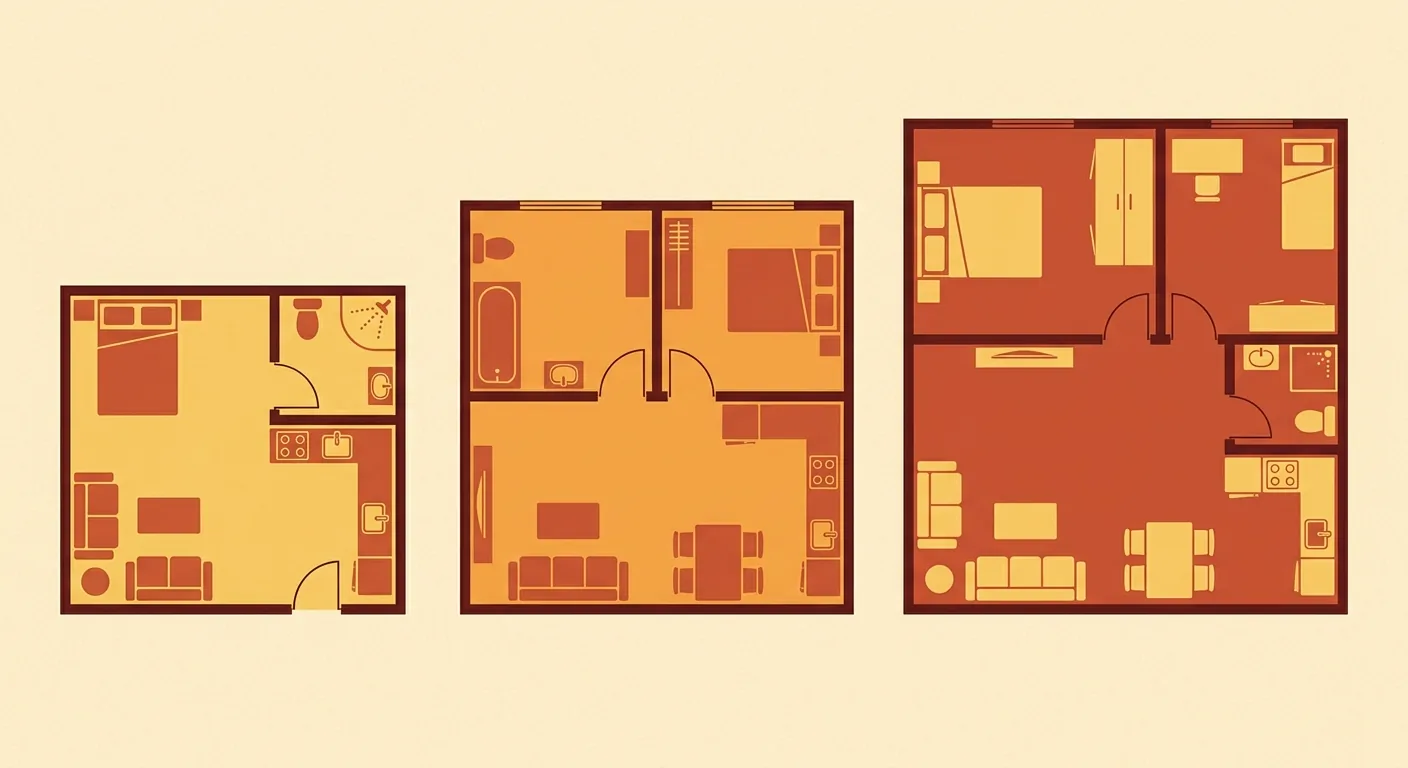
Homes in Taiwan keep getting smaller. According to the Ministry of the Interior's Department of Household Registration, the national average household has shrunk to just 2.35 people (Department of Household Registration, Ministry of the Interior, 2025). Singles and small families moving into compact studios has become the norm. How to furnish a studio is no longer a niche worry — it's the first hurdle many people face the very first time they rent.
This article lays out the trade-offs clearly: what to buy, what to skip, whether a matching furniture set is worth it, how far you can push a 6–7 ping (roughly 20–23 m²) rental, and one habit that will save you a world of trouble — laying everything out at 1:1 scale before you buy. If you want to get the big-picture layout thinking down first, pair this with our guide to making a small room feel bigger.
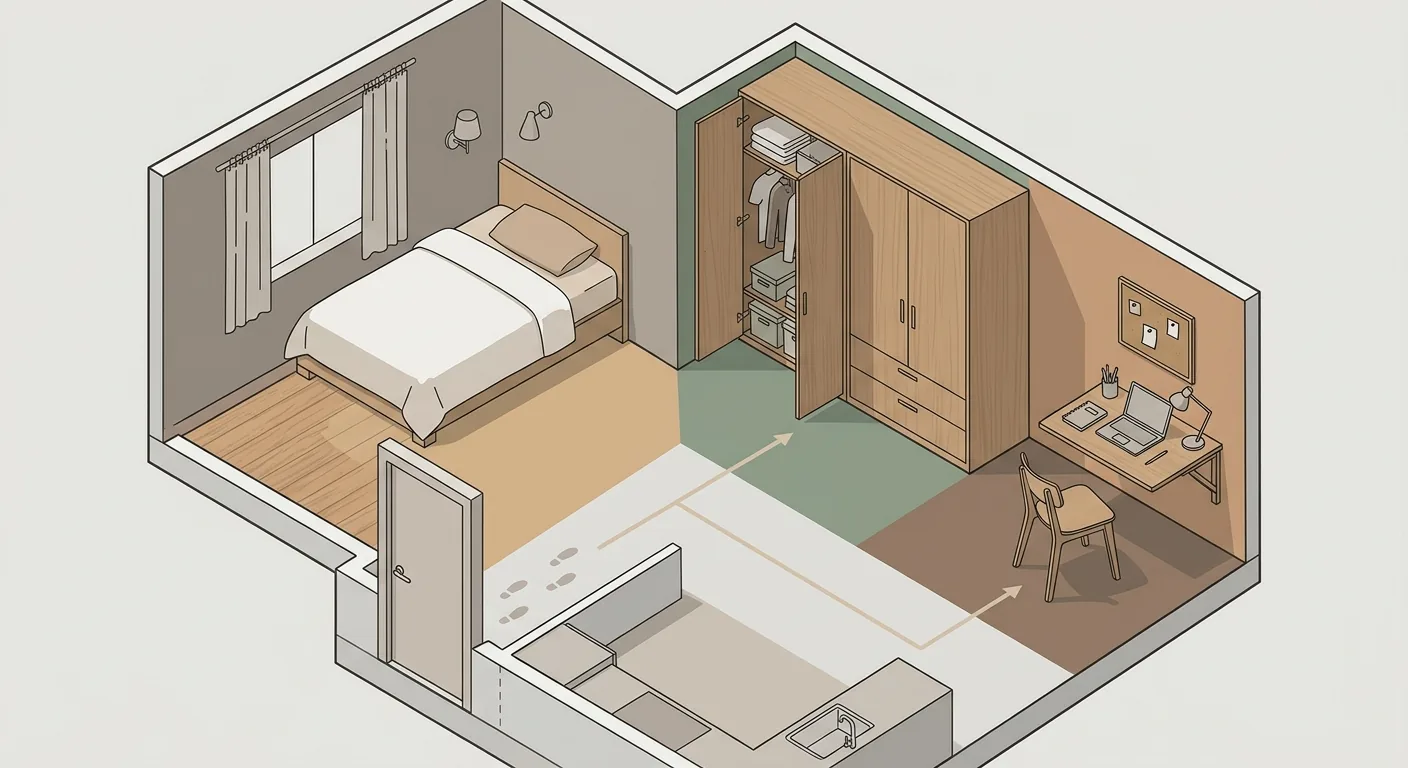
Caption: The heart of studio furniture — sleeping, sitting, working, and storage, each zone in its place, leaving what little floor you have for the walkway
Key takeaway: Studio furniture is about functional density, not piece count. The Ministry of the Interior's 2025 figures put the national average at just 2.35 people per household (Department of Household Registration, Ministry of the Interior, 2025); in a small space, every piece should earn its keep by doing double duty — so arrange first, then buy.
2How to Furnish a Studio: The Multi-Purpose Must-Have and Skip Lists
The first rule of studio furniture is simple: ideally, one piece should do the work of two or three. Space is tight, and the more pieces you add, the narrower the walkway gets. Below is where your money actually belongs — prioritized across four functions: sleeping, sitting, working, and storage — along with a skip list of the things you are better off leaving on the shelf.
The Must-Have Pieces for Sleeping, Sitting, Working, and Storage
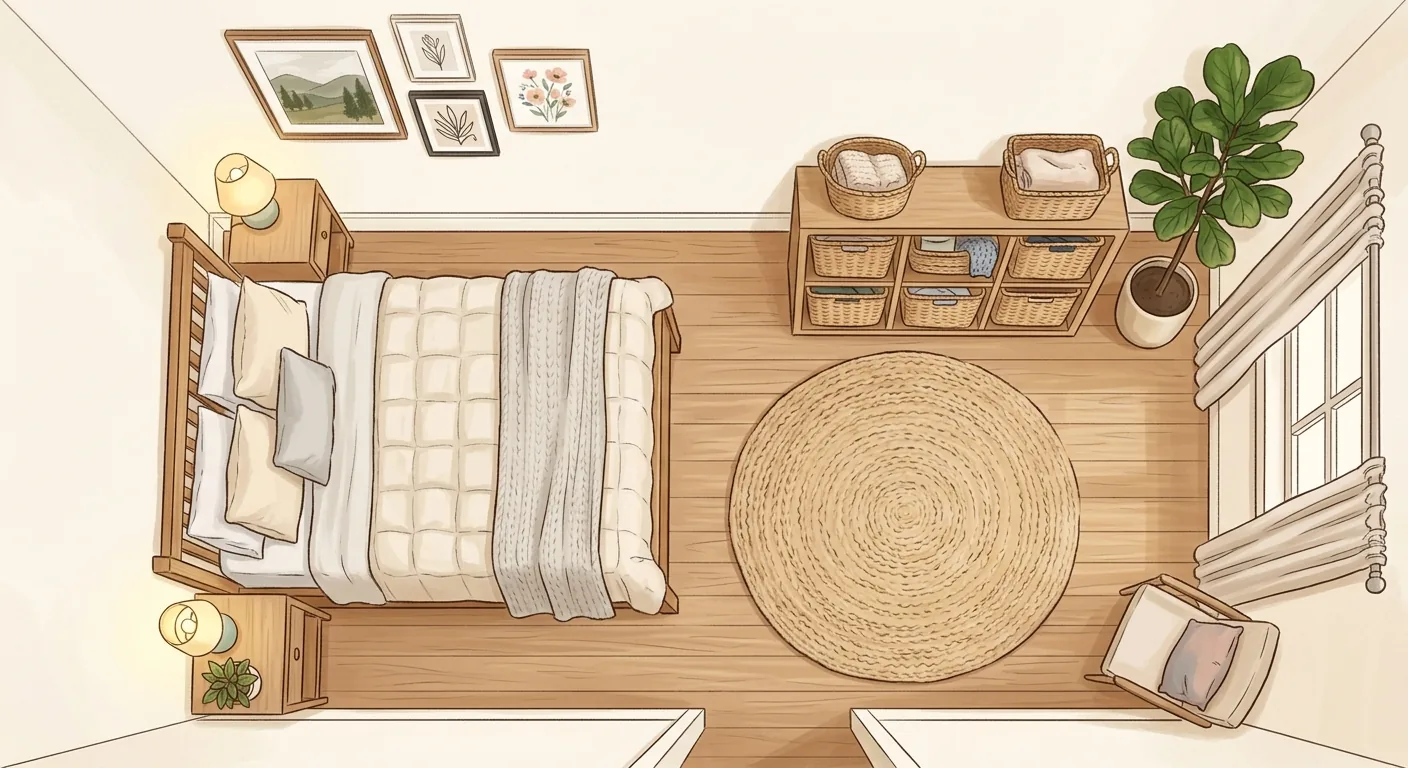
Start with the essentials. Sleep is the core of any studio, so a well-sized mattress is worth spending on — but for the frame, choose a lift-up storage bed or one with under-bed drawers and turn the space beneath into storage. Sitting and working can often be combined: a sofa bed doubles as seating by day and a guest bed by night, and a folding or wall-mounted desk drops down when you need it and tucks away when you don't. For storage, go vertical first — a tall cabinet against the wall saves far more floor than a squat, low sideboard.
Get these four covered and a studio genuinely works. Everything else is a bonus, not a necessity.
The Bulky and Barely-Useful Pieces a Small Studio Should Skip
The skip list matters even more than the buy list. A deep 90 cm sofa, a big coffee table hogging the center, a traditional wardrobe with doors that swing outward — these three are the studio's space-killers. They eat floor, block the walkway, and make the room look smaller.
Watch out for the barely-useful pieces too: the decorative shelf, the spare chair, the statement floor lamp you buy thinking "I'll use it someday" tend to become corners where clutter piles up. Ever had a piece of furniture that ended up only holding hung-up clothes? That's the signal it shouldn't have been there. To plan each room's function in more detail, see the bedroom and living-room zoning approach in our small-space design guide.
3How to Choose a Studio Furniture Set: The Pros, Cons, and Traps of Buying a Matching Bundle
Is buying a matching set a good deal? The answer is "it depends." The upside is real — a unified look, everything at once, and no piece-by-piece price comparison. But the risk is that a set's dimensions may not fit your space, and it often bundles in pieces you'll never use. Before you buy, laying out the actual dimensions of every piece matters far more than admiring the whole set in a showroom photo.
Where a Set Saves You Effort, and Where the Risk Hides
What a set saves you is decision cost. Beginners don't have to fret over whether the bed, cabinet, and desk colors clash — buy one set and it all hangs together. For anyone rushing to move in with no time to shop slowly, that's genuinely appealing.
The risk hides in the details. Showrooms are usually much bigger than your studio, so a set that looks just right on the showroom floor turns clunky once it's back in a 5-ping room. And that line — "the whole set is a better deal" — often nudges people into an extra side table or nightstand they don't need. The money you saved gets traded for pieces that eat floor.
The Common Traps of Matching by Size and Style
Three traps show up most often when matching a set: judging only by the showroom's overall look, ignoring each piece's actual depth, and getting led along by "buy more for a discount." In our experience, the two numbers to watch hardest with studio furniture are depth and door-swing direction — they decide whether a piece will jam once it's in.
Matching by style works the same way. Forcing everything into one color and one material can actually flatten the depth of a room. Rather than chasing a fully matched set, first confirm every piece fits and the flow stays smooth. Take each store's set deals with a grain of salt; it always comes back to the real dimensions of your own home.
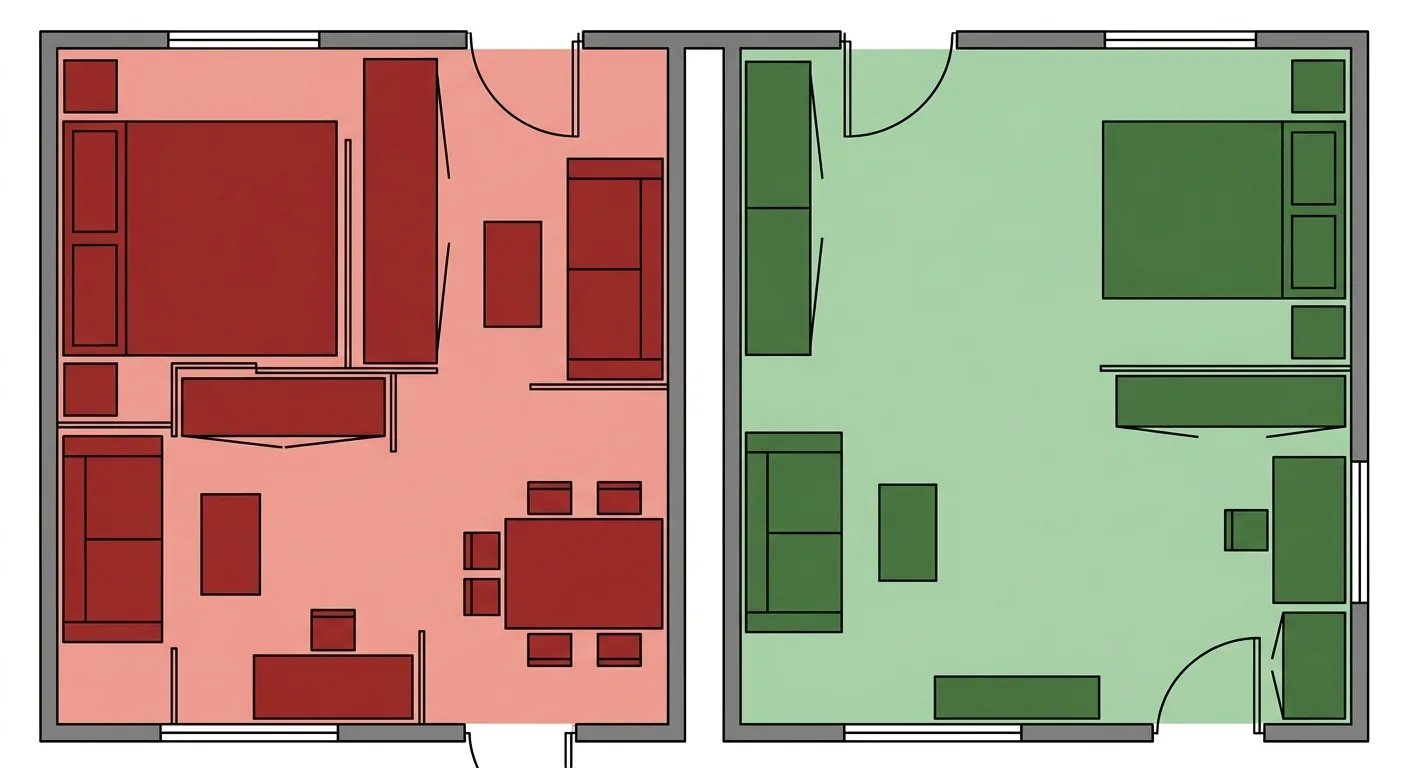
Caption: The same studio — oversized furniture (left, walkway squeezed) vs. furniture aligned to the walls (right, walkway flows). The difference is whether the sizes were laid out first
4A 6–7 Ping Studio in Practice: What You Can and Can't Change in a Rental Makeover
How far can a rental makeover go? First, separate the changeable from the fixed. Take a 6–7 ping studio: the changeable is soft furnishings, movable furniture, and reversible shelves and hooks; the fixed is the layout, the plumbing, and whatever the lease restricts. Before you lift a finger, read the lease — this one step helps you keep your deposit.
The Soft Furnishings and Reversible Changes You Can Make in a Rental
The changeable range is actually pretty wide. Curtains, rugs, bedding, lighting — swap them out and you swap the whole mood, cheaply and packably. Damage-free hooks, no-drill shelves, a rolling storage cart: these wall-friendly pieces let you re-zone the space without touching the layout.
Movable furniture is the other workhorse of the changeable side. A side table on casters, a set of stackable storage boxes — pull them out when you need them, tuck them away when you don't. A renter's biggest advantage is that all of this comes with you when you move.
The Fixed Layout, Plumbing, and Deposit Risk
Don't force the fixed parts. The position of walls, the plumbing for the bathroom and kitchen, the exterior windows — changing these isn't just a breach of contract; restoring them costs a fortune. Plenty of leases spell it out: no drilling into walls, no altering partitions — break that, and it comes out of your deposit.
Deposit risk is the red line of any rental makeover. For any change that leaves a mark on the wall or needs to be torn out and restored, ask the landlord first and get written consent before you start. If you want to keep it simple, put your energy into packable soft furnishings — returning the place exactly as it was is the cleanest way out at move-out. These trade-offs tie closely to planning a space for one, so read on with our guide to how many ping one person really needs.
5Student and Budget Rental Styling: A Low-Budget, Layout-Untouched Setup Order
When the budget is tight and you can't touch the layout, styling needs an order of operations. Solve sleep and storage first, then lighting and textiles, and only then decoration. Spend where it counts, get the order right, and the same budget buys a far more comfortable home.
The Budget Order of Operations and Best-Value Pieces
The top priority is always sleeping well. A suitable mattress and a set of blackout curtains directly shape your quality of life. Second is storage — get the scattered stuff tidied away and the room instantly clears up. With these two done, the basics of living are solid.
Lighting comes third. A warm-toned desk or floor lamp feels far more like home than a stark white ceiling light, and it isn't expensive. Textiles and decoration come last — they make the room pretty, but they aren't essentials for "livable." The best-value pieces are usually the ones that do double duty and come with you when you move.
Styling Techniques That Don't Damage the Walls
Not damaging the walls is the core discipline of rental styling. Damage-free hooks, adhesive shelves, no-drill tension rods — these hang and hold without leaving a trace. Whether you're hanging art, string lights, or a storage pocket, there's a no-drill version of it.
One small reminder: don't get greedy with weight. Damage-free products have a load limit, and hanging something too heavy will tear the paint right off the wall — costing you the very deposit you were trying to protect. For more ways to change the look without touching the layout, our room styling playbook pulls together the full thinking on styles, small objects, and DIY.

Caption: The four-step budget styling order — (1) Sleep (bed + curtains) (2) Storage (3) Lighting (4) Textiles and decoration
6Lay It Out at 1:1 Scale Before You Buy: So Nothing Gets Stuck, Oversized, or Left Behind
The line that hurts renters most is "I bought it, then found it won't fit through the door." The three traps studio furniture trips on most — it won't fit, the walkway's too narrow, and it can't be moved out at move-out — can all be dodged before you place the order. The method: measure first, lay it out first, then buy.
We've laid out plenty of small studios for people, and what usually gets stuck isn't the room itself — it's the moving path. A double bed that looks like a perfect fit gets wedged at an elevator or a stairwell corner and won't go in; this happens more often than you'd think. So when you measure, don't just measure the room — measure the elevator depth, the stairwell width, and the doorframe height too.
This is exactly where Roomfit earns its keep. Pull in the studio's real wall lengths, door width, and window positions, then drop in the bed, cabinet, and desk you're eyeing at 1:1 true scale — whether the walkway is wide enough, whether a door will hit something, whether the bed can even make it through the doorway, all of it becomes obvious at a glance. Get one layout right on screen, then order, and you'll never hit that move-out bind of "it went in back then, but it won't come out now." No download needed — just open your browser and start arranging.
Laying out one version before you buy takes hardly any time, yet it saves you the hassle of returns, moving, and even a lost deposit. That's the most down-to-earth advice we have about studio furniture.
7In Short: Arranging Studio Furniture Right Beats Buying Expensive
Whether a studio fits just right comes down not to how much furniture you bought, but to whether it was arranged right. Put functional density first, ruthlessly cut the bulky pieces you should skip, validate every set-or-not decision against your own dimensions, and hold the deposit red line on any rental makeover — do these, and even a small studio can feel easy to live in. Laying it out at 1:1 scale before you order is, in our view, the single most worthwhile step. To tie the whole small-space layout together, don't forget to circle back to our hub guide, making a small room feel bigger.
8Frequently Asked Questions
What are the most essential pieces of studio furniture?
One piece from each of the four functions — sleeping, sitting, working, and storage — is enough: a well-sized bed (ideally a lift-up or drawer bed that doubles as storage), a sofa bed or a folding table-and-chair set, and a tall wall-mounted cabinet. The Ministry of the Interior's Department of Household Registration put the 2025 national average at just 2.35 people per household (Department of Household Registration, Ministry of the Interior, 2025), so in a small space every piece should do double duty. Everything else is a bonus — cover these four before you consider adding more.
Is a studio furniture set (buying the matching bundle) worth it?
It depends. The upside of a set is a unified look, everything at once, and time saved on price comparison; the risk is that the set's dimensions may not fit your space, and it often bundles in pieces you won't use. Showrooms are usually bigger than a real studio, so a whole set easily looks clunky once it's back in a small room. Lay out each piece's depth and door-swing direction to cross-check, and don't let "the whole set is a better deal" talk you into buying more.
How far can you take a rental makeover in a 6–7 ping studio?
You can only touch the reversible, wall-friendly parts: curtains, rugs, lighting, damage-free hooks, no-drill shelves, and movable furniture are all fine and come with you at move-out. The layout, plumbing, and partitions are off-limits — most leases explicitly ban drilling into walls or altering partitions, and breaking that comes out of your deposit. For any change that leaves a mark or needs to be torn out and restored, get the landlord's written consent before you start.
On a tight student rental budget, what should you buy first?
Spend in this order: sleeping and storage → lighting → textiles and decoration. The top priority is a mattress and blackout curtains, which directly affect sleep quality; second is storage, which instantly clears up the room once the clutter is tidied away; lighting is third — a single warm-toned lamp already feels like home; textiles and decoration come last. Prioritize pieces that do double duty and come with you when you move — those give you the best value.
How do you make sure the furniture you buy will fit and make it through the door?
Measure, then lay it out, before you order. Beyond the room's wall lengths and door width, be sure to measure the moving path — elevator depth, stairwell width, doorframe height — because big pieces getting stuck halfway is common. Use Roomfit to lay out your furniture at 1:1 true scale inside your actual floor plan, and check the walkway, door clearance, and entry path all at once — far safer than buying on a hunch.
9Related Reading
- Rental Makeover Before and After: A Big Transformation Without Touching the Layout
- Student Rental Styling and What to Watch For: The Complete First-Time Renter's Guide
- The Complete Furniture Dimensions Chart: Check Depth and Size Before You Shop