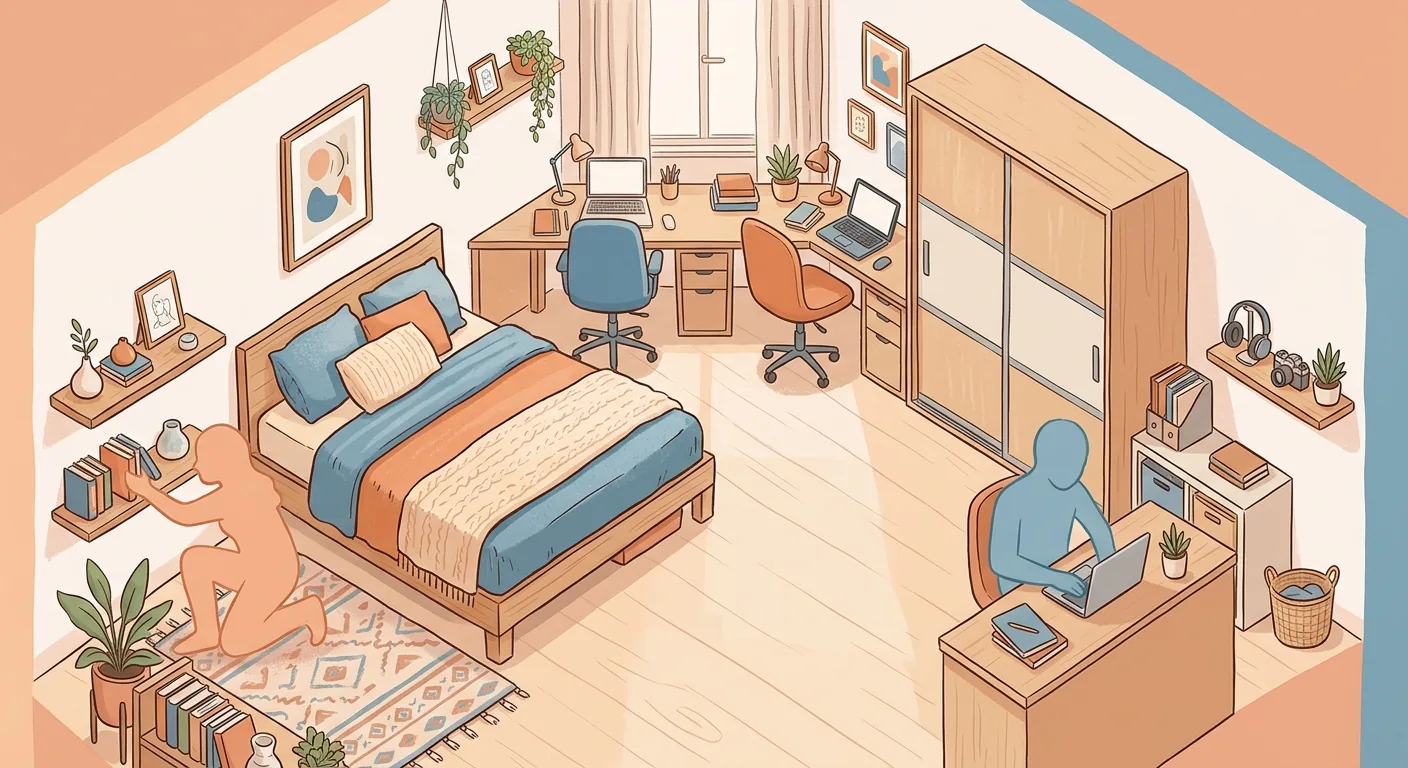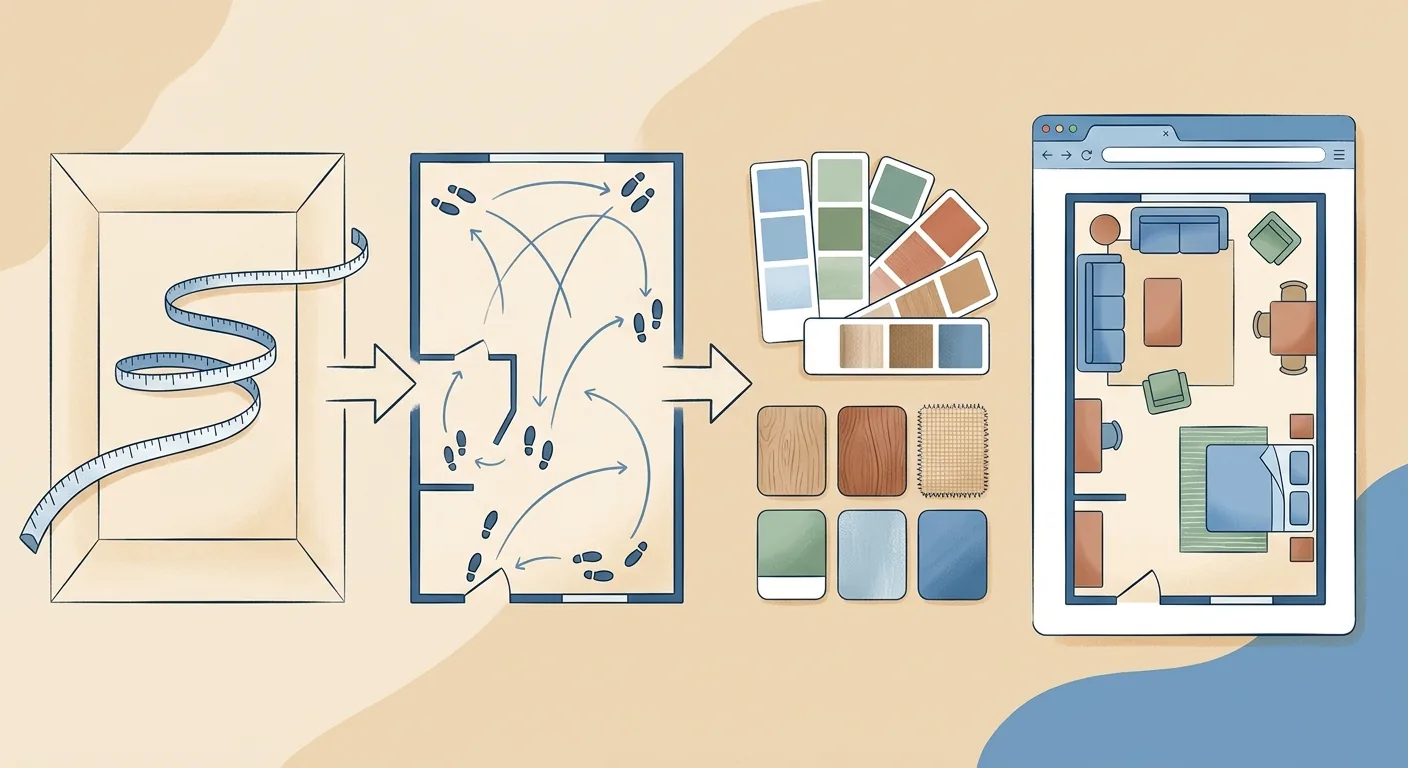

Wanting your rented room to feel like your own is a completely normal impulse. But the moment you think "touching the walls means losing the deposit," your hands pull back. A big transformation doesn't actually require touching the layout.
The truly smart approach to a rental makeover is refreshing the look under a "reversible, non-destructive, fully restorable at move-out" premise. This piece takes a before-and-after approach, walking you through what you can and can't change, how to budget for it, and whether you should DIY or hire a designer. Before you start the makeover, lay out a version on screen first — it saves a lot more regret than tearing things apart and wishing you hadn't.
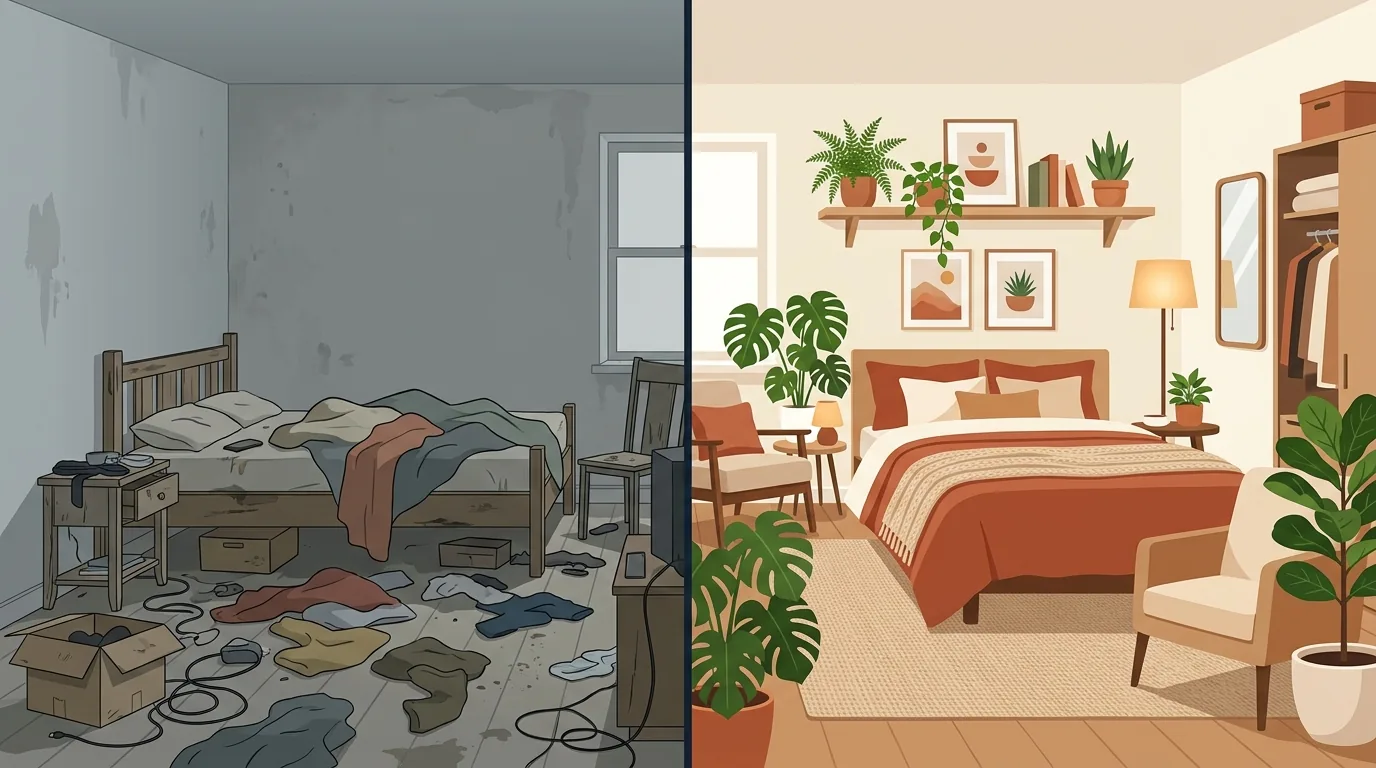
Caption: A before-and-after transformation without driving a single nail — soft furnishings, shelving, and placement refresh the look, and it still restores fully at move-out
Key takeaway: Per Ministry of the Interior standard residential lease terms, a security deposit cannot exceed two months' rent, and tenants are generally required to restore the unit to its original condition upon return (2025 notice). A rental makeover can transform your space without losing your deposit, as long as you stick to three lines: reversible, non-destructive, and landlord-approved.
1What You Can and Can't Change in a Rental Makeover: A Reversible Checklist That Doesn't Touch the Layout
According to the Tzu Mei Ma Foundation, rental dispute filings totaled 14,014 cases from 2017 through September 2023, with deposit refunds and repairs being the most common sources of dispute (Tzu Mei Ma Foundation, 2023). That tells you one thing: touching the walls or the layout is where rental makeovers most often run into disputes. So the first red line of any makeover is "reversible, non-destructive, fully restorable at move-out."
Draw the lines clearly first, and you'll feel free to actually make changes afterward.
The Reversible Makeover Checklist
Everything that transforms the look without touching a wall belongs on this list:
- Soft furnishings: curtains, rugs, throw pillows, and bedding — swap in a new color scheme and the whole room feels different.
- Peel-off wallpaper and wall decals: options that come off cleanly with no sticky residue give your walls an instant theme.
- Drill-free shelving and hangers: tension rods, residue-free hooks — both storage and display are achievable.
- Movable furniture: relocatable tables, chairs, and storage cabinets, ready to be rearranged anytime.
- Ambient lighting: a floor lamp, a string of warm-toned lights — the mood shifts dramatically.
What Absolutely Needs Landlord Approval
Knocking down walls to change the layout, moving fixed cabinetry, altering plumbing or electrical, painting the walls (explicitly forbidden in some leases) — anything that touches the actual structure of the property requires landlord approval upfront, spelled out in writing, or you risk losing your deposit and paying for restoration on top of it. There's no gray area on this one.
How Move-Out Restoration Is Calculated
Per Ministry of the Interior standard residential lease terms, tenants are generally required to restore the unit to its original condition upon return (Ministry of the Interior, 2025). In plain terms: whatever you changed, you need to undo when you move out. So stick your entire makeover to the "peels off, moves out" approach, and your restoration cost is zero. Actual rights and obligations still follow your lease terms. To fully master the drill-free, residue-free approach, check Decorating Guide for No-Drilling and Lease-Restricted Rentals.
2Lay It Out in Roomfit First: Preview a Before-and-After Comparison at True Scale Before You Tear Anything Apart
Per the Taipei City DGBAS household survey, housing-related items accounted for 28.49% of household consumption spending in 2024 — the single largest category (Taipei City DGBAS, 2024). Housing already costs plenty — a makeover shouldn't waste money on top of it. And the cheapest before-and-after comparison is one you lay out on screen — changes on screen cost nothing; changes on-site cost money.
Lay out your room's current state in a tool at true-to-scale sizing as your "before," then lay out the new furniture and zoning as your "after" — put the two side by side, and every problem reveals itself.
Laying Out the Current State as "Before"
Start by recreating your room as it stands now. Upload a floor plan, calibrate the scale, and place your existing bed, desk, and cabinets back into their true-to-scale positions. This version is your "before." Its value lies in laying bare the traffic flow and proportions you live with every day but have never actually examined closely. A lot of problems only become visible once you've laid them out.
Laying Out Your Vision as "After"
Next, duplicate the layout and place your makeover vision onto it. New sofa here, desk moved to that wall, an extra shelving unit. Because the furniture is rendered at true scale, you'll immediately know whether "what you pictured in your head" actually fits.
We used exactly this trick during our own makeover: we originally wanted to squeeze a big desk by the window, and once we laid it out, we discovered it would block half the window's natural light — we switched plans on the spot.
Comparing the Two Versions to Spot Traffic-Flow Pitfalls
Lay the two versions side by side, and pitfalls like a blocked aisle, a cabinet blocking a window, or a roundabout traffic flow all become obvious at a glance. To be honest, the simulation solves "does it fit, does it flow smoothly" — the feel of materials and lighting still needs to be experienced in person, and it doesn't replace your own aesthetic judgment. But get the big picture and dimensions locked down on screen first, and you won't end up regretting it after you've already torn things apart, bought things, and moved things in.
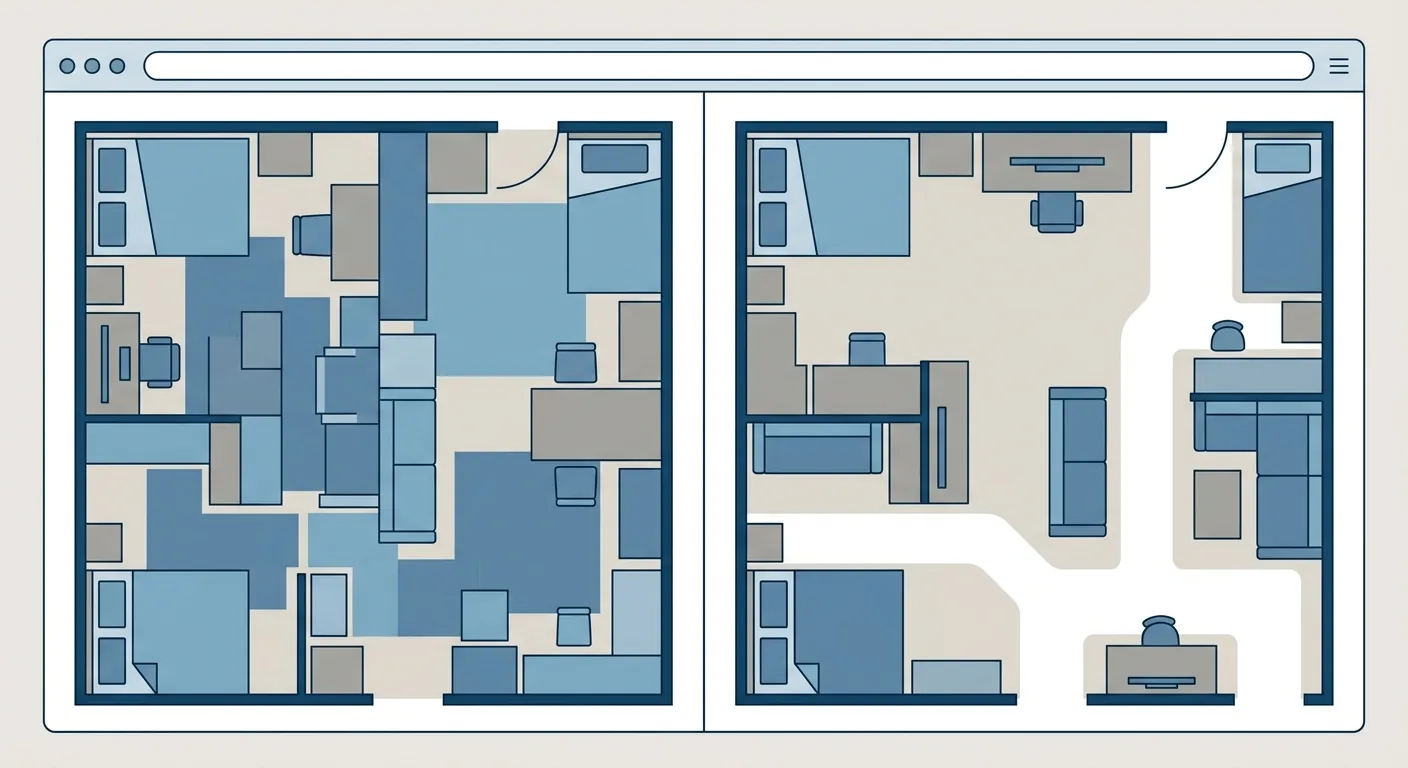
Caption: The "before" version on the left has a blocked aisle, the "after" version on the right has clear traffic flow — changes on screen cost nothing, so catch the pitfalls before you start
3How to Budget for a Rental Makeover: Cost Tiers From Wallpaper and Rugs Up to System Shelving
The Directorate-General of Budget, Accounting and Statistics household survey shows Taiwan's homeownership rate stood at 84.4% at the end of 2024, meaning roughly 15.6% of households rent (Directorate-General of Budget, Accounting and Statistics, 2024). Renters need to budget for a makeover more carefully than homeowners do — because whatever money you spend that you can't take with you counts as a sunk cost. So budget for a makeover in "tiers," not exact figures.
Below, common makeover items are grouped into three tiers. All prices are left unspecified — go by whatever the retailer is charging in real time.
| Tier | Common Items | Characteristics |
|---|---|---|
| Low | Peel-off wallpaper, rugs, throw pillows, string lights, wall art | Lowest cost, zero burden at move-out, swap it out with the seasons |
| Mid | Movable shelving, storage cabinets, curtain sets, rugs | Balances function and looks, still movable |
| High | Drill-free system shelving, larger multi-purpose furniture | Higher unit price, choose disassemblable pieces so you can still take them with you |
The Low/Mid/High Tiers
The low tier is "mood," the mid tier is "function," and the high tier is "a bigger investment." We recommend working from low to high: set the tone first with low-cost soft furnishings, live with it a while to confirm you still like the style, then add mid- and high-tier pieces. That way even if you change your mind partway through, your losses stay small.
Where to Spend First
One principle: spend first on functional pieces you'll use daily and can take with you, with decorative soft furnishings coming later. One good chair you sit in for eight hours a day is worth more than ten pretty wall hangings you never look at. This money-saving logic is covered in more detail in Budget Renter Styling Money-Saving Guide.
Prioritize Movable Pieces
For higher-tier furniture in a rental makeover, always choose pieces that are disassemblable and movable. Go with drill-free system shelving, and modular large cabinets. Every high-value dollar you spend can then move with you to your next place as a complete unit — keeping the money with you.
4Should You Hire a Rental Makeover Designer? Weighing DIY Against Hiring a Professional
The Consumer Protection Administration's 2023 review of standard subleasing contracts found 219 non-compliant items across 50 contracts sampled, an overall noncompliance rate of 29.2% (Consumer Protection Administration, 2023). This is a reminder: whether you DIY or hire a designer, the moment payment and agreements are involved, get the scope, cost, and restoration responsibility spelled out in writing. There's no single right answer to whether you should hire a designer — it comes down to four things: budget, time, scope of the makeover, and how demanding you are about the result.
Figure out first which one you're stuck on, then decide.
Who DIY Suits
If you have a limited budget, your makeover is mostly soft furnishings and movable furniture, and you're willing to spend your own time planning and shopping, DIY is the best value. Rental makeovers are mostly small, reversible projects that you can absolutely handle yourself. The upside is saving on design fees and doing everything exactly your way; the trade-off is spending time researching, comparing prices, and iterating through trial and error.
Who Should Hire a Designer
If your makeover scope is larger, you want a cohesive overall style, your time is limited, and you're willing to pay for efficiency, hiring a designer or makeover consultant can save you a lot of hassle. In a rental context, be sure to state upfront that "everything must be reversible" — otherwise the designer might propose changing the layout or installing fixed cabinetry, which becomes a headache when you move out.
The Middle Ground: Lay Out the Plan Yourself, Consult Only on Style Selection
There's also a third path — and the one we most recommend for renters: lay out the floor plan and dimensions yourself using a tool, and only consult a professional on style and product selection. This way you save on the full design fee while still borrowing professional aesthetic judgment. Solve "does it fit, does it flow" yourself, and hand off "does it look good, which piece to choose" to a professional.

Caption: Three paths for a makeover — DIY to save money and plan it yourself, hire a designer to save time and gain efficiency, or the middle ground: plan the layout yourself and only consult on style selection
5Keep the Makeover Reversible: Get the Placement Right First, Then Make Your Move With Confidence
The logic of a rental makeover is simple: stick to the three lines of reversible, non-destructive, and landlord-approved, and you can boldly transform your space without losing your deposit. Budget by tier, spend on functional pieces you can take with you, and choose disassemblable pieces for bigger items — none of it goes to waste, even when you move.
What you should actually do first is open a tool and lay out two versions for a before-and-after comparison. Changes on screen cost nothing; changes on-site cost money. Catch the aisle, proportion, and traffic-flow pitfalls first, then buy and make your changes — that's how your makeover ends up both good-looking and regret-free.
To understand the whole "get the placement right first, then chase looks" logic behind rental styling, start with Rental Styling Complete Guide. Still in the room-hunting stage for your first rental? The Complete Guide to Student Rental Setup and Precautions helps you avoid room-viewing pitfalls. A landlord with strict rules who won't allow touching the walls at all? Decorating Guide for No-Drilling and Lease-Restricted Rentals has the complete no-fixed-installation approach.
6FAQ
Will a rental makeover cost me my deposit?
Not if you stick to a reversible approach. Per Ministry of the Interior standard residential lease terms, a security deposit cannot exceed two months' rent, and tenants are generally required to restore the unit to its original condition upon return (Ministry of the Interior, 2025). Use peel-off wallpaper, drill-free shelving, and movable furniture for your makeover, and peeling things off and moving furniture out at move-out restores the original condition, so you get your full deposit back. Only touching the walls or the layout carries real risk of a deduction — always get landlord approval in writing for those first.
Roughly how much does a rental makeover cost?
Costs vary widely — budget by tier rather than chasing an exact figure. The low tier (wallpaper, rugs, string lights) costs the least; the mid tier (shelving, storage cabinets, curtains) balances function; the high tier (system shelving, larger multi-purpose furniture) has a higher unit price. Housing-related spending already accounts for nearly 30% of household consumption in Taiwan (28.49% per the Taipei City DGBAS 2024 survey), so all figures should be based on real-time retailer pricing — set your budget first, then scale up from there.
Do I have to hire a designer for a rental makeover?
Not necessarily. If your makeover is mostly a small, reversible project centered on soft furnishings and movable furniture, DIY is entirely doable and saves you the design fee. If your scope is larger, you want overall cohesion, or your time is limited, that's when hiring a designer makes sense. Either way, once payment and agreements are involved, spell out the scope and restoration responsibility in writing — the Consumer Protection Administration's 2023 review found a 29.2% noncompliance rate in subleasing contracts, so getting it in writing matters.
Will peel-off wallpaper damage the wall?
It depends on the wall material — there's no single answer. A smooth, flat latex-painted wall usually peels off with no residue, but dark-colored walls, old painted walls, or wallpapered walls carry more risk. The safe approach is to test a small area in a corner first and observe how it comes off before committing to a large area. The adhesion and residue-free performance of any "no-trace" product should always be verified against the product specs and real-world testing — don't assume "residue-free" means 100% no trace, no matter what.
7Related Reading
- Room Decoration Guide: Styles, Decor, and DIY Fully Explained
- Room Color Scheme Guide: Color Principles, Recommended Palettes, and Online Simulation Methods
- Renovation Budget Sheet, Allocation Ratios, and a Shopping List Template
8References
- Ministry of the Interior Regulatory System — Standard Residential Lease Terms: Required and Prohibited Provisions (2025)
- Tzu Mei Ma Foundation (2023)
- Taipei City DGBAS — Household Income and Expenditure Survey (2024)
- Directorate-General of Budget, Accounting and Statistics — National Overview (2024)
- Consumer Protection Administration — Subleasing Standard Contract Review (2023)