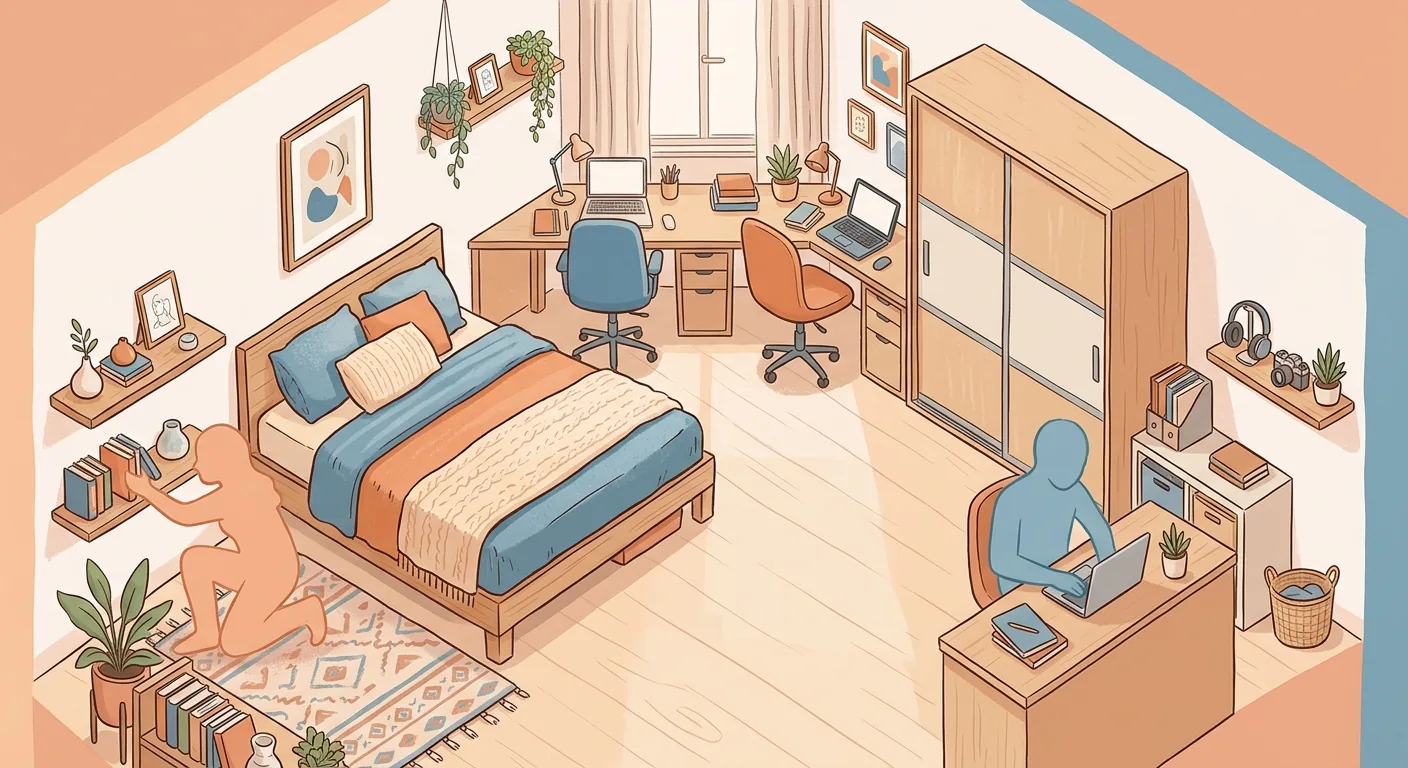

Renting on your own for the first time — feeling nervous is completely normal. You can't tell where the red flags are in an apartment, the lease is full of clauses you never finish reading, and you buy furniture only to discover it doesn't fit the room. Nearly every student has stumbled into these same pitfalls.
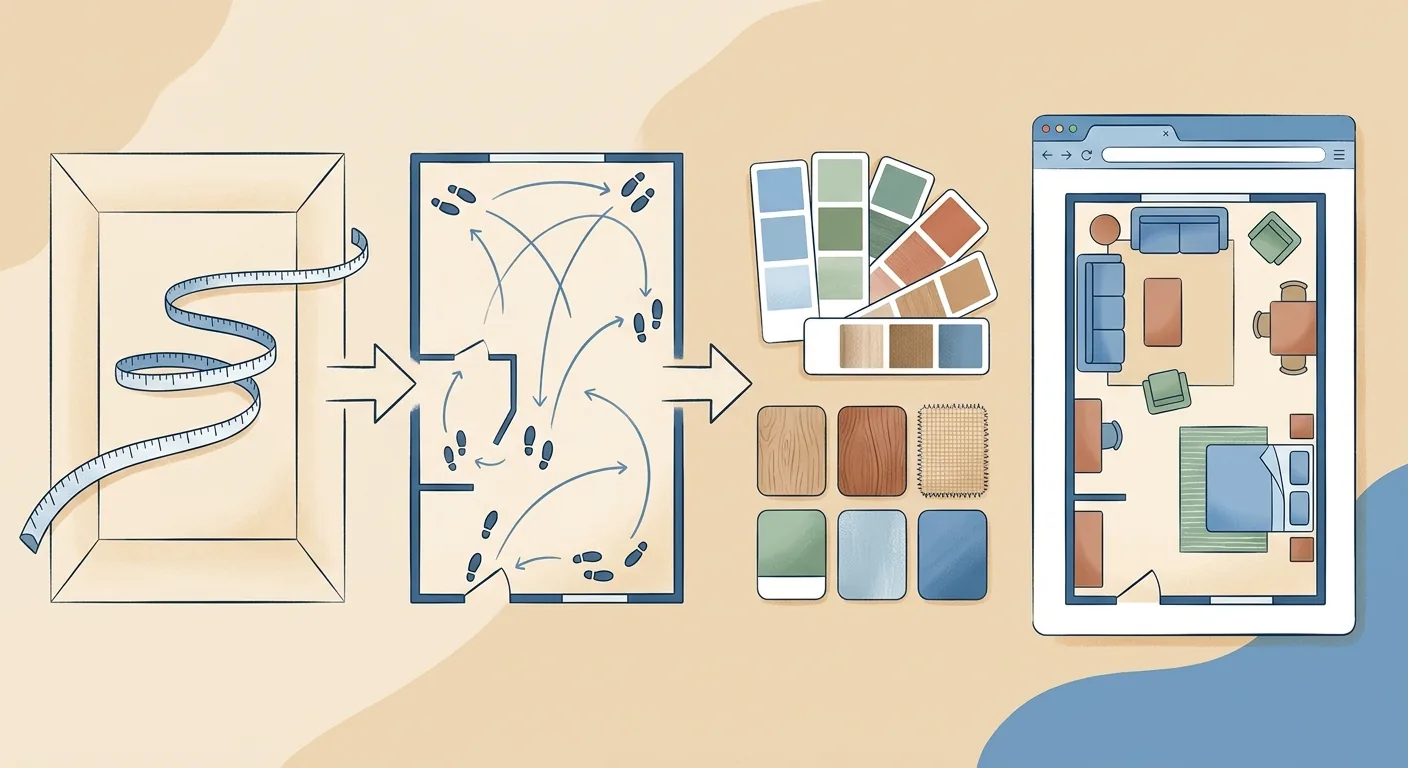
This guide walks through the three stages of student renting in one go: how to view an apartment, what to watch for when signing, and how to style a room well on a small budget. There's one core principle to remember: measure first, arrange first, buy last. Keep that in mind, and your first time renting can go a lot more smoothly.
Caption: The three stages of student renting — (1) pick the right apartment (2) understand the lease terms (3) arrange before you buy
Key takeaway: According to Taiwan's Ministry of Education, roughly 300,000 college students rent off-campus housing, accounting for about half of all students with housing needs (2017/2018 academic year). Sticking to "measure first, arrange first, buy last" the first time you rent helps you avoid the two most common pitfalls: wrong-sized furniture and a badly signed lease.
1The First-Time College Student Viewing Checklist: How to Check Layout, Lighting, and Outlet Placement
According to Taiwan's Ministry of Education Department of Statistics, an estimated 300,291 students across all colleges and universities rent off-campus housing — about 50.84% of those with housing needs, meaning half of all student housing demand is met through off-campus rentals (Ministry of Education Department of Statistics, 2017/2018 academic year). With that many students renting, apartment viewings often focus only on "cheap and close to campus" before signing. Bring a checklist and get everything covered in one visit.
Don't let a low rent sweep you off your feet. Check these three things first.
Does the Layout Fit Your Three Essentials?
Is the room a clean rectangle you can actually use, or an awkward, hard-to-furnish shape? A bed, a desk, and a wardrobe — these three pieces are the core of a student's room. When viewing, bring a tape measure and check the key dimensions: how wide is the wall where the bed will go, and is the planned desk spot deep enough? A rectangular room is easy to furnish; an awkward one is hard to live in no matter how cheap it is. If your three essentials don't fit, cross the place off your list right there.
How to Check Lighting and Ventilation
Is there enough daylight? Does the window face outside, or an airshaft? Is there a risk of dampness or mold? Lighting and ventilation directly affect comfort, health, and your electric bill — a poorly lit room means keeping the lights on during the day too. A damp room makes clothes and books prone to mold. These things are obvious on-site, so don't judge from photos alone.
Outlet and Network Port Placement
The number and location of outlets determines whether your desk and bedside area can actually be used. When viewing, confirm: is there an outlet near where the desk will go? Where's the network port? Otherwise you'll move in only to discover you need extension cords running across the entire room. Bring the dimensions you measured on-site back home and lay them out in Roomfit — you'll know whether everything actually fits before you decide to sign.
2Student Rental Checklist: Deposit, Lease Terms, Shared Facilities, and Safety
The Tomorrow Foundation reports rental dispute filings reached 14,014 cases from 2017 through September 2023, with deposit return and repair responsibility among the most common disputes (Tomorrow Foundation, 2023). Students are most likely to get burned in these "beyond the apartment tour" areas. Understanding the apartment is only the first hurdle — understanding the lease is the real skill.
Confirm these three things clause by clause before you sign.
Deposit and Lease Key Points
How many months' deposit are you paying? Under Taiwan's standard residential lease template, the deposit cannot exceed two months' rent (Ministry of the Interior, 2025). How is the deposit returned, how long is the lease term, is there a penalty for early termination, and who's responsible for repairs — get all of this in writing before you sign. Verbal promises don't count; only what's written into the contract does. Students are especially prone to being told "a two-month deposit up front is normal" — but a deposit exceeding two months is actually non-compliant.
Questions to Ask About Shared Facilities
Where's the washing machine, and how is it billed? How's trash disposal handled, are there enough scooter parking spots, and who's responsible for cleaning common areas? These questions come up a lot in shared/subdivided units — ask them all during the viewing. Vague rules around shared facilities are the most common source of friction with roommates and landlords after moving in.
Safety Checks
Are escape routes clear? Is there a fire extinguisher? Are the door locks and building security solid? Is the floor level and surrounding area safe? Safety always comes before cost savings. A cheap apartment with a difficult escape route isn't worth the rent you save. Contract terms and related responsibilities always depend on your actual lease and local regulations — this section offers concepts and reminders, not legal advice.
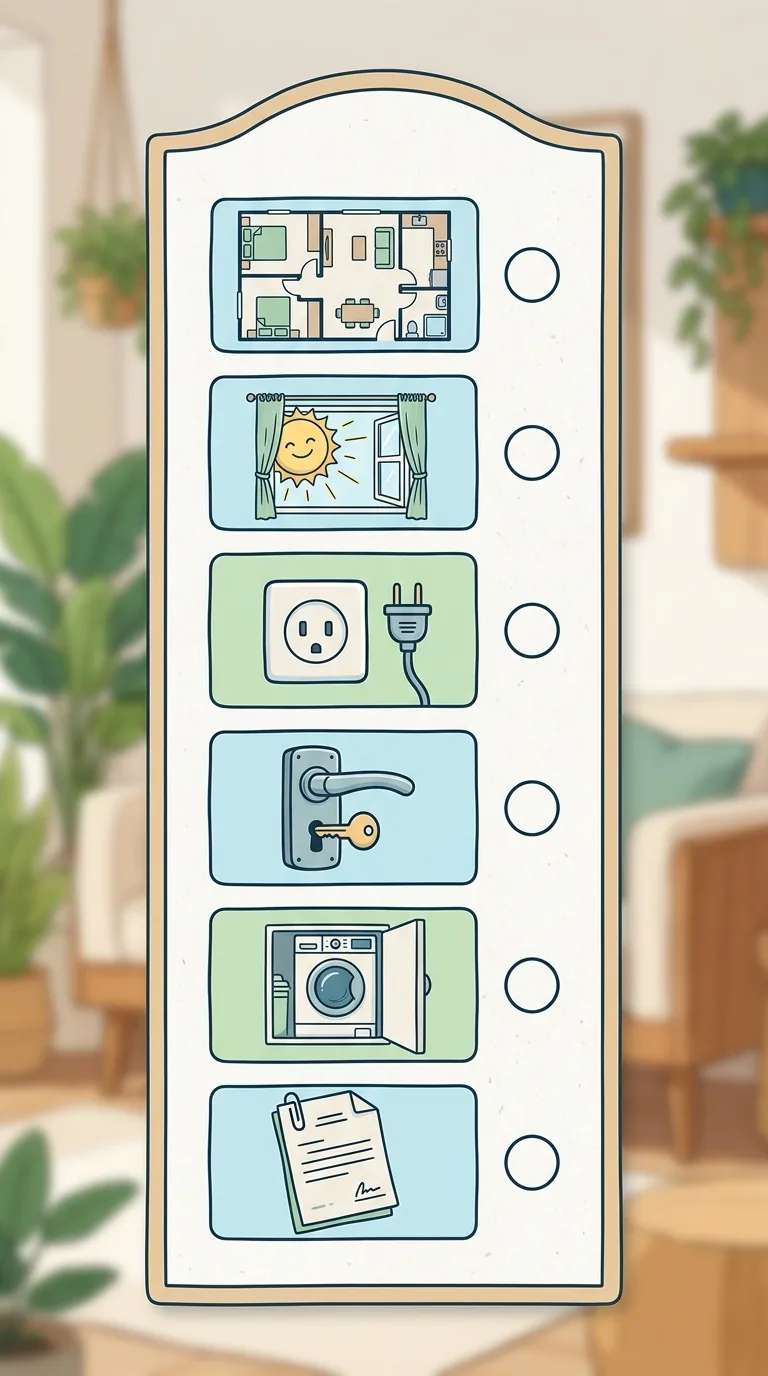
Caption: Six things to check when viewing — layout, lighting, electricity, safety, shared facilities, and lease terms; bring a checklist and confirm each item before signing
3Budget Student Room Styling: Arrange First With Roomfit Before You Buy, and Avoid Wrong-Sized Furniture
Data from the Ministry of the Interior's Real Estate Information Platform shows that even shared-room rent medians in university districts hovered around NT$8,000 in the first half of 2025 (e.g., roughly NT$8,210 in Taipei's Da'an District) (Ministry of the Interior Real Estate Information Platform, 2025). Rent already eats up a large chunk of a student's living budget, so furniture mistakes are even less affordable. Returning one wrong piece is a hassle — "arrange first, buy later" minimizes that trial-and-error cost.
The logic is simple: confirm it fits on-screen first, then spend the money.
The Arrange-First-Then-Buy Process
Upload your room dimensions to the tool, drag in a 1:1-scale bed, desk, and wardrobe, confirm everything fits, the walkway is wide enough, and doors won't get blocked — then place your order. This process takes less than ten minutes but saves you the return hassle and shipping costs of "buying it and then discovering it doesn't fit." When you're a student on a tight budget, those ten minutes are especially worth it.
The Three Must-Haves for a Small Room
A student room really comes down to three essentials: something to sleep on (bed), something to study at (desk and chair), and something to store in (storage). Get these three in place, and the room becomes livable and study-ready. Everything else is a bonus. Put your limited budget toward the quality of these three pieces rather than a pile of decorations you won't use.
Choosing Multi-Purpose Pieces
A lift-top desk, a bed frame with built-in storage, modular shelving — one piece doing the work of two means fewer total pieces of furniture, which frees up space in a small room. When we laid out a student studio ourselves, simply swapping a regular bed frame for one with built-in drawers freed up an entire dresser's worth of floor space. Spend your money on the two functions students need most — studying and sleeping — and leave decoration for last. For a more complete budget breakdown, see Budget Renter Styling Tips.
4Avoiding Pitfalls in Student Rental Makeovers: Reversible, Drill-Free Styling You Can Take With You at Move-Out
Under Taiwan's standard residential lease template, tenants are generally required to restore the unit to its original condition upon returning it (Ministry of the Interior, 2025). If you want to add personal style to a rented room, the precondition is sticking to the bottom line of "restorable at move-out." Change the visuals, not the walls — that's the golden rule of rental makeovers.
If you want a room with personality without losing your deposit, going reversible is the way.
The Reversible Makeover Checklist
Peel-off wall stickers, marks-free hooks, drill-free shelving, movable rugs, and string lights — these change the look without driving in a single nail. Want a themed wall? Use peel-off stickers. Need storage? Use a floor-standing shelf. Everything peels off and packs up, so move-out is zero-burden.
Drill-Free Storage
You can build out full storage without drilling into a wall. Floor-standing shelves, floor-to-ceiling tension-rod units, hanging rods, and storage bins all stay put through placement and tension, leaving zero holes. For the complete drill-free approach, The No-Damage Rental Styling Guide covers it in more detail.
Choosing Furniture You Can Take With You
Prioritize furniture and storage pieces that are detachable and lightweight. When you move out after graduation, you can take everything with you without waste. Students may move several times over four years, and furniture you can take with you means keeping your money with you the whole way through. If you're planning a bigger transformation, check out the reversible approach in Rental Makeover: Before and After first.
5Popular Student Rental Discussions on Dcard and PTT: Rental Disputes and Styling Inspiration
In 2023, the Executive Yuan's Consumer Protection Office audited 50 residential sublease contracts across 25 master-lease operators and found 219 instances of non-compliance, a 29.2% non-compliant rate (Executive Yuan Consumer Protection Office, 2023). No wonder discussions about rental disputes never stop on student forums. Organizing these high-frequency questions into a structured framework is more useful than scrolling through post after post.
Here are the two categories students discuss most, organized into actionable reminders.
How to Prevent Rental Disputes
Deposits not returned, repairs turning into a blame game between parties, unclear sub-landlord identity — these are the most common disputes discussed on forums. How do you prevent them in advance? Confirm your landlord's (or sub-landlord's) identity and subleasing authority before signing, get deposit and repair responsibilities written into the lease, and keep records of payments and communication. A bit of upfront diligence saves you ten times the trouble after the fact.
Curated Styling Inspiration
How to style a small studio well, how to allocate budget, which furniture is most practical — for this kind of styling inspiration, the answer almost always comes back to the same sentence: arrange first, buy later. Rather than copying someone else's pretty photo, lay out your own room's actual dimensions once and find your own best solution. Whether it's viewing or styling, everything eventually comes back to the same overarching principle of renting. Don't miss The Rental Styling Playbook for the complete styling logic.
6First Time Renting: Remember Measure First, Arrange First, Buy Last
The three stages of student renting are actually interlocked: pick the right apartment when viewing, understand the terms when signing, and arrange before you buy when styling. Use a checklist to view, read the lease carefully to sign, and lay things out on-screen first to style — and your first time renting can go smoothly.
One last reminder: deposit no more than two months, style entirely reversible, and choose furniture you can take with you. Remember these few things, and you'll live comfortably through your years of renting — and walk away clean at move-out too. To fully master every step of rental styling, start with The Rental Styling Playbook.
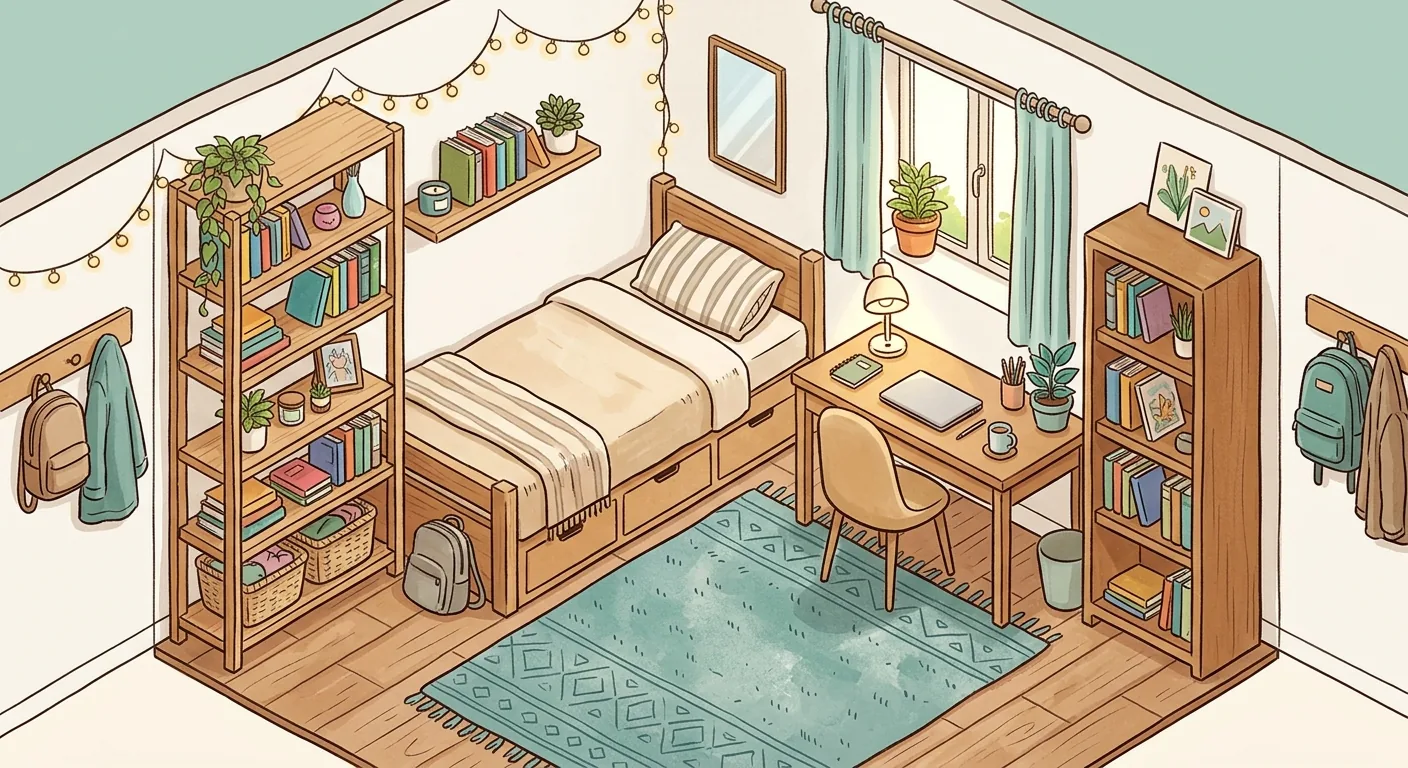
Caption: A small budget can still look great — a storage bed, a lift-top desk, floor-to-ceiling shelving: arrange first, buy later, and one piece doing double duty makes the most of the space
7FAQ
What should students watch out for the first time they rent?
All three stages matter: viewing, signing, and styling. When viewing, use a checklist to check layout, lighting, outlets, and safety; when signing, confirm the deposit (capped at two months' rent under Ministry of the Interior rules), lease term, and repair responsibility; when styling, measure first, then arrange, then buy. With roughly 300,000 college students renting off-campus — about half of all students with housing needs — this is a very common task, and going through it step by step with a checklist keeps you from feeling overwhelmed.
How many months' deposit should students pay when renting?
Under Taiwan's standard residential lease template, the deposit cannot exceed two months' rent (Ministry of the Interior, 2025). If a landlord asks for more than two months, that's non-compliant, and you can negotiate on that basis. Data from the Tomorrow Foundation shows deposit return is one of the most common rental disputes (over 14,000 cases from 2017 through September 2023), so make sure the move-out terms are written into the lease in black and white, and keep payment records.
How should students style a room on a small budget?
Put your money toward the three core functions first — sleeping, studying, storage — and leave decoration for last. Shared-room rent medians in university districts in Taipei hover around NT$8,000 (per Ministry of the Interior data for the first half of 2025), so rent already eats up a large part of the budget. Furniture needs to be arranged before you buy to avoid the waste of returns and exchanges. Choose multi-purpose, movable furniture — like a bed with built-in storage, a lift-top desk, or modular shelving — to reduce the total piece count, saving both space and money in a small room.
Can I take a student rental makeover with me after graduation?
Yes, as long as you choose the right approach from the start. Under Taiwan's standard residential lease template, tenants are generally required to restore the unit to original condition at move-out (2025 notice), so your makeover should go entirely reversible: peel-off stickers, marks-free hooks, drill-free shelving, movable furniture. Choose furniture and storage pieces that are detachable and lightweight, so you can take everything with you in one move after graduation without waste. Since students often change residences within a few years, choosing portable pieces effectively keeps your money with you.
8Related Reading
- How Much Space Do You Need Living Alone? A Guide to Single-Occupant Home Size and Space Planning
- Small-Space Room Layout Tricks: Get the 1:1 Fit Right Before You Buy Furniture
- Studio Furniture Layout and Rental Makeover Guide
9References
- Ministry of Education Department of Statistics (2017/2018 academic year)
- The Tomorrow Foundation (財團法人崔媽媽基金會) (2023)
- Ministry of the Interior — Standard Residential Lease Terms (Required and Prohibited Clauses) (2025)
- Ministry of the Interior Real Estate Information Platform (2025)
- Executive Yuan Consumer Protection Office — Residential Sublease Contract Audit (2023)