
"Am I a budget-conscious renter?" That question actually hides a much bigger one: how should I be splitting up my money?
Being budget-conscious isn't the same as living paycheck to paycheck, and it isn't about being wealthy either. The core idea is making the most of a limited budget. This piece starts by defining what "budget-conscious" actually means, then walks you through splitting your money into savings, investing, and styling, and finally zeroes in on "how to spend your styling budget wisely" — plan before you buy, putting every dollar toward furniture you'll actually use and can take with you. For the full picture of rental styling, pair this with Rental Styling Complete Guide.
The financial and investment sections in this article are general information sharing and do not constitute investment advice. Please evaluate any actual approach based on your own financial situation and professional guidance.
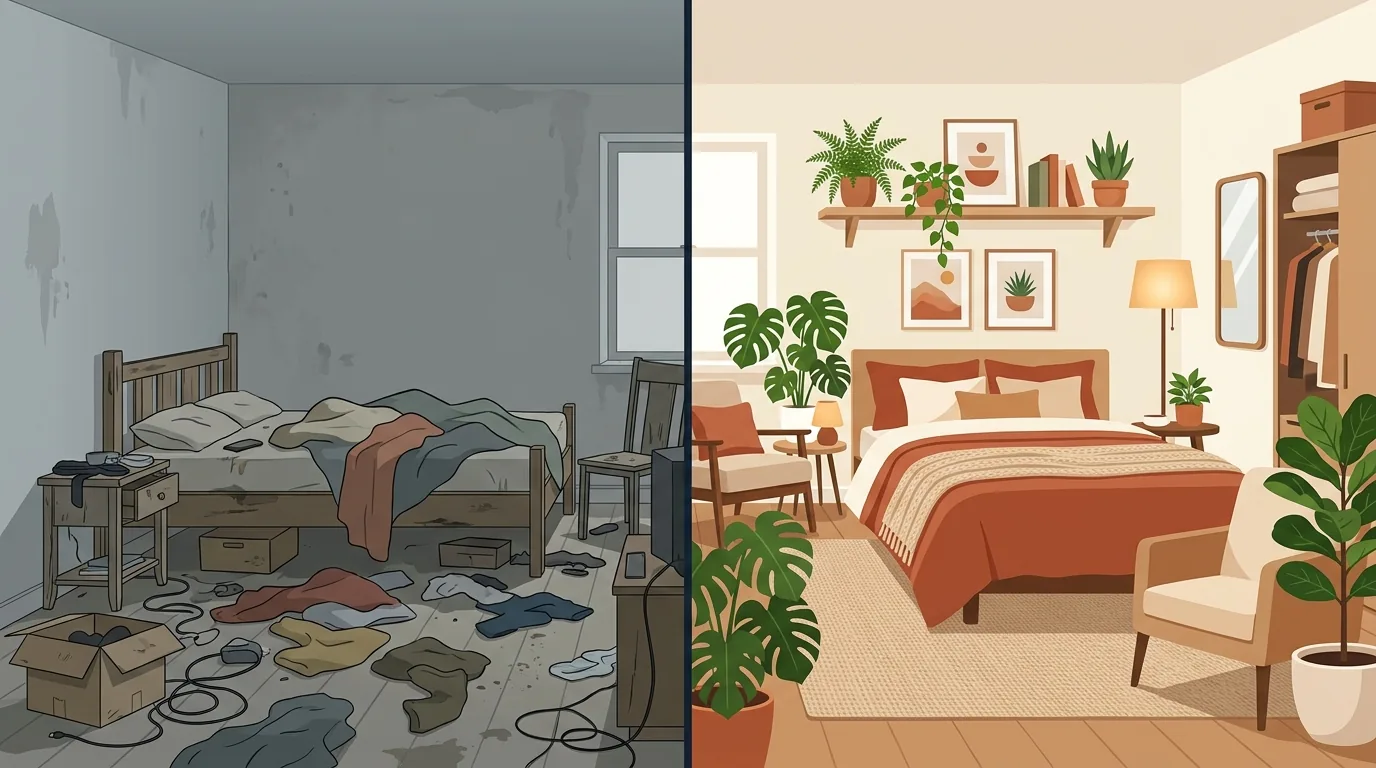
Caption: The budget-conscious renter's money-saving method — split your money first (savings/investing/styling), then plan your styling budget before you buy and spend it where it counts
Key takeaway: Common estimates place budget-conscious renters at roughly NT$30,000–50,000 in monthly income, with a small surplus left over after basic expenses (SinoPac Bank finance column). The key to money-saving styling isn't cutting corners — it's splitting your money properly first, then spending your styling budget on furniture you'll actually use and can take with you.
1Defining "Budget-Conscious": How Much Income Counts?
According to SinoPac Bank's finance column and several financial media outlets, "budget-conscious" is commonly defined as an office worker earning roughly NT$30,000–50,000 a month who still has a small surplus to save or invest after covering basic expenses (SinoPac Bank, 2025). But let's be clear upfront: there's no official threshold for what counts as budget-conscious. The point was never a specific number — it's your attitude toward spending.
At its core, being budget-conscious means making the most of a limited budget to live well.
What Does "Budget-Conscious" Mean
"Budget-conscious" broadly describes people who don't have especially high income, who track every dollar carefully, yet still value quality of life and small everyday pleasures. They know how to treat themselves well, and they know how to manage money — they're savvy consumers. This term describes an attitude toward life, not an income line. Whether you agree with "spend money on the things that matter" defines you as budget-conscious far more than your monthly salary does.
How Much Income Counts as Budget-Conscious
Common discussion lands in the NT$30,000–50,000 monthly range, and some people look at savings brackets instead. But these are all just reference points. Someone with a high income who spends it all every month isn't necessarily closer to financial freedom than someone with an average income who saves steadily. Instead of fixating on the number, put your attention back on "how I split and spend my money."
The Difference Between Budget-Conscious and Living Paycheck to Paycheck
The biggest difference between being budget-conscious and living paycheck to paycheck is "whether there's a surplus." Someone living paycheck to paycheck spends whatever comes in, hitting zero by month's end; a budget-conscious person deliberately holds back a small amount and builds it up gradually. The difference isn't in how much you earn — it's in how much you keep. This habit of "deliberately holding back" is exactly where the money-splitting method below begins.
2How Budget-Conscious Renters Split Their Money: The Order of Savings, Investing, and Styling Budget
A common piece of advice in finance columns is to first save at least 6 to 12 months of living expenses (roughly NT$300,000–600,000) as an emergency fund, before moving on to investing and lifestyle upgrades (SinoPac Bank, 2025). That gives budget-conscious renters a "split your money before you spend it" order: save first, then invest, and styling comes last. Get the order right, and you'll spend with peace of mind.
Again, a reminder: the investing sections below are general information and do not constitute investment advice.
How Much Savings to Set Aside First
Build your safety net first. Renters in particular need to cover deposits, moving costs, and unexpected repairs — without a reserve fund on hand, any hiccup means reaching for a credit card or a loan. The common recommendation is to save 6 to 12 months of living expenses first — this is the top priority in the whole money-splitting order. A sense of security is the foundation of personal finance.
Invest Within Your Means
Once your savings base is solid, invest only if you have room to spare. The principle is to act within your means and diversify risk — never gamble with your living expenses or reserve fund. This section offers only general concepts, no recommended products and no promised returns — your actual approach should be evaluated based on your own financial situation and professional guidance. "Investing carries risk" is a line budget-conscious renters especially need to keep in mind.
Set an Upper Limit on Your Styling Budget
Styling comes last. Set an upper limit on your available styling budget first — for example, "cap this move's styling spend at NT$20,000." With a cap in place, seeing furniture you like won't turn into an impulsive overspend. Setting the budget is the first step to saving money, because it draws a clear line between "want" and "can afford."
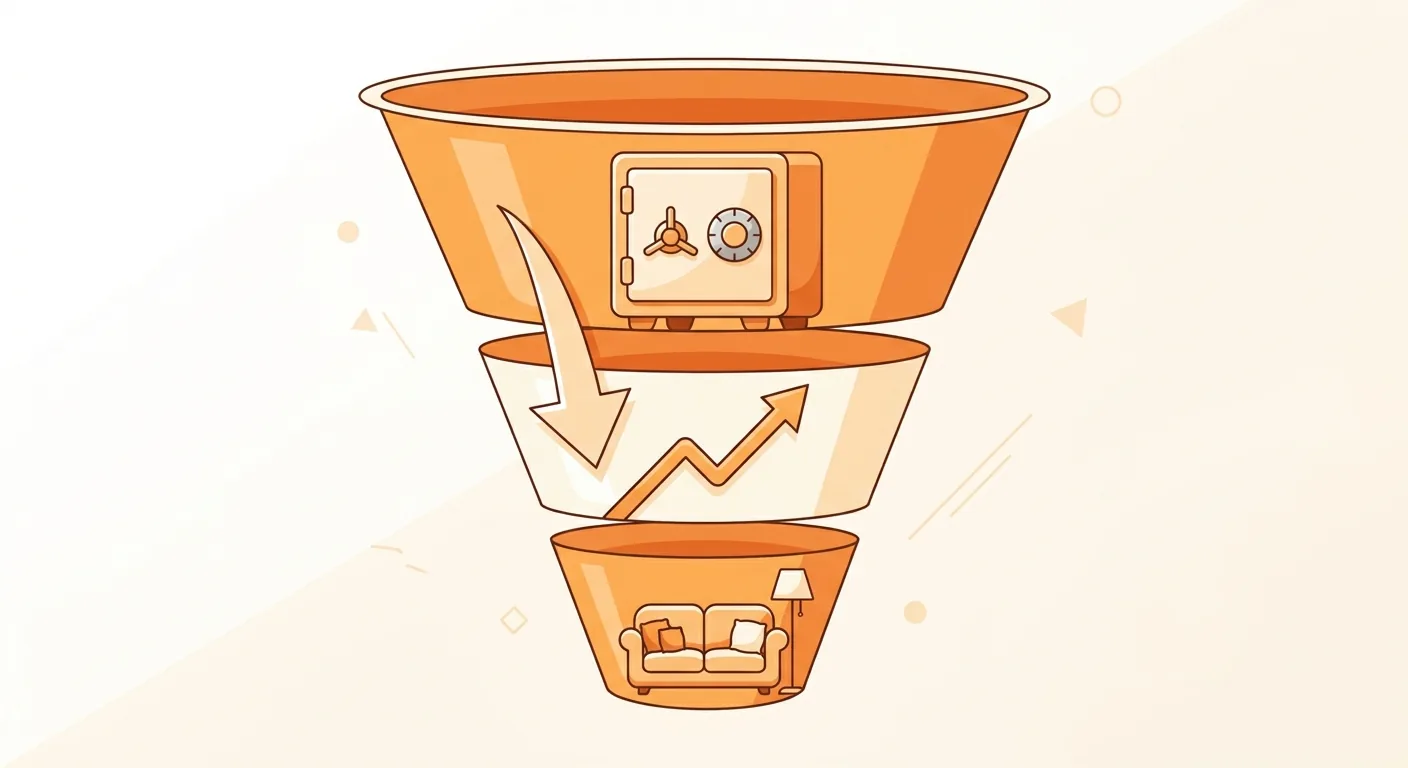
Caption: The three-tier money-splitting order — (1) save 6–12 months of living expenses as a reserve fund first (2) invest within your means once you have room to spare (3) finally, set an upper limit on your styling budget
3Budget Renter Styling: Plan in Roomfit First, Spend on Furniture You'll Actually Use
According to the Taipei City Government's Directorate-General of Budget, Accounting and Statistics household expenditure survey, housing-related items accounted for 28.49% of household consumption spending in 2024 — the single largest category (Taipei City DGBAS, 2024). Housing already eats up this much, so styling needs to spend every dollar where it counts even more. Once you've set your styling budget cap, this section covers how to spend it wisely — the answer is plan before you buy.
Lay it out on screen once first, and you'll know exactly where the money should go.
The Money You Save by Planning Before Buying
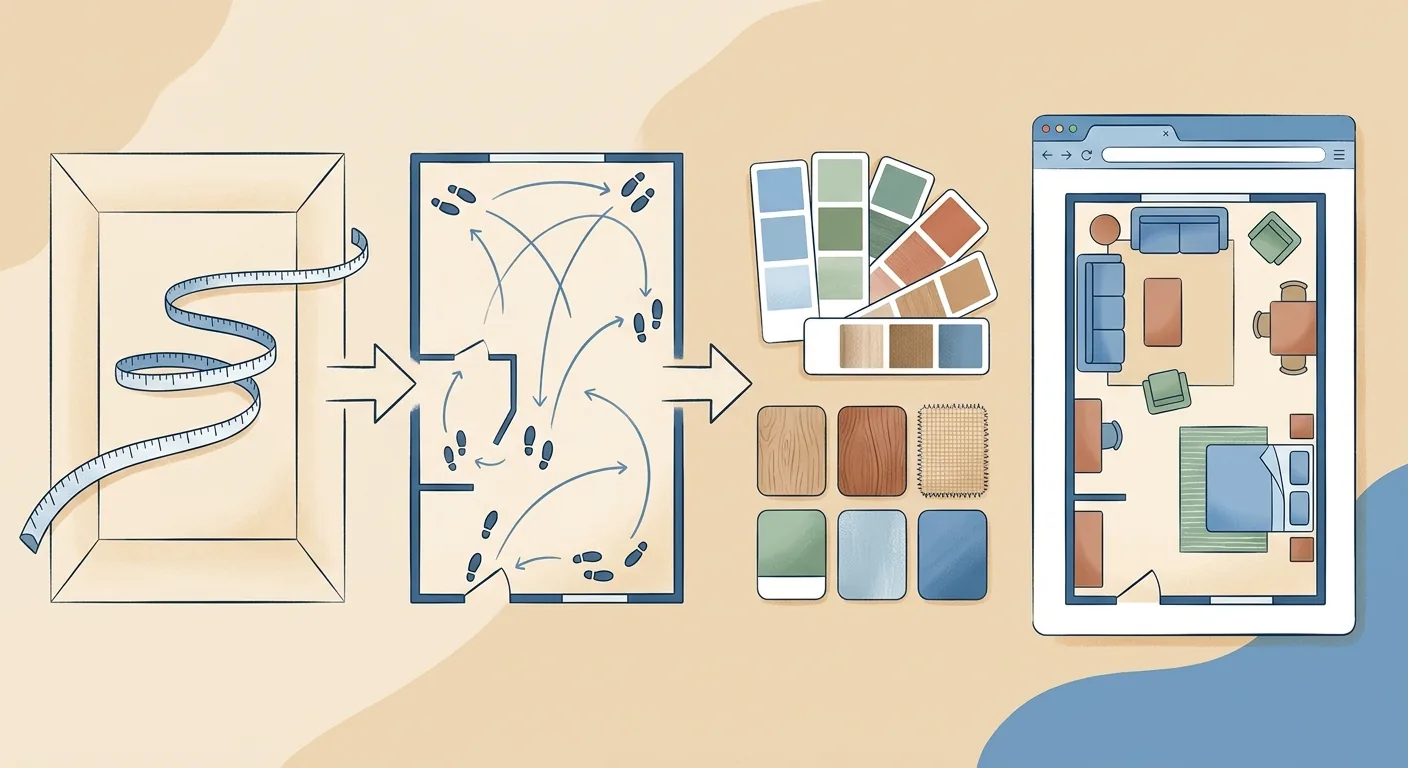
Enter your room's dimensions into Roomfit, and use a true-to-scale layout to confirm which furniture actually fits, whether the aisle is wide enough, and what you'll actually use every day, before deciding on your shopping list. This helps you avoid the hidden waste of "buying something, discovering it doesn't fit, and dealing with the hassle of a return." Return shipping, time, and effort — all of that is money you save. The tool needs no installation and opens right in your browser — planning once first costs you nothing.
Prioritize High-Use Furniture
Concentrate your budget on high-use, functional pieces. A chair you sit in every day, a bed you sleep in every night, a storage set you use daily — these are worth spending a bit more on; a pile of decorative pieces that look nice but never get used — cut those wherever you can. The judgment is simple: how many times a week will this get used? The more it gets used, the more it's worth investing in.
"Can Take It With You" Means "Not Wasted"
Movable, drill-free, multi-purpose — furniture you can take with you keeps your money with you, so moving out doesn't mean throwing money away. Renters fear buying large pieces they can't move most of all — hard to give away and hard to throw out when the lease ends. When choosing, ask yourself "can I take this with me when I move" — that alone helps you avoid this kind of waste. First-time student renters can also check out The Complete Guide to Student Rental Setup and Precautions for the plan-before-buy workflow.
4Affordable Decor and Small Appliance Checklist: Must-Buy Items for Budget-Conscious Renters, From Decor to Vacuums
The Directorate-General of Budget, Accounting and Statistics household survey shows Taiwan's homeownership rate stood at 84.4% at the end of 2024, meaning roughly 15.6% of households rent (Directorate-General of Budget, Accounting and Statistics, 2024). For renters, both decor and appliances should be chosen with "can I take it with me" as the guiding principle. Telling "necessary" apart from "wanted" is the first lesson in affordable shopping.
Affordable decor should meet functional needs first — decorative and upgrade pieces come later.
What Affordable Decor to Do First
Peel-and-stick wallpaper, rugs, ambient lighting, drill-free shelving — these low-cost items change the look while still being fully reversible at move-out. Decor doesn't need to be perfect on day one — use low-cost soft furnishings to set the tone first, live with it a while to confirm the style, then add on gradually. All material prices are left unspecified — go by whatever the retailer is charging in real time.
The Must-Have Small Appliance Checklist
Choose small appliances based on "how often you'll use it, and whether you can take it with you when you move":
| Appliance | Necessity | What to Look For |
|---|---|---|
| Vacuum cleaner | High (basic cleaning need) | Choose lightweight, cordless, or handheld — easy to store and move |
| Electric fan | High (ventilation, cooling) | Foldable or compact — easy to bring along when you switch homes |
| Basic cooking appliance | Depends on your needs | Pick either a rice cooker or an air fryer — don't buy both at once |
For units where cooking isn't allowed, your appliance choices will be more limited — see Decorating Guide for No-Drilling and Lease-Restricted Rentals for more on that.
Wants vs. Necessities
The core of saving money is telling wants apart from necessities. Buy the necessities first, and buy them decent; let the wants sit in your cart and cool off for a few days — most of the time, you'll stop wanting them. Choose appliances that are light and easy to store, movable — avoid ones too heavy to move or that you can't give away at move-out. A vacuum that's easy to carry beats one with flashy features but a bulky body.
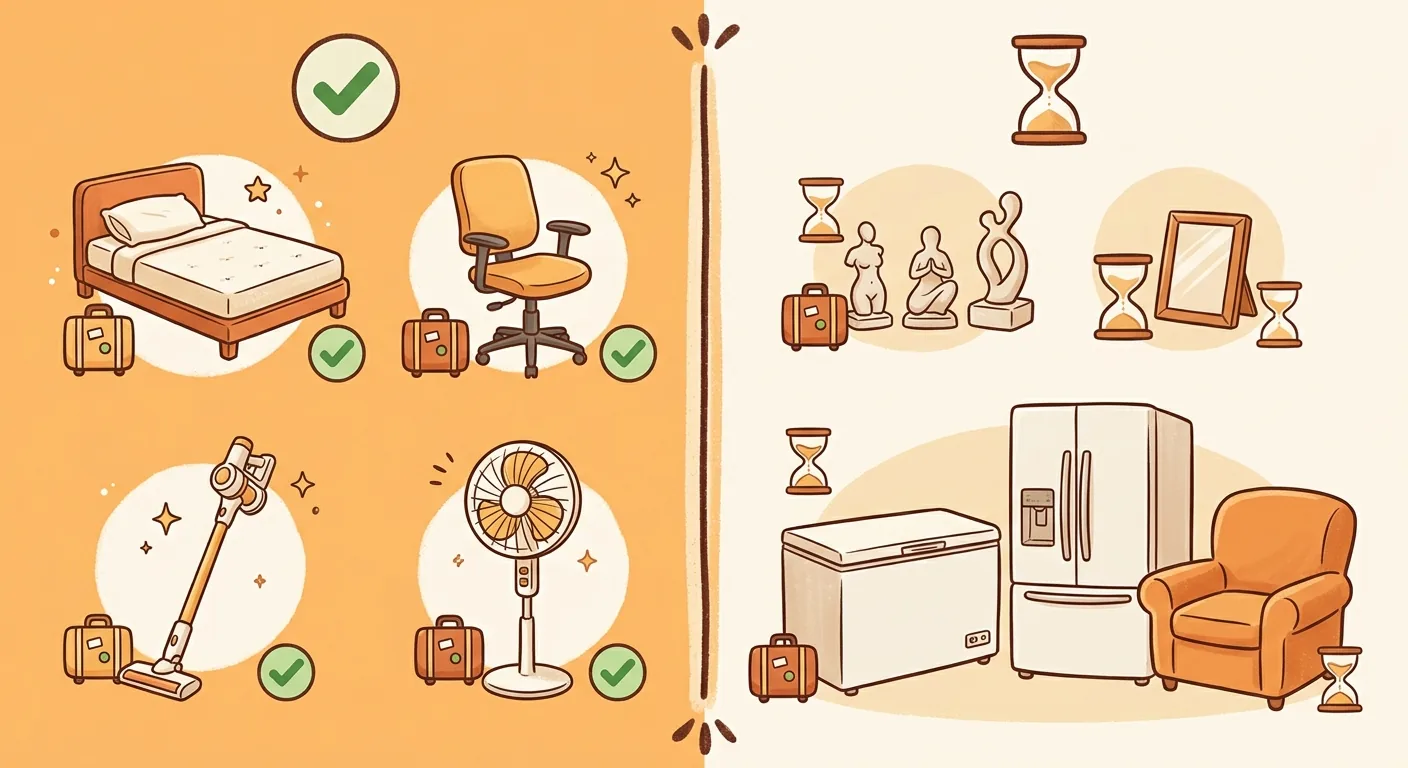
Caption: The two-column money-saving shopping method — buy the "necessary" high-use functional pieces first and buy them good, let the "wanted" decorative big-ticket items sit in your cart to cool off, and pick movable options in both columns
5Top Discussion Threads on Budget Renter Styling and Personal Finance
Ministry of the Interior real estate data for the first half of 2025 shows median monthly rents for small urban studios and single rooms are generally high (for example, a single room in Taipei's Wenjiao District runs around NT$8,210) (Ministry of the Interior Real Estate Information Platform, 2025). No wonder "how to save" is such a perennially hot topic on budget-conscious renter forums. Organizing these high-frequency topics is far more efficient than scrolling through every thread yourself.
Below, we've distilled the styling and personal finance discussions into actionable takeaways.
Top Styling Discussion Takeaways
How to style on a small budget and still make it look good, where to find affordable furniture, which pieces are worth investing in — nearly every answer to these questions comes back to "plan before you buy." Rather than copying someone else's beautiful photo, lay out your own room once and find your own best solution. If you want to save, save on screen first.
Top Personal Finance Discussion Takeaways
How budget-conscious renters save, and whether to invest, is another perennially popular forum topic. The takeaway boils down to: split your money before you spend it — save your reserve fund first, then consider investing, and finally upgrade your lifestyle. This section doesn't recommend any investment products or constitute investment advice — it only shares the concept of splitting your money. Putting the styling budget you save back into the overarching principle of "measure first, plan first, then buy" is the most practical way to save. For the complete styling logic, see Rental Styling Complete Guide.
6Bringing It Together: Split Your Money First, Then Plan Before You Buy
Budget renter styling really comes down to combining two things: splitting your money properly, and spending your styling budget correctly. Save your reserve fund first, invest within your means, and set an upper limit on your styling budget last — that's how you spend with peace of mind. When it comes to styling itself, plan before you buy, and concentrate your budget on high-use, movable furniture — saving money doesn't have to mean settling.
Our own experience is that these two moves alone — "set a hard budget cap" and "plan before you buy" — cut a huge chunk off the overspending on a typical move-in styling job. Put every dollar toward things you'll actually use and can take with you, and renting can still feel comfortable without hurting your wallet. If you want a bigger transformation, check the reversible approach in Rental Makeover Before and After.
7FAQ
How much income counts as budget-conscious?
There's no official threshold. Common discussion places budget-conscious renters at roughly NT$30,000–50,000 in monthly income, with a small surplus left after expenses (per SinoPac Bank and other finance columns). But the point is your spending attitude, not a specific number — someone with an average income who saves steadily is closer to financial freedom than someone with a high income who spends it all. Rather than fixating on an income bracket, focus on how you split and spend your money.
Should budget-conscious renters save first or invest first?
General financial guidance recommends saving first, then investing: build 6 to 12 months of living expenses (roughly NT$300,000–600,000) as an emergency fund first, then invest within your means once you have room to spare (SinoPac Bank finance column). Renters in particular need a reserve fund to cover deposits, moving costs, and other unexpected expenses. This section is general information sharing, not investment advice, and doesn't recommend any specific products — evaluate your actual approach based on your own situation and professional guidance.
How should a budget-conscious renter split their styling budget?
Set an upper limit first, then prioritize by how often you'll use each item. Housing-related spending already accounts for nearly 30% of household consumption in Taiwan (28.49% per the Taipei City DGBAS 2024 survey), so managing your styling budget matters even more. Give priority spending to functional furniture you'll use daily and can take with you, with decorative soft furnishings coming last. Plan it out in a tool first, confirm it fits and you'll actually use it, before you buy — that avoids the hidden waste of returns and exchanges.
Do renters really need to buy a vacuum cleaner?
It depends on your needs, but a vacuum is generally a basic cleaning necessity worth putting on your must-have list. Look for lightweight, cordless, or handheld models — easy to store, easy to carry, easy to bring along when you move. Roughly 15.6% of households in Taiwan rent (per 2024 Directorate-General of Budget, Accounting and Statistics figures), and rental appliances should all be chosen with "can I move it" as the guiding principle, avoiding bulky items you can't give away at move-out. Rather than a model with flashy features that's hard to move, choose a lightweight, durable one.
8Related Reading
- Studio Apartment Furniture Layout and Rental Makeover Guide
- Making a Small Room Feel Bigger: Get True-to-Scale Sizing Right Before Buying Furniture
- Complete Furniture Size Chart: Sofas, Beds, Dining Tables, and Desks at a Glance