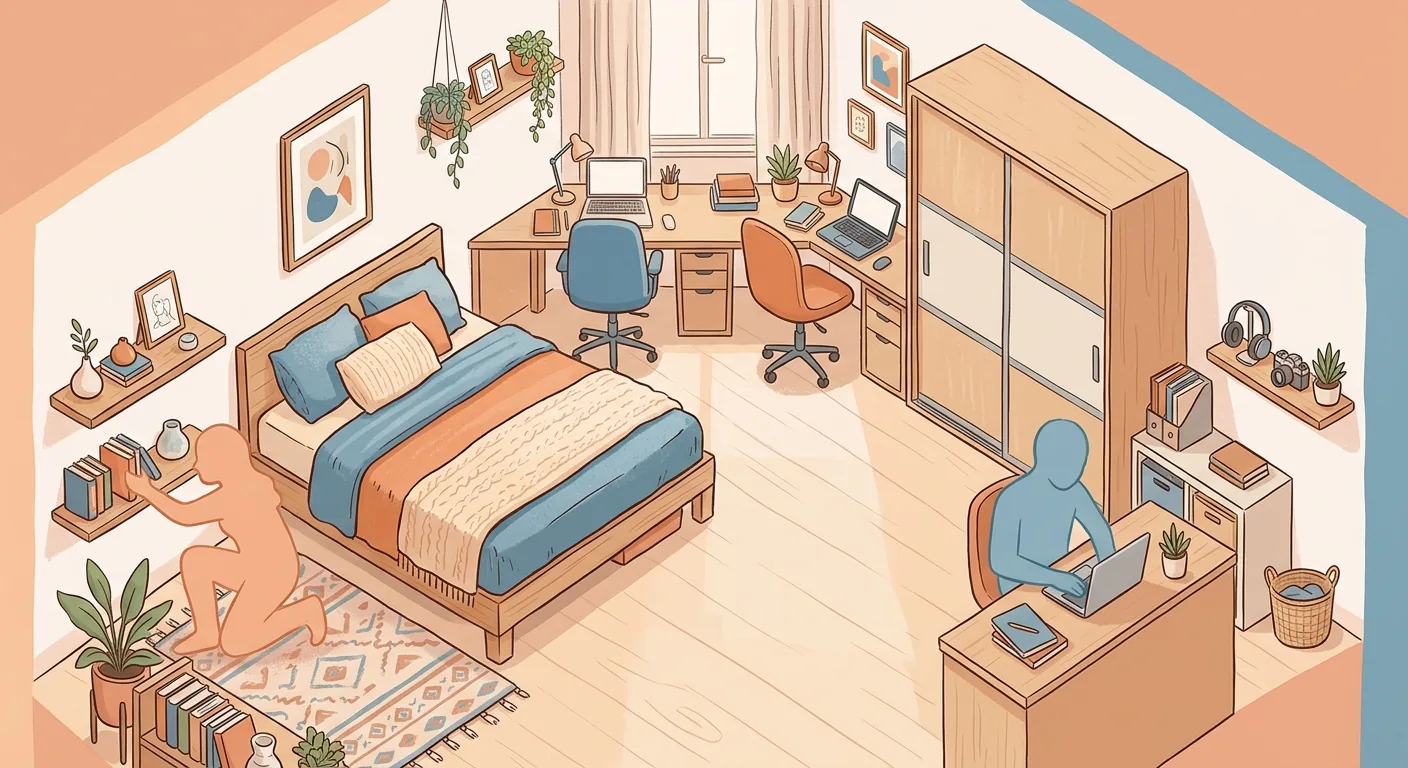

Your lease says "no cooking" and "no drilling into walls." Your first reaction might be: can I even decorate this room?
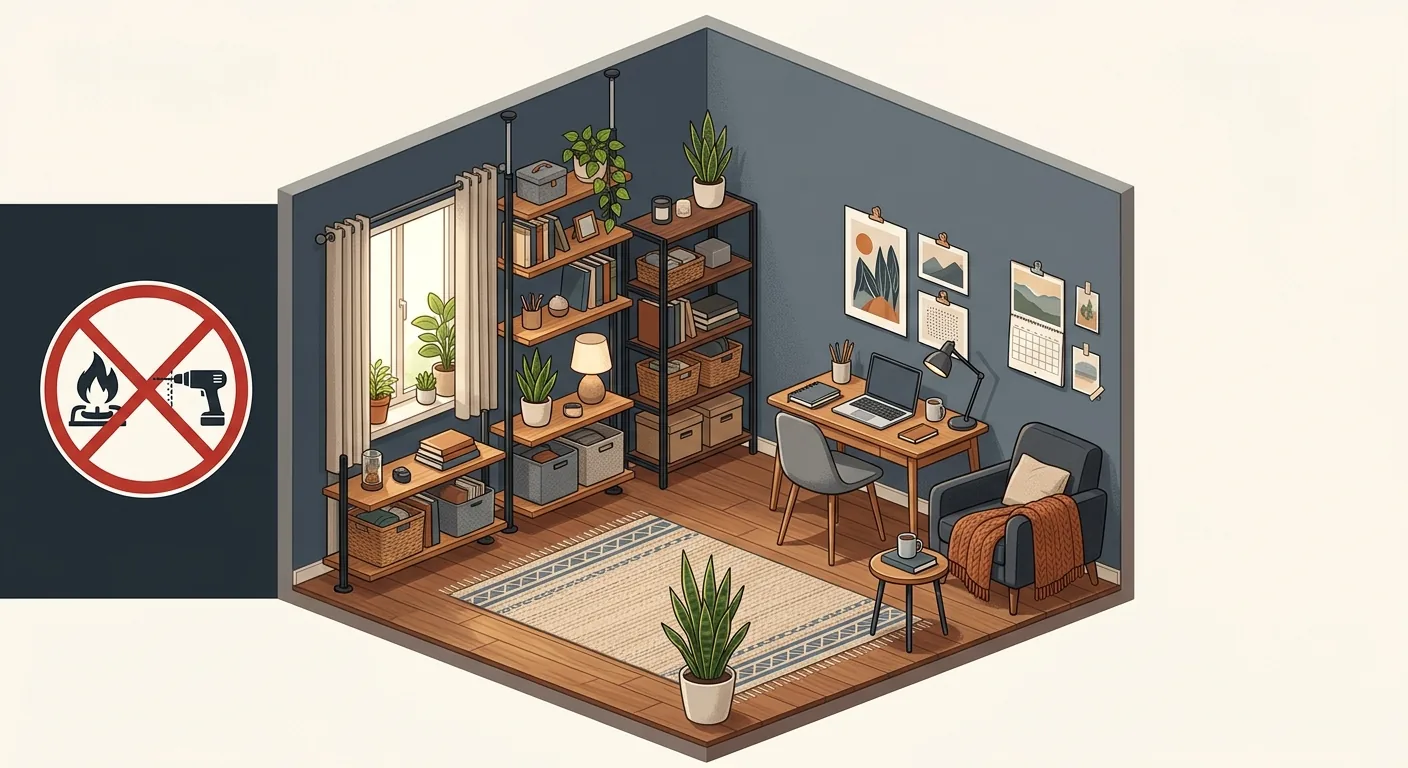
You can — and you can do it well. The more restrictions you face, the more it tests your skill at "styling through placement, not destruction." This article first decodes what those common lease restrictions actually mean, then teaches you how to style with no drilling, no adhesive marks, and zero move-out restoration cost. Finally, it walks you through picking the right apartment from the start so you can filter out dealbreaker restrictions before you sign. You can make a rented room comfortable without driving in a single nail.
Caption: The mindset for styling under restrictions — no open flames, no drilled holes, all done with tension rods, floor-standing shelves, and free-standing furniture
Key takeaway: Under Taiwan's Ministry of the Interior standard residential lease template, tenants are generally required to restore the unit to its original condition upon move-out (2025 notice). If your rental bans cooking and wall-drilling, going fully drill-free, mark-free, and movable means your restoration cost is zero and you get your full deposit back.
1What Does "No Cooking" Actually Mean? Decoding Lease Language and Real Restrictions
According to the Tomorrow Foundation (崔媽媽基金會), rental dispute filings totaled over 14,014 cases from 2017 through September 2023, with usage restrictions and restoration obligations among the most common sources of conflict (Tomorrow Foundation, 2023). "No cooking" is precisely the restriction that raises the most questions. Let's clarify it first: "no cooking" typically means the landlord doesn't allow open flames, gas stoves, or cooking methods that produce heavy smoke inside the unit.
This restriction is common in studios, shared rooms, and older buildings, usually out of safety and cleanliness concerns.
The Actual Scope of "No Cooking"
"No cooking" usually targets open flames and heavy smoke — think high-heat gas-stove stir-frying or deep-frying. The landlord's concerns are fire risk and oil smoke staining walls and ventilation equipment. So this restriction really comes down to two things: safety and cleanliness. Once you understand what the landlord is worried about, it's easier to gauge what's allowed and what isn't.
Does Low-Smoke Cooking Count as "Cooking"?
This is a gray area. "No cooking" doesn't necessarily mean no cooking at all — in many cases it specifically means no high-heat frying on a gas stove, while rice cookers, microwaves, and air fryers (low-smoke, no open flame) are often tacitly allowed. But here's an important caveat: common practice isn't the same as an absolute rule. Whether something is actually allowed always comes down to your specific lease terms and your landlord's actual agreement. Ask directly before signing, and get it in writing — that's the safest approach.
What Else Might a Lease Restrict?
"No cooking" is often just one clause among many. Other common lease restrictions include no drilling or nailing into walls, no altering the floor plan, no repainting walls, and no pets. Like the cooking clause, these are written into the contract — read every line before you sign. Miss one, and you might pay for it at move-out. Get the restrictions clear up front, and your styling plan will have direction.
2The No-Damage Styling Method: Drill-Free, Mark-Free, Zero Restoration Cost at Move-Out
Under Taiwan's standard residential lease template, the security deposit cannot exceed two months' rent, and tenants are generally required to restore the unit to its original condition when they move out (Ministry of the Interior, 2025). In plain terms: whatever you altered, you need to undo before move-out — and if you can't undo it, your deposit may be docked. So the more restricted the apartment, the more you should lean into a "change the visuals, not the walls" styling approach — zero restoration cost, full deposit back.
Here are the three core moves for damage-free styling.
How to Do Drill-Free Storage
You can build out plenty of storage without drilling into a wall. Drill-free shelving, floor-standing racks, tension rods, and floor-to-ceiling cabinets all stay put using floor and ceiling support — leaving zero holes. Want to display things? Use a floor-standing shelf. Need to hang clothes? Use a tension rod or a free-standing coat rack. Swap the "hang it with a nail" mindset for "support it with placement," and you can still build out full storage.
Choosing and Testing Adhesive-Free Products
Marks-free hooks and peel-off wall stickers work great, but choose carefully. Different wall surfaces hold adhesive differently — dark-painted walls, oil-paint walls, and wallpapered walls carry higher risk. The safe move is to test a small area in a corner first, peel it off, and see if it leaves a mark before committing to a larger area. To be honest, "marks-free" is a product claim — the actual adhesion and how cleanly it comes off still depends on the product's specifications and your own testing. Don't take the advertising at face value.
Checking for Restoration Before Move-Out
Before you move out, go through your original lease and move-in photos item by item: did you fully peel off every sticker? Are there any holes or leftover residue on the walls? Did the space return to its original state once furniture was removed? If you stuck to a reversible approach from day one, this check will be easy. To fully understand reversible renovation techniques, see Rental Makeover: Before and After for how to transform a space dramatically without touching the floor plan.
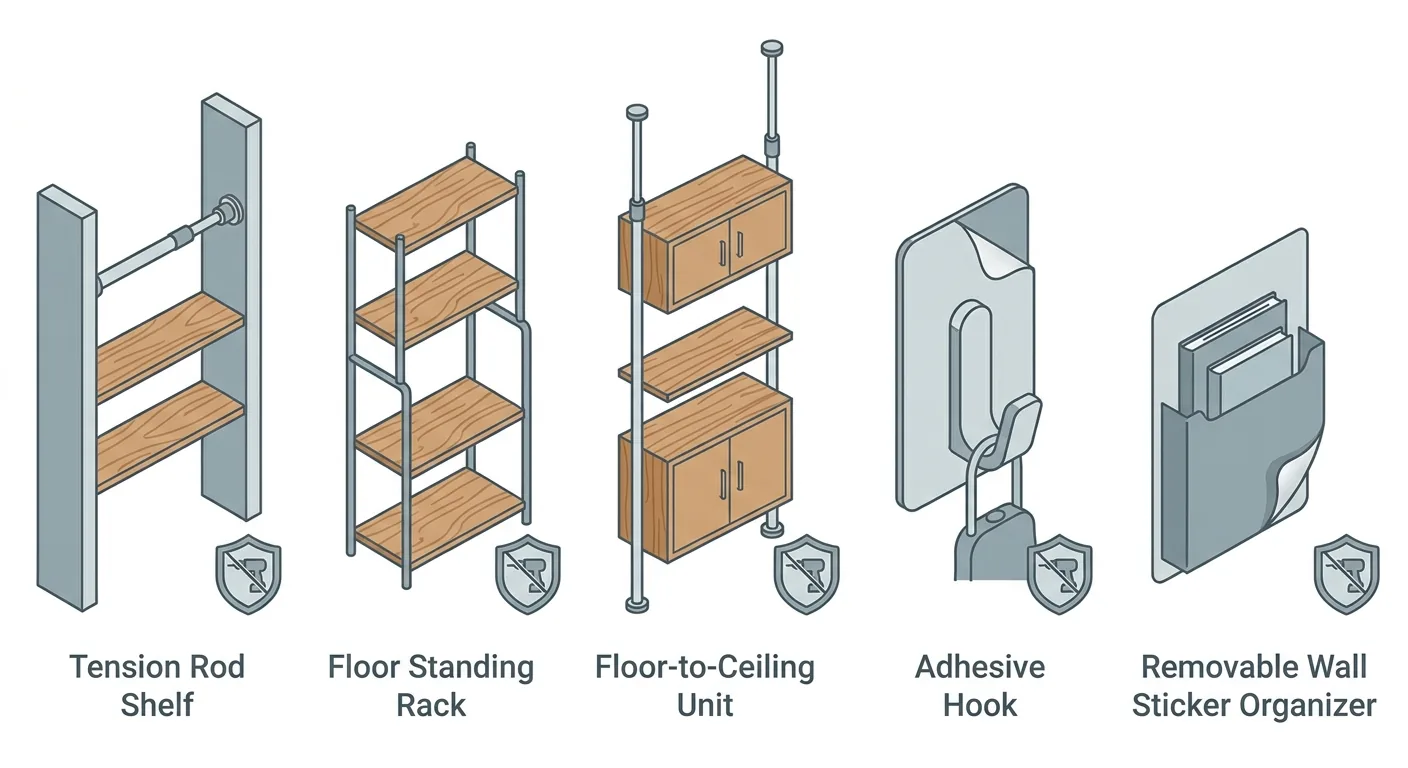
Caption: Five drill-free storage moves — tension rods, floor-standing shelves, floor-to-ceiling cabinets, marks-free hooks, and peel-off stickers, none of which damage your walls
3Use Roomfit to Arrange Free-Standing Furniture: Placement Instead of Fixtures, Rearrange Instantly When You Move
According to the Directorate-General of Budget, Accounting and Statistics' household survey, roughly 15.6% of Taiwanese households were renting by the end of 2024 (home ownership rate of 84.4%) (DGBAS, Executive Yuan, 2024). That's a lot of renters facing apartments full of restrictions. The more restrictions you face, the more critical it becomes to plan around "placement instead of fixtures" — as long as furniture is positioned correctly, you don't need to drill into a wall to hold it.
Laying out your room in Roomfit and solving storage and zoning purely through placement is the best solution for a restricted apartment.
Zoning Through Placement
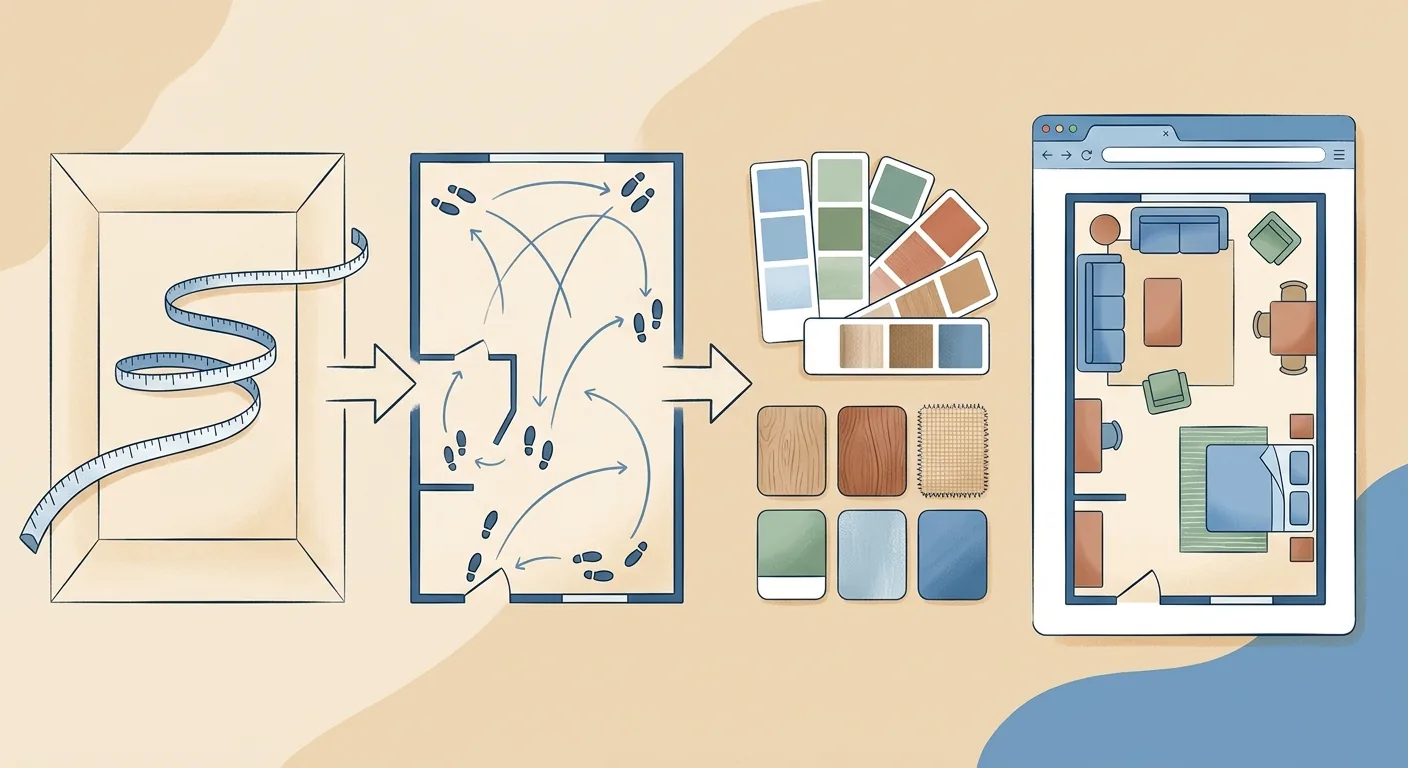
You don't need to build a wall or install a partition to create zones. Use 1:1-scale furniture placed against walls or against each other to define zones: an open shelf acts as a half-wall to separate the sleeping area, a rug marks off the living zone, a desk facing away from the bed defines a work zone. The system automatically flags clearances so you can confirm walkways and door-swing space are all sufficient. Zoning is done through "how you arrange it," not "how you nail it in" — which sidesteps the drilling ban entirely.
Storage Without Fixtures
Storage doesn't have to be bolted to a wall. Floor-standing shelves, wheeled carts, and floor-to-ceiling cabinets are all free-standing options with plenty of storage capacity. Lay these fixture-free storage pieces into your floor plan, account for drawer and cabinet-door swing space, and you can plan your sleeping, storage, and living zones — all without driving in a single nail.
How to Rearrange Your Layout When You Move
The biggest benefit of free-standing furniture is that moving becomes far less of a hassle. Keep your saved layout, and when you move to your next room, just drag the same set of furniture into the new floor plan. It's not some one-click magic move — it's simply re-positioning existing furniture against new wall lines. Your styling effort carries forward; changing rooms just means rearranging, not starting from zero. This is especially useful for renters who move often and keep encountering different sets of restrictions.
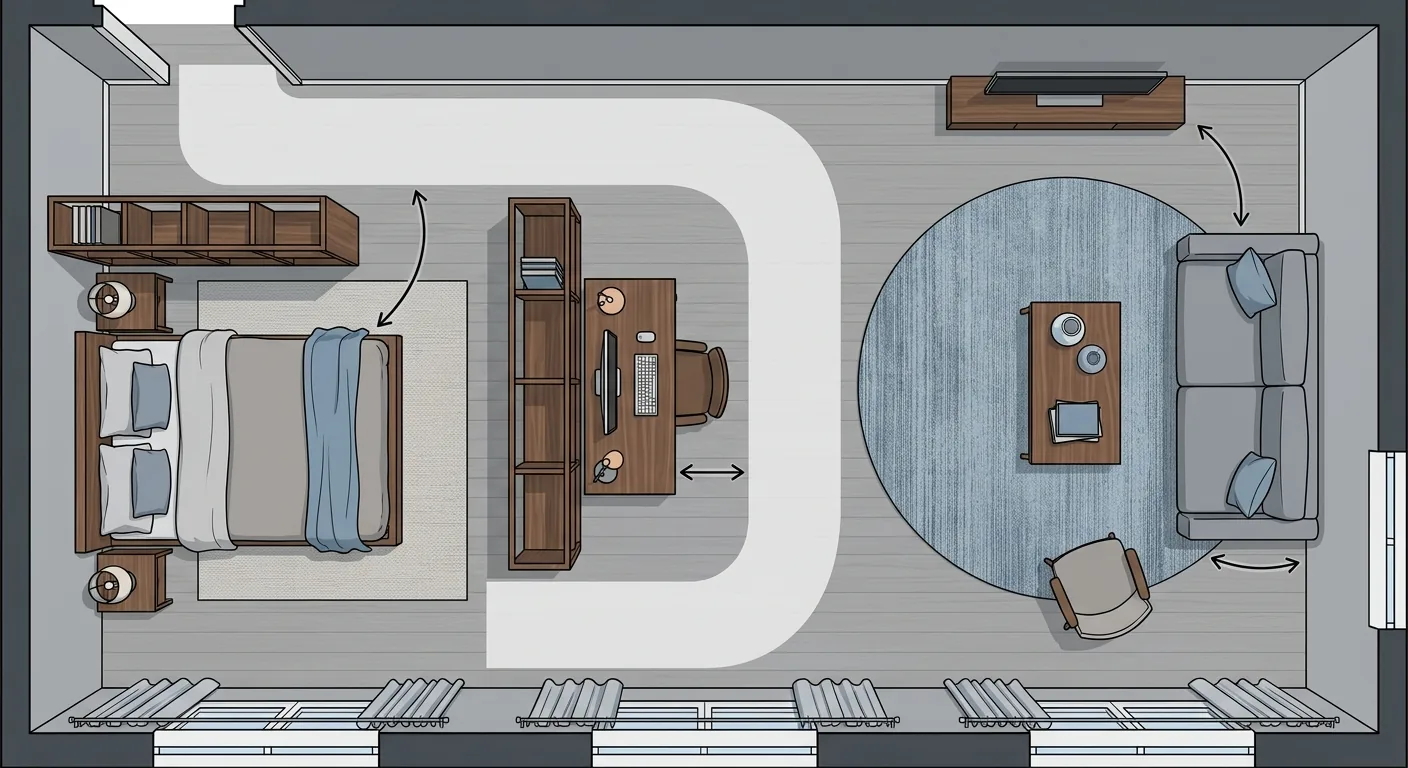
Caption: Zoning without a single drilled hole — an open shelf as a half-wall for the sleeping zone, a rug marking the living zone, a desk facing away from the bed for the work zone
4Finding the Right Landlord and Management: What to Look for in Listings and Platforms
In 2023, the Executive Yuan's Consumer Protection Office audited 50 residential sublease contracts across 25 master-lease operators and found a 29.2% non-compliance rate (Executive Yuan Consumer Protection Office, 2023). This tells you that how much styling freedom and living quality you get largely depends on the landlord and how the property is managed. Rather than discovering a pile of restrictions after you've moved in, it's better to pick the right apartment from the source.
When viewing an apartment, look beyond the room itself — pay attention to "who manages it and how."
Traits of a Good Landlord
A landlord who manages well, states rules clearly, and handles repairs responsibly matters more than saving a bit on rent. The clearer the lease terms, the easier it is to negotiate and know where the boundaries are when restrictions come up. In contrast, a landlord with vague rules and slow repairs tends to breed conflict. Choosing an apartment is, in effect, also choosing a landlord.
Using Platforms to Filter Restrictions
Make good use of rental platform filters to screen out restrictions before you even view a property. Whether cooking is allowed, whether pets are allowed, furniture arrangement, and whether management is included — most platforms let you filter for these upfront. There are quite a few rental listing and property management platforms on the market, such as the commonly mentioned Dasheng Rental Management, Dajia Rental, and Zufang951; the services and property rules offered by any specific operator or platform should always be verified against their latest official announcements and your actual lease — this article offers a general framework for viewing listings and does not endorse or evaluate any specific operator.
The Clearer the Lease, the Better
No matter which platform or landlord you go through, it all comes back to the lease itself. Cooking, drilling, pets, restoration responsibility, deposit and move-out terms — every clause should be spelled out in black and white so there's no dispute later. The clearer your lease, the more confidence you'll have both in styling and in getting your deposit back. To understand the full logic of placing first and prettifying later, see The Rental Styling Playbook; for couples sharing a rental under restrictions, Rental Styling for Couples covers related approaches too.
5Restrictions Aren't the Enemy of Styling — Damage Is
Back to the question we opened with: can a "no cooking, no drilling" room still be styled? Absolutely. The real enemy was never restrictions — it's damage. Go fully drill-free, mark-free, and movable, and no matter how many restrictions you face, you can still make the room comfortable, and walk away with your full deposit at move-out.
A heavily restricted apartment actually forces smarter styling. Zone through placement, store through free-standing furniture, and rearrange your layout in one pass when you move — once you've internalized this mindset, you can settle into any room quickly. If you're on a tight budget, check out Budget Renter Styling Tips first; students renting for the first time can get their restrictions sorted with The Complete Guide to Student Rental Setup.
6FAQ
What does "no cooking" mean in a rental?
It typically means the landlord doesn't allow open flames, gas stoves, or heavy-smoke cooking inside the unit — common in studios, shared rooms, and older buildings, usually for safety and cleanliness reasons. The Tomorrow Foundation's data shows usage restrictions and restoration obligations are among the most common sources of rental disputes (over 14,000 cases from 2017 through September 2023). The actual scope always depends on your lease terms and your landlord's agreement — clarify this before signing and put it in the contract.
Can I use a rice cooker or air fryer if cooking is banned?
Usually yes, but it's not absolute. "No cooking" mostly targets open flames and heavy smoke, while low-smoke, no-flame methods like rice cookers, microwaves, and air fryers are often tacitly allowed. But "common" doesn't mean "guaranteed" — what's actually allowed always depends on your lease and your landlord's actual agreement. The safest move is to ask directly before signing and get the answer in writing to avoid disputes later.
How do I store things without drilling into walls?
Go drill-free. Drill-free shelving, floor-standing racks, tension rods, and floor-to-ceiling cabinets stay in place using floor and ceiling support, leaving zero holes. For hanging things, use marks-free hooks or peel-off wall stickers. With roughly 15.6% of Taiwanese households renting (per 2024 DGBAS data), drill-free storage is a shared challenge for renters — swap "hang it with a nail" for "support it with placement," and you can still build out full storage.
Do marks-free products really leave no trace at move-out?
Not always — it depends on the wall surface, and you should test first. Marks-free hooks and peel-off stickers usually peel cleanly off smooth latex-painted walls, but dark-painted walls, older painted walls, or wallpaper carry higher risk. Under Taiwan's standard residential lease template, tenants are generally required to restore the unit to original condition at move-out (2025 notice), so test a small area in a corner before committing. The actual adhesion and how cleanly these products come off always depends on the product specs and your own testing — don't take advertising claims at face value.
7Related Reading
- The Complete Guide to Small-Space Storage Planning: From Seasonal Storage to Cabinet Traffic Flow
- The Complete Guide to Furniture Placement Simulation: Get the Fit Right Before You Chase Looks
- Studio Furniture Layout and Rental Makeover Guide
8References
- The Tomorrow Foundation (財團法人崔媽媽基金會) (2023)
- Ministry of the Interior — Standard Residential Lease Terms (Required and Prohibited Clauses) (2025)
- Directorate-General of Budget, Accounting and Statistics — Executive Yuan Overview (2024)
- Executive Yuan Consumer Protection Office — Residential Sublease Contract Audit (2023)