Interior Design Styles
Scandinavian style is the look most people in Taiwan want to achieve — and also the one most easily reduced to an "Instagram cafe" imitation. What's the real difference? It's not that the furniture isn't expensive enough — it's missing Scandinavian style's true core: brightness, warmth, and function. People in the Nordic countries live somewhere with short winter daylight, so their design isn't about looking good — it's about making a home comfortable through the long dark season.
This guide walks you through Scandinavian style's core features, gives you a repeatable color formula, shows you how to choose furniture, and how to layer plants, textiles, and lighting for a hygge feel — finally helping you tell apart three often-confused light-toned styles: Scandinavian, Japanese Minimalist, and Wabi-Sabi. To see where it fits among the 8 major styles first, go back to the Interior Design Styles Overview.
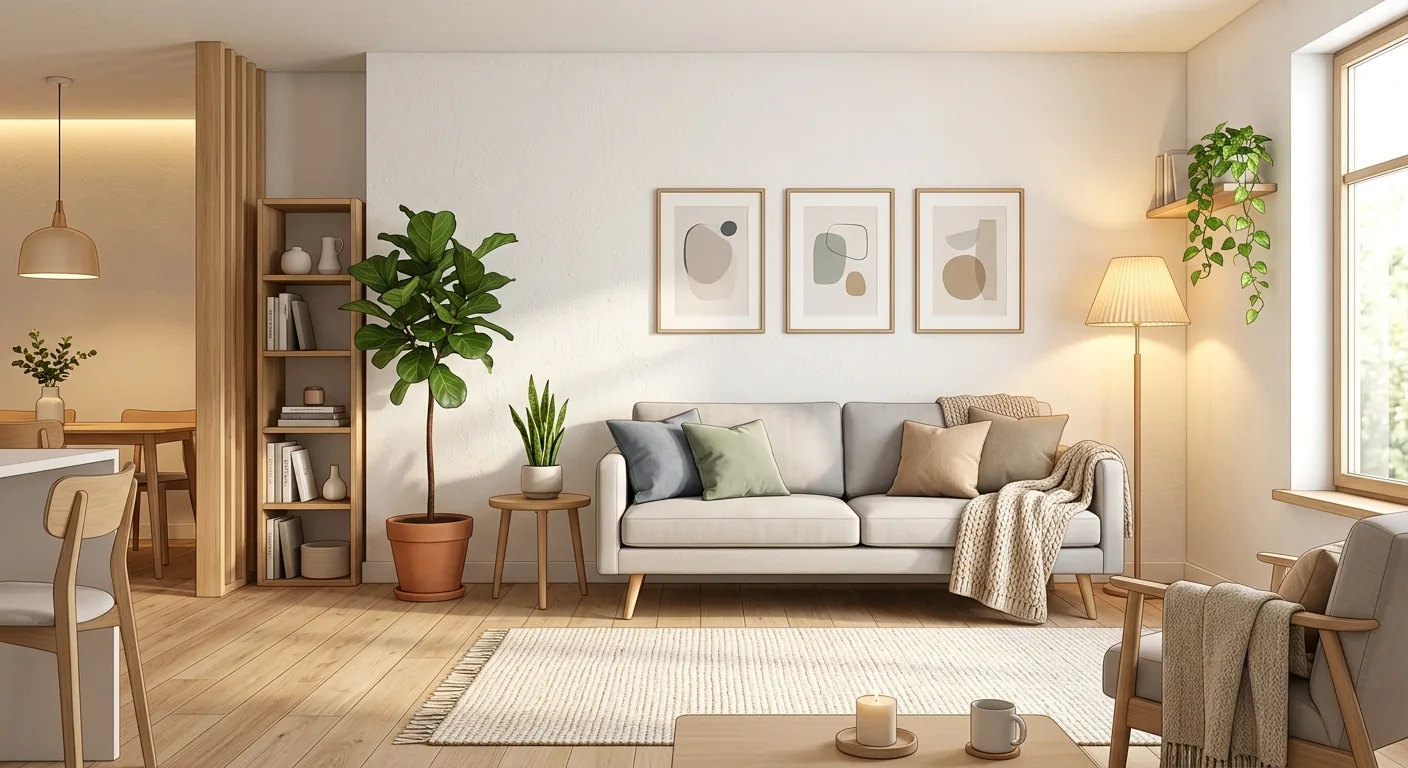
Caption: Scandinavian living room — white walls, light wood, low-saturation accent cushions, plants, and layered warm light
Key takeaway: Research found 78% of people believe natural daylight improves health and well-being, and 70% believe it improves performance (VELUX). Scandinavian style's brightness, built on light colors and abundant natural light, comes directly from a climate that learned to treasure every bit of light.
Scandinavian style can be defined by three keywords: bright, warm, and function-first. It originated in a Nordic climate with short daylight hours, so it relies on light colors and abundant natural light to feel bright, while placing real emphasis on practical function. Research backs up how much natural light matters: 78% of people believe natural daylight improves health and well-being (VELUX). That's exactly why Scandinavian style isn't just beautiful — it's genuinely livable.
Let's break down these three words. Bright — white walls, light wood, and generous natural light, using every bit of available light to the fullest. Warm — wool, rattan, warm lighting, and low-saturation accent colors, avoiding a cold, distant feel. Function — storage and multipurpose furniture that solve real everyday needs.
All three are essential. Without brightness, Scandinavian style turns gloomy; without warmth, it turns cold and hard; without function, it's just good-looking decor. Get all three right, and you have complete Scandinavian style.
Scandinavian style is especially well-suited to Taiwan's small-to-mid-size homes, for very practical reasons. Light colors expand the sense of space, so a small home doesn't feel cramped; functional furniture solves storage needs, making limited space work harder. Both of these hit exactly the pain points of Taiwanese housing.
Homes in Taiwan tend to be compact, and Scandinavian style's "expand with light color, solve storage with function" approach fits that situation perfectly. It doesn't need a large floor area to look beautiful, which is exactly why it's remained popular in Taiwan. To see how to style a small space without it feeling crowded, see the Small Space Design Guide.
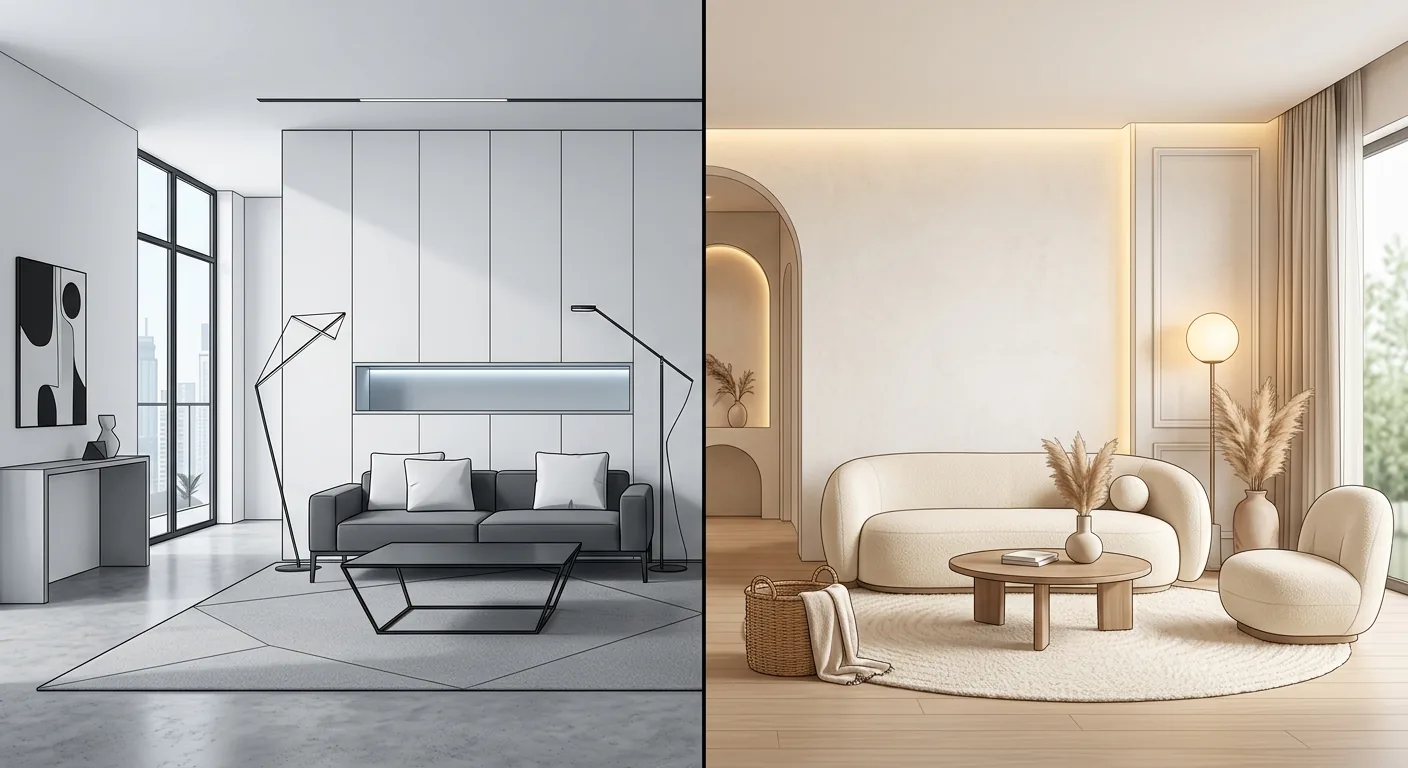
Scandinavian and Modern Minimalist are often confused, and the difference is warmth. Scandinavian is warmer and friendlier, using wood, wool, warm light, and a touch of accent color to create comfort; Modern Minimalist is cooler and crisper, using achromatic tones, geometric lines, and hidden storage to create order. One feels like a warm home, the other like a crisp showroom.
Simply put: choose Scandinavian if you want your home to have warmth, choose Minimalist if you want ultimate cleanliness. For a deeper comparison with Cream style too, see the full breakdown in Modern Minimalist vs. Cream Style.
Scandinavian color follows a repeatable formula — this is the most practical part of the whole guide. Three layers: white walls as a base to expand natural light, light wood throughout for a warm foundation, and low-saturation accent colors as the finishing touch. The key is keeping accents "low-saturation and small-scale," so they don't break Scandinavian style's clean feel. Follow this formula and you'll get 80% of the way there.
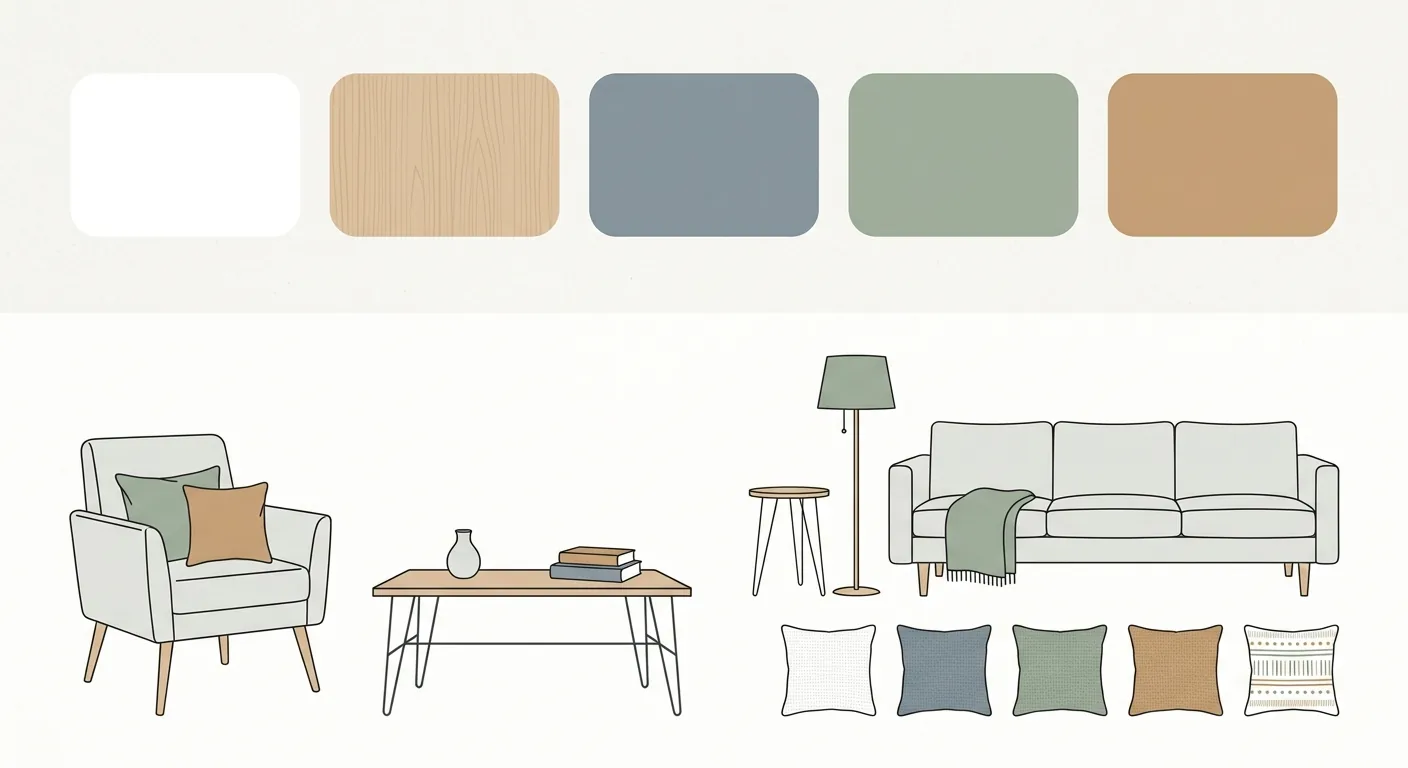
Caption: Scandinavian color, three layers — white walls as base, light wood throughout, low-saturation accents (Morandi gray-blue, misty green, warm taupe)
The first layer of Scandinavian color is white walls. White reflects light and expands the space, forming the foundation of Scandinavian brightness. Pure white can lean cold, so choose an off-white or ivory with a touch of warmth to keep the space bright without feeling sterile. The walls are the largest surface area in a space — get the base right, and everything else is easier to layer on.
White walls are also the best backdrop. They let both the light wood and the accent colors stand out without competing with each other. If you want an easy way to keep things bright, white walls are always the safe choice.
The second layer is light wood. Flooring and furniture in pale wood tones inject warmth into white walls' coolness — this is the biggest difference between Scandinavian style and pure white minimalism. Oak, ash, and birch's light wood grain is warm and bright, and forms Scandinavian style's signature foundation.
The light wood needs enough coverage for the warmth to come through. Flooring, dining table, and cabinetry all in light wood, and the whole space takes on a Scandinavian foundation.
The third layer is accent color, but it needs restraint. Use low-saturation Morandi tones (gray-blue, misty green, warm taupe, blush pink) as small-scale accents on cushions, textiles, and artwork, adding a highlight to the space without breaking its clean feel. The key is "low saturation, small scale."
High-saturation or large-area accent colors are a Scandinavian taboo — they make the space feel noisy. Ever wonder why some Scandinavian rooms look refined while others look like a toy box? The difference is in the saturation and proportion of the accent color. For a more systematic way to nail the color ratio, see the 6:3:1 rule in Room Color Schemes.
Choosing Scandinavian furniture comes down to three axes: lines, materials, and function. For lines, choose clean, slim-legged pieces for a light, unobtrusive visual; for materials, layer warmth through light wood, wool, and rattan; for function, weigh storage cabinets and multipurpose furniture, matching Scandinavian style's practical spirit. This section gives you a checklist to shop from — before you choose, get familiar with actual sofa and dining table dimensions in the Furniture Dimensions Reference Guide.
Scandinavian furniture favors slim-legged designs, and this isn't just a stylistic preference. Slim legs lift furniture "off the floor," making it feel visually lighter, exposing more of the flooring, and making the space feel bigger and airier. Lines also stay clean, avoiding elaborate carving and bulky forms.
For small-to-mid-size homes, slim-legged furniture is a hidden helper in expanding the space. When choosing a sofa, dining chairs, or cabinetry, pay attention to the legs — thinner and taller, and the space feels less crowded.
Scandinavian furniture's materials are responsible for layering warmth. Light wood's warmth, wool's softness, rattan's natural texture — these natural materials keep Scandinavian style from feeling cold. Avoid large expanses of hard, cold metal and glossy plastic, which cancel out the warmth.
Mixing materials is part of the fun in Scandinavian style. A light wood dining table paired with wool cushions and a rattan storage basket — different natural textures stacked together bring out both depth and warmth.
Scandinavian style places real weight on function, so a piece's storage capacity and versatility are important considerations. A sofa with built-in storage, an extendable dining table, a bench that doubles as a side table — these are all very Scandinavian. Well-designed functional furniture lets a small space serve multiple purposes, which is exactly the practical spirit of Scandinavian style.
That said, function shouldn't come at the expense of aesthetics. My own rule when choosing multipurpose furniture: the function should be hidden beautifully — don't let it look like a bulky tool.
There are three techniques you can apply to Scandinavian style right away: plants, textiles, and lighting. Plants bring life to a bright space, textiles layer in depth and warmth, and lighting uses multiple warm sources instead of a single overhead fixture, creating Scandinavian style's hygge (cozy comfort) atmosphere. How much do Danes value the warmth of light? They burn an average of about 13 pounds of candles per year (Nordalight).
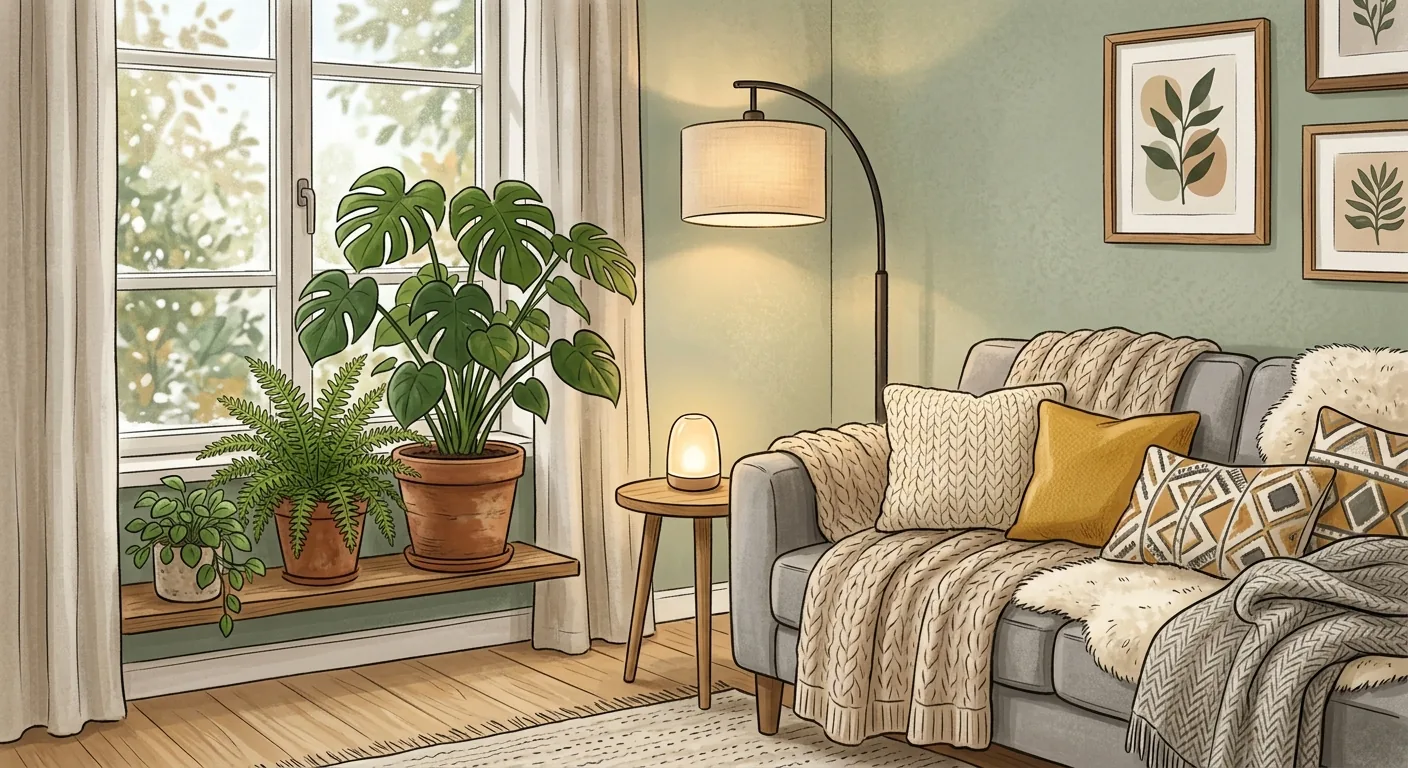
Caption: Three Scandinavian styling tricks — plants for life, layered textiles for depth, layered warm light for hygge
Plants are Scandinavian style's best-value element. They bring life and vitality to a bright, light-toned space, at low cost with high impact. A cluster by the window, a pot in a corner, and the whole space comes alive. Choose naturally-posed, easy-to-care-for varieties — don't chase rare or expensive ones.
Plants also echo Scandinavian style's closeness to nature. A few plants alone can break up the monotony of a light-toned space, and it's the easiest styling move for beginners to pull off.
Textiles are responsible for layering depth and warmth. Rugs, cushions, wall hangings, and wool throws, stacked in different materials and low-saturation colors, give the space thickness and warmth. Nordic winters are cold, so textiles are both practical and beautiful.
Layering is the key. A sofa with cushions of varying sizes and materials, plus a throw draped casually across it, feels more lived-in and hygge than everything matched perfectly.
Lighting is the soul of hygge. Scandinavian style favors multiple warm light sources — floor lamps, table lamps, wall sconces, and candles layered together — instead of a single overhead ceiling fixture, creating a soft, layered mood. Danes burn an average of about 13 pounds of candles a year (Nordalight), which shows just how much they care about the warmth of light.
Avoid a harsh, overly bright ceiling fixture. Multiple, warm, dimmable light sources are what turn a home into a genuinely comfortable warm tone. This is the most easily overlooked, yet most critical, difference between Scandinavian style and ordinary decorating.
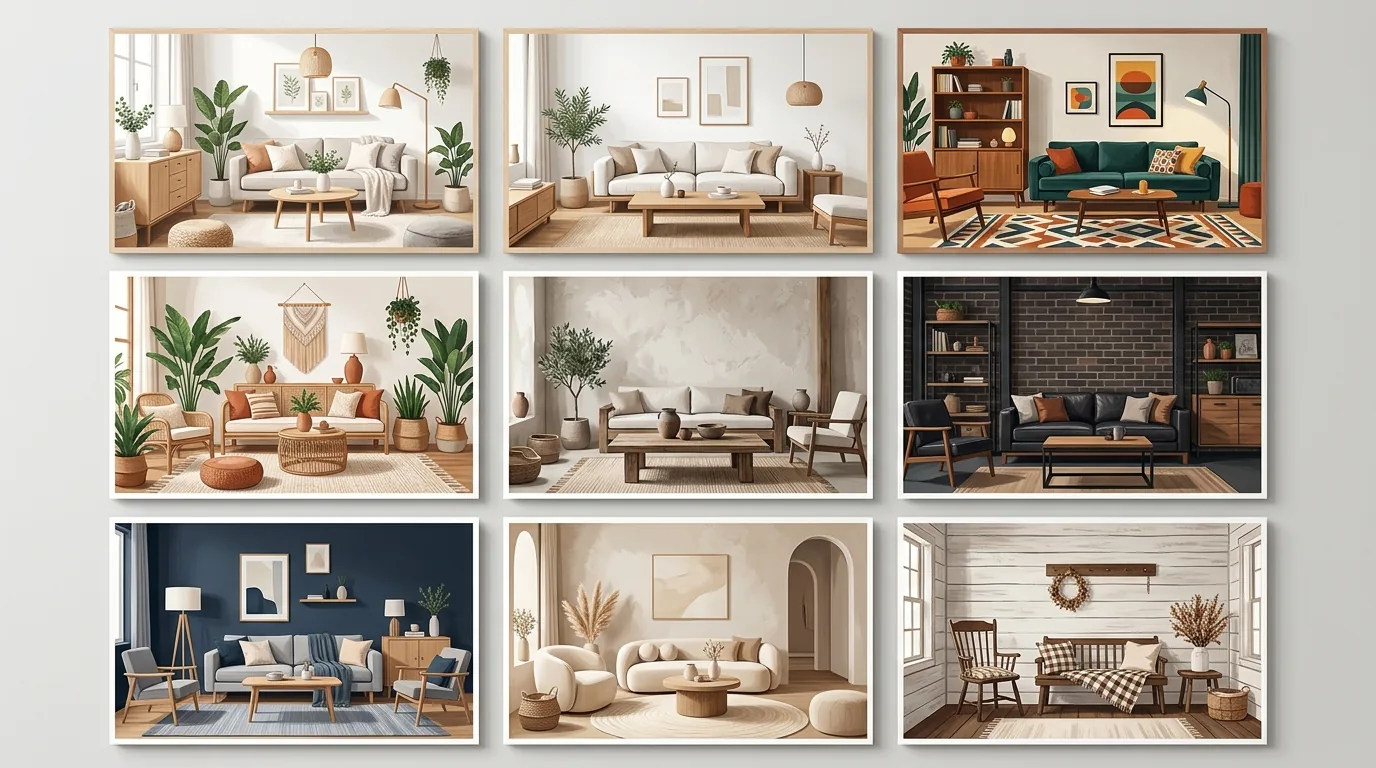
These three light-toned styles are the most commonly confused — here's a one-sentence positioning for each. Scandinavian = white base + light wood + low-saturation accents, function-first, with warmth. Japanese Minimalist = solid cotton/linen + subtractive storage, the most restrained, using almost no color. Wabi-Sabi = earth tones + rustic emptiness, celebrating the sense of age and handmade texture. All three are light and clean, but each has its own personality.
| Dimension | Scandinavian | Japanese Minimalist | Wabi-Sabi |
|---|---|---|---|
| Palette | White base + light wood + low-saturation accents | Solid white, wood, and gray | Earth tones, grays, low saturation |
| Materials | Light wood, wool, rattan | Light wood, cotton/linen, built-in cabinetry | Microcement, raw wood, handmade clay |
| Mood | Bright, warm, a little lively | Clean, restrained, rational storage | Rustic, calm, patina of age |
| Accent Colors | Small-scale low-saturation accents allowed | Almost no color used | Avoids high saturation, earth tones only |
For a deeper dive into Japanese Minimalist and Wabi-Sabi, read the full guides for Japanese Minimalist Style and Wabi-Sabi Style.
Don't borrow a bit from all three at once — pick one primary style first. If you have great natural light and want warmth and liveliness, choose Scandinavian; if you're chasing ultimate cleanliness and have heavy storage needs, choose Japanese Minimalist; if you like calm and appreciate the patina of age, choose Wabi-Sabi. Personality is also a factor — do you prefer brightness, or calm?
Once you've settled on a primary style, you can borrow a small element from another style as an accent, but don't let them split the spotlight evenly. A home works best with one lead — that's how you avoid a messy result.
Scandinavian style emphasizes function and traffic flow, and its furniture count is usually not small, but it needs to stay "plentiful without feeling crowded." That's exactly why confirming functional layout and smooth traffic flow matters before discussing color and textiles. The clearances between the sofa, dining table, and walkways — these numbers determine whether Scandinavian style feels comfortable to live in or awkward. Get function right first, and color scheme becomes meaningful.
Scandinavian style places real weight on function, so it typically has more furniture than a minimalist look — storage cabinets, side tables, multipurpose pieces, all in play. With more items, traffic flow matters even more. A walkway blocked by furniture, a cabinet door that won't open, a sofa you can't pull out from — good function is wasted if none of it works.
"Plentiful without feeling crowded" is where Scandinavian style's skill really shows. To pull that off, furniture dimensions and spacing need to be calculated in advance, not discovered as a problem after the furniture's already delivered. To see how to place furniture correctly before worrying about looks, see the Complete Furniture Placement Simulation Guide.
Roomfit lets you upload your floor plan and place the sofa, dining table, and cabinetry into it at true 1:1 scale, showing you walkway width and furniture spacing directly, with the system automatically marking the clearances. You can confirm before buying furniture whether these Scandinavian pieces, once placed, still leave smooth traffic flow or end up feeling crowded.
Once the functional layout is confirmed, go back to color and textiles — that's the right order. Get the fit right first, then worry about looks — that's the most practical way to bring Scandinavian style to life. After reading about Scandinavian style, you can also go back to the Interior Design Styles Overview to compare other styles.
Scandinavian style's core is brightness, warmth, and function — not turning your home into an Instagram cafe. Master the color formula of white walls as base, light wood throughout, and low-saturation accents; choose slim-legged, clean furniture with real storage function; layer in plants, textiles, and multiple warm light sources for hygge — and you can create a genuinely warm Scandinavian home.
And with more furniture in play, traffic flow is key. Before discussing color, use Roomfit to place your sofa and dining table into the floor plan at true 1:1 scale, confirm walkways and clearances, and achieve "plentiful without feeling crowded." Get the function right, and the color scheme can finally support a Scandinavian home that's genuinely livable.
The difference is warmth. Scandinavian is warmer and friendlier, using wood, wool, warm light, and small-scale low-saturation accents to create comfort; Modern Minimalist is cooler and crisper, using white-gray-black achromatic tones, geometric lines, and hidden storage to create order. Scandinavian feels like a warm home, Minimalist feels like a crisp showroom. On materials, Scandinavian favors light wood and natural textiles, while Minimalist favors glass, metal, and lacquered panels. Choose Scandinavian if you want your home to have warmth, choose Minimalist if you want ultimate cleanliness.
The three-layer structure is easiest to remember. First layer, white walls as a base, reflecting light and expanding the space; second layer, light wood throughout, with flooring and furniture in pale wood tones for a warm foundation; third layer, low-saturation accent colors, using Morandi tones (gray-blue, misty green, warm taupe) as small-scale highlights on cushions and textiles. The key is keeping accents low-saturation and small-scale — high saturation or large areas will break Scandinavian style's clean feel. Follow this formula and you'll get 80% of the way there.
Very much so, which is exactly why it's remained popular in Taiwan. Scandinavian style uses light colors to expand the sense of space and functional furniture to solve storage needs, hitting exactly the pain points of small-to-mid-size homes. Pairing it with slim-legged furniture exposes more flooring and makes the space feel airier, so even a small space can look bright and comfortable. The key is that while the furniture is function-heavy and the count might not be small, it needs to stay plentiful without feeling crowded — laying out traffic flow at true 1:1 scale before you start is critical.
Through three techniques: plants, textiles, and lighting. Plants bring life to a bright space; rugs, cushions, and wool throws layered together create warmth and depth; lighting uses multiple warm sources (floor lamps, table lamps, candles) instead of a single overhead ceiling fixture. Danes burn an average of about 13 pounds of candles a year (Nordalight), which shows just how much they care about the warmth of light. Avoid a harsh overhead fixture — multiple, warm, dimmable light sources are what turn a home into a genuinely comfortable, hygge-warm space.
Arrange furniture in your space at true 1:1 scale with Roomfit and see exactly how much walkway is left — no install, no sign-up.
Start with Roomfit →