You've found a sofa you like, and the first question is always: "will this width fit in my place?" You measure the wall, check the product page, and you're still not sure whether the walkway will get eaten up once it's placed. The sofa is the largest piece of furniture in the living room, and returning or exchanging one after buying the wrong size is a real hassle.
This article organizes the width, depth, and seat height for one, two, three-seat, and L-shaped sofas into a comparison chart, then walks through how to measure, how much walkway to leave, and how to confirm it'll make it through your door. How wide a three-seat sofa should be, and what counts as an "oversized three-seater," get covered too.
1Before You Understand Sofa Dimensions: Three Numbers Decide Whether It Fits and Whether It's Comfortable
Don't just look at width when choosing a sofa — there are actually three key numbers: width (how much wall it takes up), depth (how much floor it takes up), and seat height (how it feels to sit on). Living room wall length in Taiwan is often estimated in Taiwanese feet (1 Taiwanese foot ≈ 30.3 cm, Ministry of Education conversion table, 2021) — convert to centimeters before comparing against sofa width, and you're least likely to make a mistake.
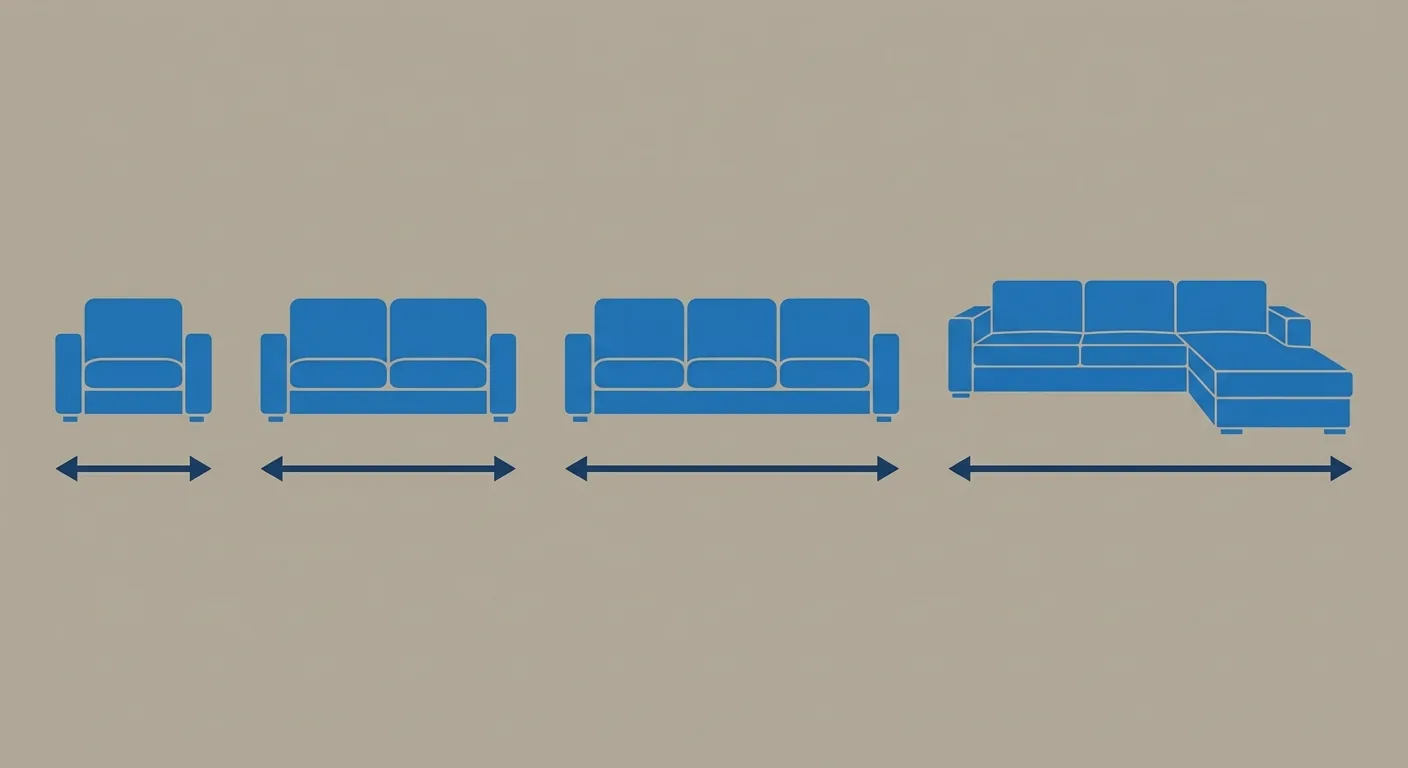
Caption: Sofa width grows with seat count — single 80–100, two-seat 130–160, three-seat 180–230 cm, and an L-shape's long side can reach 300
Key takeaway: Standard three-seat sofa width is mostly 180–210 cm; an "oversized/large three-seater" is roughly 210–230 cm, with 40–45 cm as the most universal seat height. Estimate your living room wall in Taiwanese feet (1 Taiwanese foot ≈ 30.3 cm, Ministry of Education conversion table), then convert to centimeters before comparing.
We've placed sofas into plenty of living rooms with our 1:1 tool, and the most common mistake isn't "buying too small a sofa" — it's "only checking width and forgetting depth." The sofa fits in fine, but the walkway in front of it ends up only forty-something centimeters, so you're sidling past it every day.
2Sofa Size Chart: Width × Depth × Seat Height (cm) for 1/2/3-Seat and L-Shaped Sofas
Sofa dimensions come down to four commonly used numbers: width, depth, seat height, and seat depth. The table below covers market-standard ranges, not tied to a specific brand — always check the actual product page before ordering. A seat height of 40–45 cm is the most universal — too low and standing up takes effort, too high and your feet dangle; a seat depth over 60 cm counts as a deep-seat style, better suited for reclining than for sitting upright at a desk.
| Seats | Common Width (cm) | Common Depth (cm) | Seat Height (cm) | Seat Depth (cm) | Best For |
|---|---|---|---|---|---|
| Single seat | 80–100 | 85–95 | 40–45 | 55–60 | Accent chair / small space |
| Two-seat | 130–160 | 85–95 | 40–45 | 55–60 | 2 people / small living room |
| Three-seat | 180–230 | 85–100 | 40–45 | 55–65 | Living room main sofa |
| Three-seat L-shape | Long side 240–300 × short side 150–170 | 90–160 | 40–45 | 55–65 | Medium-to-large living room |
Armrest height and backrest height, while not always specced out, still affect visual mass. At the same width, a version with a tall armrest and tall backrest looks a size bigger — for a small living room, we'd recommend a version with a lower back and slimmer armrests for a lighter visual feel. To see how much distance you need between the sofa, TV, and coffee table once it's in the living room, the sofa layout golden ratio has a complete quick reference.
3How Wide Should a Three-Seat Sofa Be? The Size Differences Between Three-Seat, Three-Seat L-Shape, and "Oversized"
A three-seat sofa doesn't come in just one width. Standard three-seat sits at 180–210 cm, while "oversized/large three-seater" mostly refers to 210–230 cm, or a version with wider armrests and a deeper seat. People searching "large sofa dimensions" are usually worried about "will it be too big to fit" — here's a rule of thumb that works well.
How to Calculate Standard Three-Seat vs. Oversized Three-Seat
The method is simple: take the width of the wall your sofa will sit against, subtract 30 cm on each side, and what's left is your usable sofa width. A 240 cm wall, minus 60, leaves 180 — go with standard three-seat. A 290 cm wall, minus 60, leaves 230 — that's when you can go for an oversized three-seater. This way, neither side crowds the wall, and there's still breathing room.
How the Footprint of a Three-Seat L-Shape Differs from a Straight Three-Seater
A three-seat L-shape's total footprint often runs 240–300 cm on the long side, because of the extra chaise section, and usually needs to sit against a wall or in a corner; a straight three-seater only takes up one wall, making it easier to place. An L-shape looks like it seats more, but it eats into the walkway in one corner — for a small space, a straight sofa plus a single accent chair is often more flexible. To see whether an L-shape will fit smoothly in your space, the furniture clearance and safety distance guide can help you confirm whether the L-shape's corner keeps enough traffic flow.
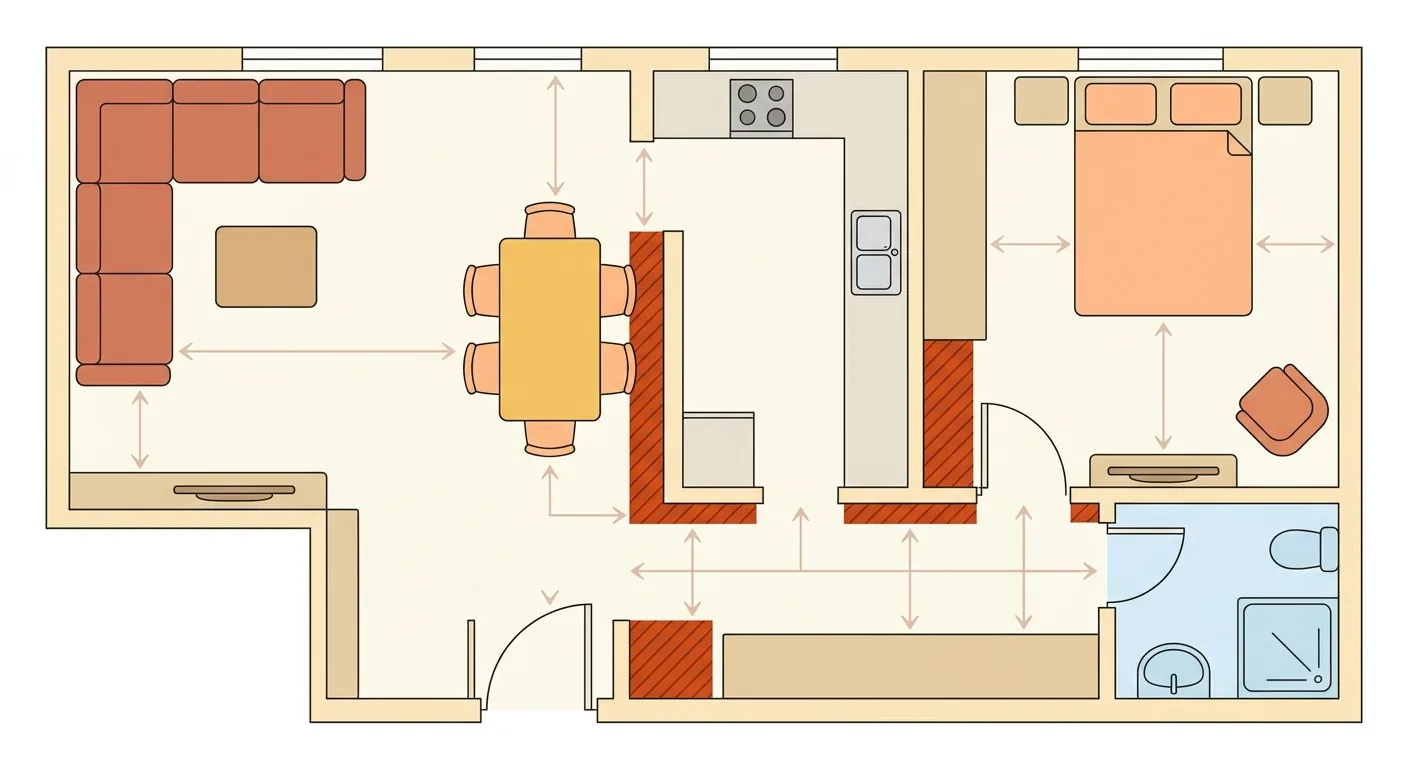
Also note that L-shapes come in "left-facing" and "right-facing" versions — whether the chaise is on the left or right determines which wall it needs to go against. Before you buy, confirm which side your sofa wall, window, and walkway are on — choosing the wrong orientation can leave the chaise blocking traffic or facing away from the TV. This left-right issue is clearest on a floor plan — don't rely on product photos alone.
4How Do You Choose and Measure a Sofa? Sizing the Right Width Based on Ping, Walkway, and TV Distance
The golden rule for sofa width: don't exceed two-thirds of the wall it sits against, leaving about 30 cm on each side. Seat feel is determined by seat depth plus seat height — a seat depth of 55–60 cm suits sitting upright, and 60–65 cm suits reclining. The distance from the sofa's front edge to the TV depends on TV size — for a 55-inch 4K TV, different standards suggest roughly 2.3–3.5 meters (BenQ Knowledge Center, 2026); see the sofa layout ratio article for the details.
Cushions change your actual usable seat depth. A product might list 60 cm of seat depth, but once you add two thick cushions, the actual usable depth might drop to 50 cm. If you like sitting back against cushions, that's actually a good fit — but if you want to lie fully flat and relax, factor cushion thickness into your choice, or pick a style with removable cushions for flexibility.
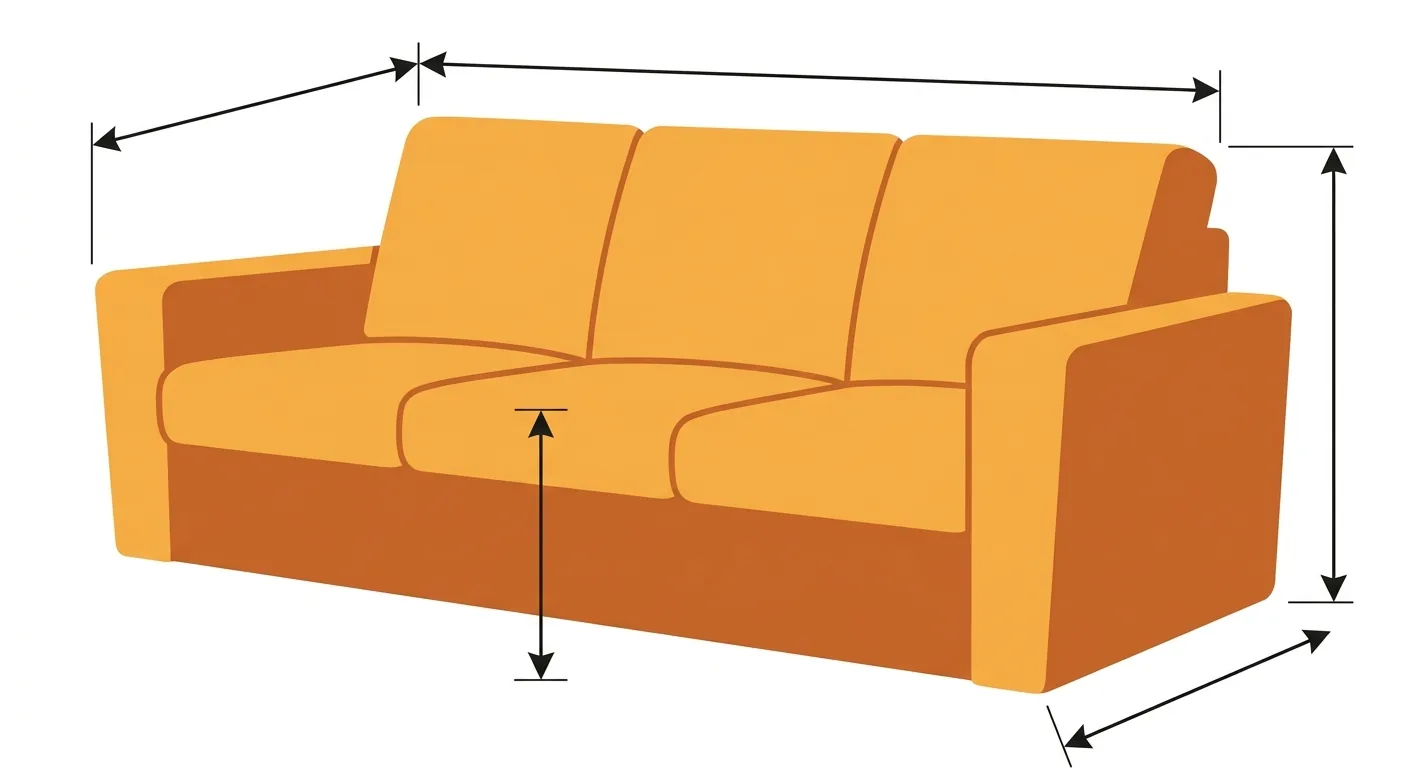
Caption: Measure a sofa at four points — widest (including armrests), deepest (including reclined backrest), seat height, and total height — miss any one and you might buy the wrong size
Choosing Seat Depth for Comfort
Seat depth is the number that most affects "how tired you get sitting for a while," yet it's the one people check least. A seat depth of 55–60 cm lets your back and feet both reach naturally — good for sitting upright at work or chatting; 60–65 cm requires leaning your whole body back, better for reclining and binge-watching, though it can be uncomfortable for a bad back over long sessions. When choosing a sofa, actually sit on it and feel whether your feet rest naturally on the floor — that tells you more than the numbers alone.
How to Choose for a Small Living Room Without Feeling Cramped
Besides controlling width, there are two more space-saving tricks for a small living room. The first is choosing a "slim armrest" style — at the same three-seat width, slim armrests save 10–20 cm of wall space compared to chunky ones. The second is choosing a "raised" style, with open space underneath so you can see the floor — visually lighter, and a robot vacuum can get underneath too.
Material affects the sense of scale too. A dark, thick leather sofa looks bulkier, while a light-colored fabric sofa feels lighter. The same 200 cm width, placed in a living room of roughly 4 ping, will make the space feel fuller in a dark finish. Our experience is that if you're genuinely unsure which to pick, place both versions into Roomfit at 1:1 scale and compare — the difference in footprint and walkway becomes obvious right away. For how to configure a whole small living room without it feeling cramped, pair this with our small-space design guide.
5Will It Fit: Getting It Through the Door, Leaving a Walkway, and Measuring a Sofa Correctly
Measure a sofa at three points: widest (including armrests), deepest (including a reclined backrest), and tallest. Buying online, specifically confirm whether the listed dimensions include cushions or the outer edge of the armrests. When we help people match furniture to their floor plans on Roomfit, the most common mistake we see is missing the 15–20 cm the armrests add — measuring the cushion width, when the actual footprint against the wall is more.
Moving a sofa involves three checkpoints: the door frame's clear width, the elevator's interior depth, and the diagonal at a stairwell or hallway corner. Oversized three-seaters and L-shapes most often get stuck at a corner — if necessary, choose a style with removable armrests. Don't forget that furniture's outer packaging is usually 5–10 cm larger than the piece itself — if a doorway is a tight fit, factor the outer box into your moving calculations too.
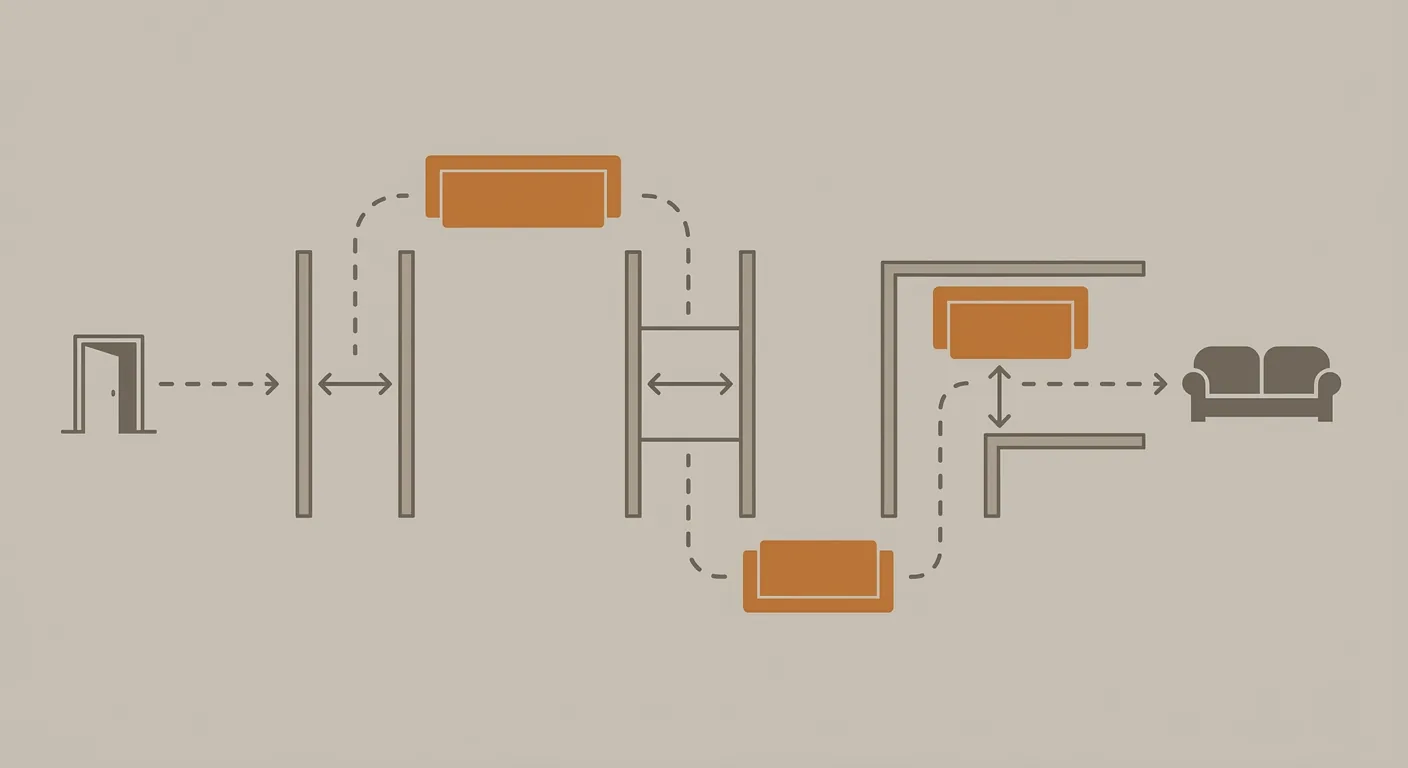
Caption: Three moving checkpoints for a sofa — door frame clear width, elevator interior depth, and the hallway corner's diagonal — large sofas most often get stuck at a corner
Place It at 1:1 Scale in Your Living Room Before You Order
Rather than staying unsure after measuring, drag the width and depth you measured into your living room floor plan at true 1:1 scale. Place the sofa with Roomfit, and the system automatically labels its distance to the wall, the TV, and the coffee table, warning you if a walkway is too narrow. Check whether the traffic flow works once it's placed, then decide between standard three-seat and oversized — comparing both versions takes just a few minutes. To confirm the dimensions of other furniture like your bed or dining table at the same time, head back to the complete furniture dimensions chart; for TV cabinet pairing, see the TV cabinet and desk dimensions chart. For how to plan the sofa, TV wall, and the whole living room's traffic flow, see our complete living room design and furniture layout guide.
6Conclusion: Nail Down Width, Depth, and Seat Height, Then Place It in Your Living Room to Finalize
The order for choosing a sofa is clear: use the comparison chart to lock in the seat count and its width, depth, and seat height; use "two-thirds of the wall, 30 cm on each side" to confirm it fits; and finally measure the three moving checkpoints. Standard three-seat is 180–210, oversized is 210–230 cm, with a seat height of 40–45 being the most universal.
The real decision comes from placing the numbers back into your own living room and checking the traffic flow. The sofa is the star of the living room — get the size right and keep the walkway intact, and coming home to sit down feels comfortable every day. Once you've checked the sofa, don't forget its distance ratio to the TV and coffee table too.
7FAQ
How wide should a three-seat sofa be?
Standard three-seat sofa width mostly falls between 180–210 cm, with oversized or "large three-seater" versions around 210–230 cm. The rule of thumb: take the width of the wall your sofa will sit against, subtract 30 cm on each side, and what's left is your usable sofa width. A 240 cm wall calls for standard three-seat; only a 290 cm wall supports an oversized three-seater — with breathing room on each side instead of crowding the wall.
What seat height feels most comfortable for a sofa?
A seat height of 40–45 cm is the most universal, matching most people's lower-leg length, so standing up takes no effort and your feet still reach the floor. Too low (under 38) makes standing up an effort, and too high (over 48) leaves your feet dangling. Pair it with seat depth: 55–60 cm suits sitting upright, and 60–65 cm suits reclining, though a deep seat isn't recommended for long stretches of work.
How do you measure a sofa correctly to avoid buying the wrong size?
Measure a sofa at three points: widest (including armrests), deepest (including a reclined backrest), and tallest. Buying online, specifically confirm whether the listed dimensions include cushions or the outer edge of the armrests — the most common mistake is missing the 15–20 cm the armrests add. Furniture's outer packaging is also usually 5–10 cm larger than the piece itself, so factor the outer box into your moving-space calculations if a doorway is a tight fit.
How big is an oversized three-seat sofa?
An "oversized/large three-seater" generally refers to a width of 210–230 cm, or a version with wider armrests and a deeper seat built on a standard three-seat base — about 20–30 cm wider than standard, needing a wall of roughly 290 cm or more. For a three-seat L-shape, adding the chaise often brings the long side to 240–300 cm, usually requiring a wall or corner placement.